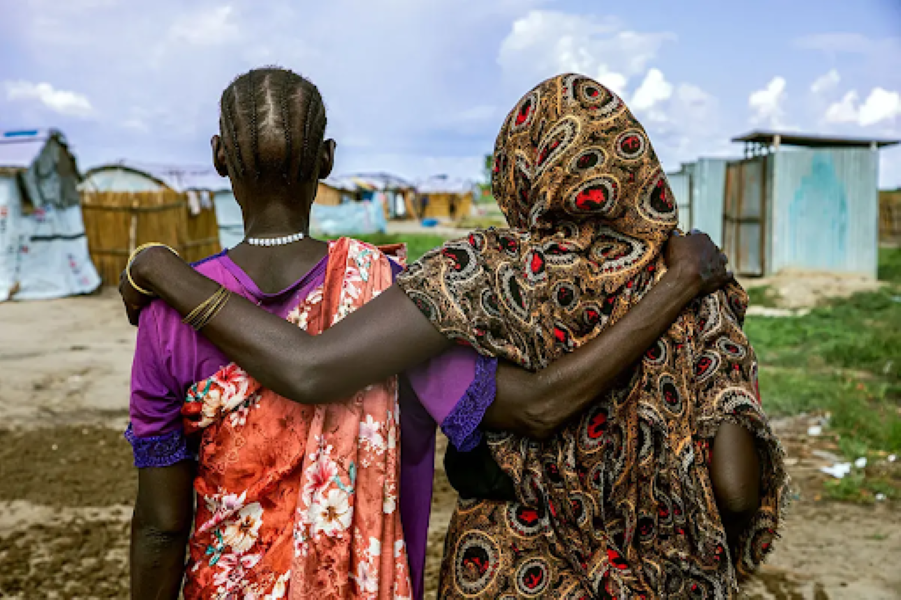
Sexual violence in Sudan’s civil war has become a deliberate tool of domination and displacement. Reports by Amnesty International and the United Nations Population Fund (UNFPA) describe systematic acts of rape, sexual slavery, and torture committed by the Rapid Support Forces (RSF) and other armed groups. These crimes, often public and organized, are not incidental; they are weapons of war meant to terrorize communities and erase social order. Since the RSF-Sudanese Armed Forces (SAF) conflict erupted in 2023, tens of thousands of people have been killed, and more than 11 million have been displaced. Amnesty International identifies this sexual violence as war crimes and potential crimes against humanity. UNFPA warns that over 12 million women and girls remain at risk, many trapped without access to any sort of medical or legal aid. This crisis reveals how sexual violence is used as a strategic method of warfare, demanding an international response that goes far beyond short-term humanitarian relief.
The Women, Peace and Security (WPS) agenda, as voiced in United Nations Security Council Resolution 1325 (2000), acknowledges that women are affected by conflict differently than men and includes their participation as a critically necessary component of peace. NATO adopted this agenda as a framework for integrating a gender perspective in all three of its mission areas: defence, crisis management, and cooperative security. The 2024 policy update of the WPS agenda articulated four areas of focus: gender-responsive leadership, participation, prevention, and protection. This further commits NATO member states to addressing conflict-related sexual violence and accountability with policies and standards sensitive to gender. Within NATO’s internal command structures, Gender Advisors and Focal Points are tasked with ingraining these perspectives into planning and operations. Gender advisors and focal points are also supported through partnerships with the UN, the African Union, and civil society networks. This support strengthens their ability to integrate gender perspectives in practice. This is because these partners provide cultural context, local knowledge, and information from affected communities. This helps gender advisors apply the WPS agenda more effectively. Their on-the-ground data, community feedback, and regional insight allow NATO to create gender-responsive policies that reflect real conditions in conflict areas and improve coordination with humanitarian groups. Together, these efforts show how NATO integrates gender perspectives in its work.
Meaningful action in response to sexual violence in Sudan must include justice, prevention, and recovery. This requires achieving justice through strong international coordination. An absence of accountability perpetuates sexual violence. NATO’s security coordination platform could support UN or African Union-led justice efforts by helping build investigative capacity, training local police forces, and implementing forensic investigation systems used in similar situations. A regional task force with the support of NATO could support the collection and preservation of evidence, in accordance with international legal standards, to ensure gender-based crimes are represented. This would lend greater credibility in prosecuting within domestic or international courts.
Prevention must also be understood as a key part of strategic security. Sexual violence in Sudan is not only a human rights atrocity; it is also a critical predictor of greater instability. Sexual violence is an indicator of the deterioration of social control and is likely to precede mass atrocities. NATO’s early warning and information sharing networks could be employed to incorporate gender-sensitive indicators which can track reports of assault, forced displacement, and weaponized sexual coercion as early warning indicators of conflict escalation. This could permit preventive diplomacy to de-escalate conflict with targeted sanctions. Reconceptualizing sexual violence as a type of warfare allows NATO to develop a clearer approach to early intervention with respect to international security institutions. This is more effective than treating sexual violence as an incidental byproduct of general conflict.
In addition, recovery and post-conflict support for Sudan are critical to any meaningful long-term response. The deteriorating health care system in Sudan means that the survivors of sexual violence are without access to services for any type of post-assault medical care or psychological treatment. A solution could be implementing NATO’s Science for Peace and Security Programme. This programme gives funding, expert support, and practical help for projects that address new security challenges. Building on these strengths, the programme is well-positioned to expand its partnerships and support initiatives that strengthen survivor protection and emergency response. This programme might be able to broaden its partnership framework and provide funding for mobile clinics, trauma counselling projects, and secure reporting methods. Protection of survivors should be included in negotiations for ceasefire agreements and in the post-conflict rebuilding of civilian governance systems. Moreover, women should not be excluded from participating in these post-war deals and agreements.
The conflict in Sudan provides NATO and the international community with an opportunity to rethink what “protection” is defined as under the WPS agenda. When sexual violence can both destabilize countries and force individuals into displacement, it should be thought of as a key consideration of international security strategy, rather than solely a humanitarian issue. The WPS framework already recognizes gender equality as a reflection of NATO’s values. However, simply implementing it as advice or training to others engaged in NATO-led missions rarely achieves a tangible outcome on the ground. This raises the issue of how NATO might broaden its WPS agenda to non-member states through partnership frameworks in a way that does not undermine national jurisdiction.
Sudan demonstrates that sexual violence is not just a moral issue; it is a structural issue aligned with power, inequality, and immunity. It also requires alignment across military, legal, and humanitarian frameworks for preventative measures against sexual violence to be effective. NATO’s WPS agenda is a very good start. However, it relies heavily on the political will of member states to act. Gender perspectives in strategic planning are no longer just symbolic; they are operationally necessary. Sexual violence in conflict strains community trust, damages governance, and ultimately makes it difficult to achieve lasting peace.
Sexual violence as a weapon of war in Sudan means action must be taken immediately. Defence alliances, like NATO, must include gender in all areas of operational planning to reduce the risk of sexual violence. This includes areas where there may be no direct presence from NATO. This will enhance humanitarian objectives while simultaneously supporting both the national interests of NATO member states and the interests of the broader international community by reducing displacement and recurring cycles of instability. Measuring success based on human security instead of geographic control helps ensure that protection from harm will be the primary focus. Combating sexual violence is, therefore, a key requirement in establishing sustainability and peace.
Ultimately, the protection of women and girls living in Sudan and elsewhere can only strengthen the credibility of the international security order. If sexual violence is tolerated as a weapon of war, international peace initiatives will always remain incomplete. NATO’s responsibilities as part of WPS commitments are clear. It must use its influence and partnerships, as well as its institutional capabilities. Essentially, NATO must build trust in protecting women by delivering on its promise to do so.
Photo: Women grapple with unplanned pregnancies after sexual violence in Sudan war. April 2024. Accessed via UN Women Africa.
Disclaimer: Any views or opinions expressed in articles are solely those of the authors and do not necessarily represent the views of the NATO Association of Canada.