


Recent News

On the Ground and in the Air: Canada’s Defining Role in NATO’s Military Healthcare

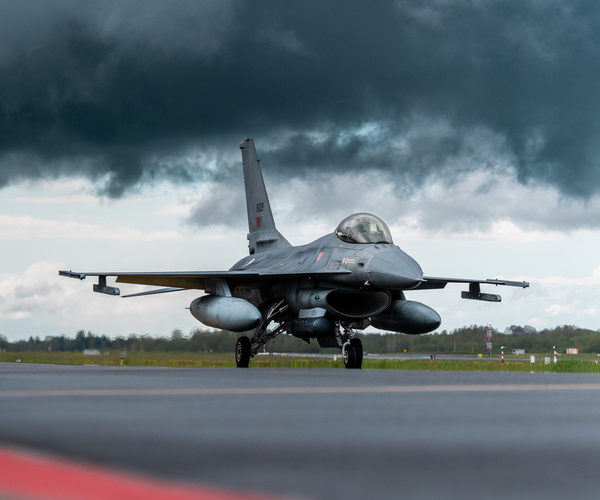
In this article, Sanam Singh argues that NATO’s medical system anchors every mission with Canada’s leadership enhancing its strength on the ground and in the air. The piece shows how Canada’s expertise positions NATO to confront the growing threat of cyberattacks targeting military healthcare.

Deterring and Proving Commitment: Canada and Task Force Latvia

Le rôle du Canada dans le renforcement du flanc sud de l’OTAN par l’innovation et le développement capacitaire

Guns vs. Butter – Canada’s 5% Defence Expenditure Commitment

Arctic Sovereignty through Airborne Surveillance: Canada’s Acquisition of Airborne Early Warning & Control (AEW&C) Systems

From Kyiv to Taipei: Why the Russian-Ukrainian War Matters in the Indo-Pacific

Alexander Morrow and Nataliia Dikalchuk explain why Ukraine’s fight matters far beyond Europe. The war is reframing deterrence in the Indo-Pacific, prompting Taiwan to prioritize self-reliant defence and pushing China to reassess Western unity. Their analysis highlights how democratic resilience in one region shapes security calculations in another.

The Philippines at a Crossroads: Domestic Politics and NATO’s Indo-Pacific Challenges 

A Model for NATO Engagement in South Asia: Why Working with India Makes Sense for Britain

Illuminating the Grey Zone: How NATO can help shape the Indo-Pacific’s Pre-Conflict Terrain

Beneath the Surface: China’s Deep-Sea Diplomacy in the Pacific Ocean

Apocalypse, Radiance, and Necessary Evils: Nuclear Attitudes Across NATO

Nuclear weapons are many things. Their fearsome power provokes millenarian musings of humanity’s penchant for self-destruction. They are a great force multiplier in international relations, raising the relevance of marginal states and confirming the dominance of powerful ones. They form a key part of NATO’s strategic rationale by serving as a deterrent against aggression.  Though Read More…

Special Report – Rural Exclusion and Right-Wing Politics: A Comparative Study of Germany and Canada

The Humanitarian-Security Balance: Canada’s Role in UN and NATO Peacekeeping Operations

“Patience, Tolerance, and Strength of Character of Her People:” Remembrance and Defence Policy

What NATO Forgot About Article II

Executing the Women, Peace & Security Agenda: Are International Human Rights Laws Able to Support NATO Commitments?

This article explores how international human rights law, through the CEDAW treaty, can help strengthen NATO’s Women, Peace, and Security (WPS) agenda. It looks at how CEDAW’s legal obligations can support NATO’s goals by adding stronger accountability for member countries. Using Canada as an example, the piece shows how combining legal commitment with political action can make real progress toward equality and women’s roles in peace and security.

When democracies censor: Alberta’s book ban and its contradiction with NATO’s mission to defend democratic principles

Jin, Jiyan, Azadî: The Enduring Resistance of Iranian Women

A feminist approach to navigating a world in flux.

The Societal and Political Treatment of Women in Politics

How NATO’s Innovation Lift Could Reshape Canada’s R&D System 

Innovation as strategic capital  NATO members are placing increasing emphasis on science, technology and industrial capability as part of collective defence. The recent commitment by allies to move toward defence spending of 5% of GDP, including higher levels of research, development and industrial investment, reflects a recognition that technological advantage affects deterrence, economic resilience and the ability to operate in contested environments.  This shift Read More…

Trusted site readiness: Canada’s edge in a shifting global FDI landscape

Vaccine Nationalism and COVID-19: Lessons for Future Pandemics

Sanctions and Security: Costs of Canada’s Global Credibility

NATO’s Resilience Agenda and Canada’s Agri-Food Reliability

Europe’s Land-Based Intermediate-Range Strike Capability Gap

The post-INF ground game has been moving fast in the past few months with long-term consequences for European security. Having successfully eliminated ground-launched intermediate-range missiles as a whole class of weapons from American and Russian Cold War inventories, the Intermediate-Range Nuclear Forces (INF) Treaty was a cornerstone of European security for so long that it was easy Read More…

How state-sponsored cyber strategies are undermining Canada and the west

Leveraging Dual-Use Research to Strengthen Canada’s NATO Contribution

Beyond the Front Line: Lessons from Ukraine’s Digital Battlefield

Science, Technology, and Strategic Foresight: Strengthening NATO for a Complex Future

What We Do Not Account For When Legislating Against Disinformation

In recent years, there have been increased calls for the Canadian government to introduce legislation against disinformation. Tighter laws have been requested in an attempt to reduce the digital flow of deliberately false information in Canadian political discourse around controversies like vaccines, especially during elections. For one, in 2022, Canada’s chief electoral officer Stéphane Perrault Read More…

Disinformation and Public Health in the Post-Pandemic Era: What COVID-19 Taught Canada and NATO About Resilience

The Culture of Distrust: : How AI Disinformation Exploits Polarization and Democracy

Canada at the Crossroads: Disinformation as a Domestic Security Challenge

Canadian Youth at the Intersection of Politics, NATO, and Disinformation

POWER PLAY IN THE ARCTIC: Part 4 – A New Partnership Model for Sovereignty in the High North

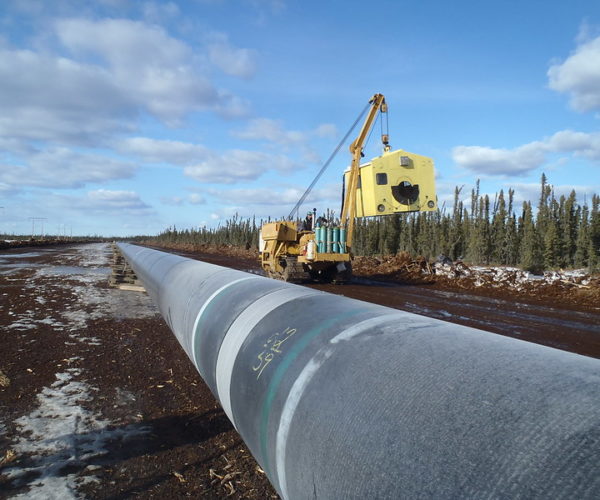
*This is the fourth instalment of a six-part series. Canada faces a number of challenges beyond those experienced by the Canadian Armed Forces that have further contributed to its inability to project sovereignty and security into the Canadian Arctic. These challenges have included: low Arctic population density, vast uninhabited areas, small remote settlements, and significant Read More…

Guardians of the Arctic: Indigenous Knowledge at the Core of Climate and Security Policy

Canada on Thin Ice: Securing Arctic Sovereignty

Brave New World: Canadian Armed Forces’ Climate Change Preparedness

Rising Sea Levels: The Peculiar Case of Pacific Island Nation Tuvalu and Canada’s Arctic 

In this series, the NATO Association of Canada in partnership with the NATO Research Group out of the University of Toronto, explore issues related to security, prosperity, and the international rules-based order.

Subscribe to Our Newsletter

* indicates required
/ ( mm / dd )

Corporate Members

Special Publication

Special Publication

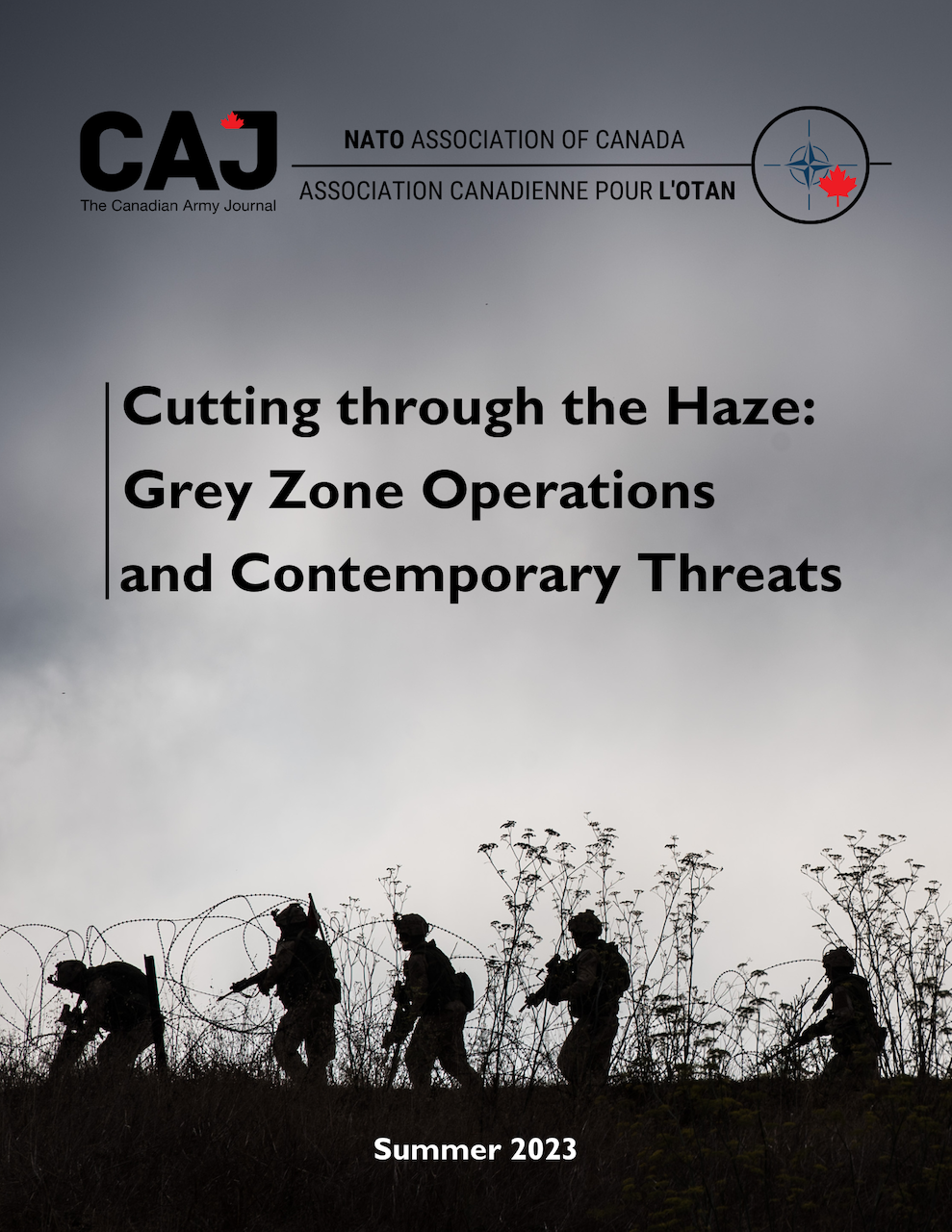
The NATO Association of Canada in partnership with the Canadian Army Journal (CAJ) announces the release of Cutting through the Haze: Grey Zone Operations and Contemporary Threats, eds. Christopher Maternowski and Aditi Malhotra (Summer 2023).

An inaugural collaboration between the NATO Association of Canada and the CAJ, this volume provides perspectives on issues relevant to grey zone operations and other topics from experts within the North American defence and security community. The volume emphasizes the growing importance of the grey zone and the role of defence innovation in grey zone and conventional operations.

Special Publication

Special Publication

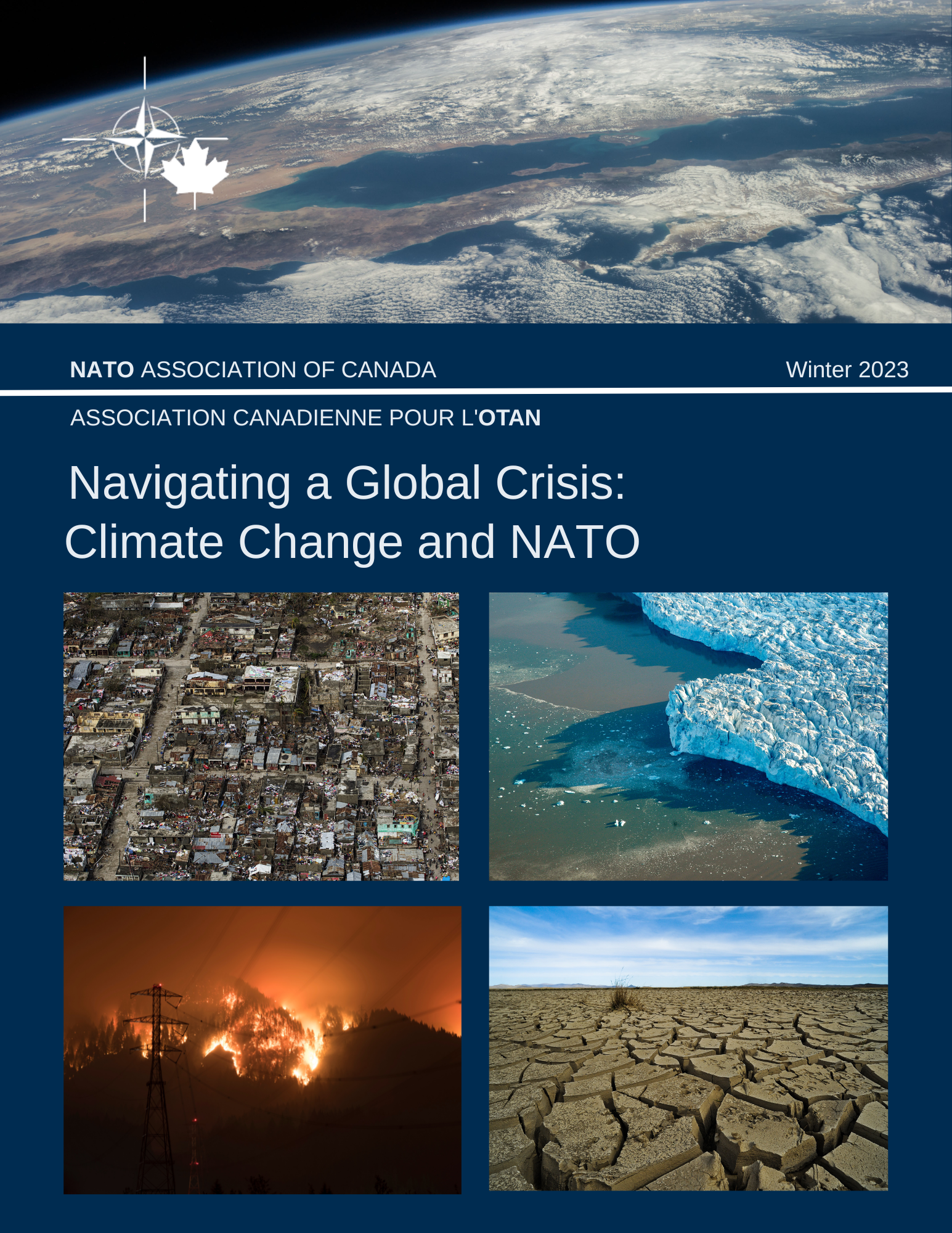
The NATO Association of Canada has released its Winter 2023 special publication.

In Navigating a Global Crisis: Climate Change and NATO, ed. Christopher Maternowski, leading authorities offer insights on what rising temperatures mean for international security and NATO. The volume explores the many ways in which climate change constitutes an urgent concern for the international community and a threat on which NATO and other intergovernmental organizations must increasingly collaborate and act.

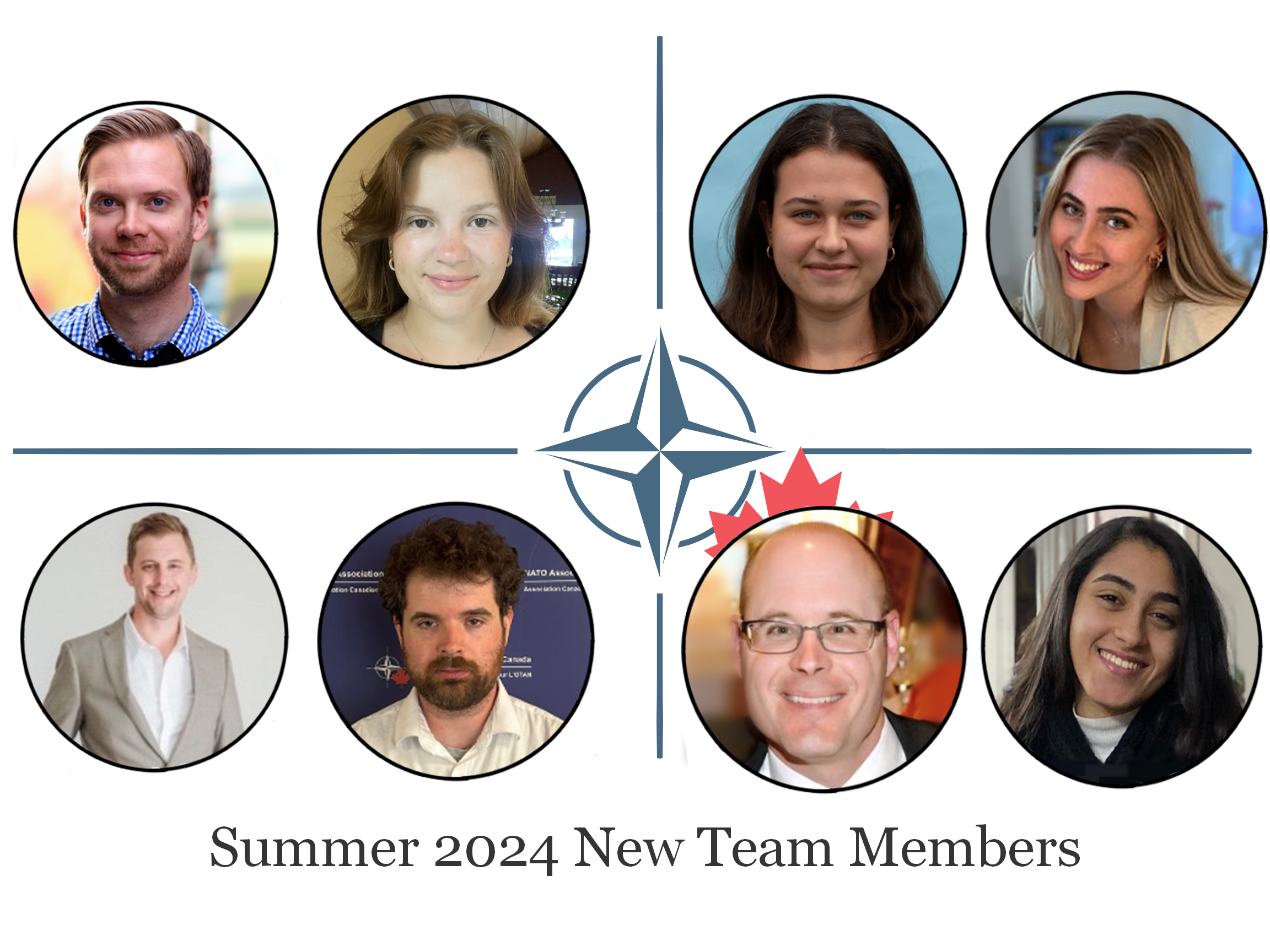
Meet the Team

Meet the Team