

Recent News

From Caracas to Canada: What U.S. Doctrine Means for the Northwest Passage 

Following the American intervention in Venezuela, Jonah Moffatt assesses the “Trump Corollary” outlined in the 2025 National Security Strategy, and what this hemispheric vison of security means for the long-contested Northwest Passage. He argues that through diplomatic coordination with its Nordic allies, Canada can utilize the forum and frameworks of NATO to protect its national interests while emerging as a leader of multilateralism in a time of uncertainty.

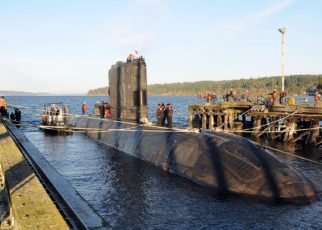
Rearming the Depths: How Canada Is Reclaiming Undersea Sovereignty

A SAFEr Bet for Canada? How the €150-Billion SAFE Program Is Pulling Ottawa Closer to Europe

Russian Drones in Europe: New Tools of Hybrid Warfare

Canada’s $200 million aid package to Ukraine: Geopolitical and Domestic Implications

Xi Jinping 02, credit: Trong Khiem Nguyen

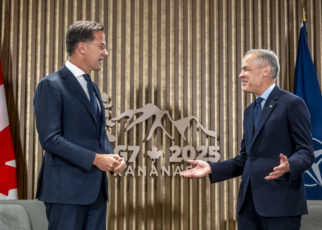
Hedging with the Dragon: Mark Carney’s China Visit and Canada’s Search for Strategic Autonomy 

What does Mark Carney’s decision to re-engage China signal about Canada’s strategic options in a more coercive global economy? Tasneem Gedi argues that Ottawa’s limited recalibration with Beijing reflects an unavoidable strategy of hedging amid U.S. unpredictability. While such engagement may expand Canada’s room for maneuver in an increasingly coercive global economy, it carries risks and thus must be pursued narrowly, conditionally and in close alignment with Canada’s alliance commitments.  

What’s at Stake for Canada in the Indo-Pacific?

Japan’s Military Revival and North Korea’s Escalation: NATO’s New Indo-Pacific Challenge

Rupture and Fury: Can Canada Build a ‘Counter-Power’ Model of Cooperation in a World Reordered? 

For Shame Upon the World: Lessons from the Crushing of Hong Kong

Au-delà des armes : la fragilisation des systèmes de santé comme stratégie de guerre et decoercion

Dans les conflits armés contemporains, la violence ne se limite plus aux affrontements militairesdirects, mais s’étend à des leviers indirects visant à affaiblir la résilience des sociétés civiles. Elles’étend désormais aux infrastructures civiles essentielles, et en particulier aux systèmes de santé,qui sont de plus en plus pris pour cibles de manière délibérée. Pourquoi la destruction Read More…

Le plan de Donald Trump pour l’Ukraine : percée diplomatique ou fantasme géopolitique ?

Fighting the Culture of Disruption: NATO’s Role in Countering External Sabotage and Homegrown Terrorism in Europe 

Special Report – Arma et Litterae: Reuniting Canada’s Civic Foundations

For Shame Upon the World: Lessons from the Crushing of Hong Kong

Parité ou Fragilité : Pourquoi l’Exclusion des Femmes Affaiblit la Sécurité Internationale

Au cours de la dernière décennie, il est clair que lorsque les femmes participent aux décisions de sécurité, la paix est plus durable. Une étude portant sur plus de 180 accords montre que ceux impliquant des femmes ont 35 % de chances supplémentaires de durer au-delà de quinze ans. Dans le Sahel, leur participation à Read More…

Shifting Priorities in Ukraine: Is NATO’s WPS Agenda Under Threat?

Divide and Conquer: How Gender-Based Disinformation Weakens Western Militaries

Operation Equal Opportunity: Canada as a Model For Women in Combat Leadership

An Intersectional Lens on Meaningful Engagement, Participation, and Decision-Making Roles of Women in Combatting and Preventing Violent Extremism

L’après-Doha et la perspective d’un « OTAN arabe »  

Au lendemain des frappes aériennes israéliennes contre Doha en septembre 2025, plusieurs États arabes et musulmans ont relancé l’idée d’une alliance militaire collective inspirée de l’Organisation du traité de l’Atlantique nord (OTAN). Cette proposition, parfois désignée comme « OTAN arabe » ou « OTAN islamique », vise à créer un cadre de sécurité régional fondé Read More…

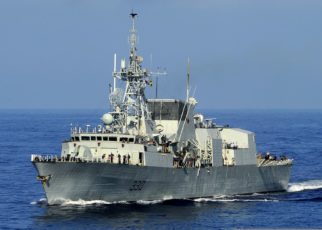
NATO at Sea and Canada’s Trade Lifelines 

Do Indices Decide Defence Financing More Than Laws Do?  

The Economics of Maritime Risk and its Impact on Prices  

Treating Freshwater as Strategic Capital For Canada’s Agri-food Reliability 

Canada’s Arctic Surveillance at Risk, Are Space Capabilities Enough to Defend Sovereignty?

The Arctic, a remote and expansive region, is heavily reliant on satellite surveillance to maintain domain awareness. As climate change accelerates, increased access to the region, along with its growing strategic and economic value, has drawn heightened interest from states such as Russia and China. The interests and activities of these actors raise security concerns Read More…

Canada Already Entered the Quantum Era: Is it Exposed or Ready for What Comes Next?

Europe’s Land-Based Intermediate-Range Strike Capability Gap

How state-sponsored cyber strategies are undermining Canada and the west

Leveraging Dual-Use Research to Strengthen Canada’s NATO Contribution

The Role of Government in Combating Gender-Based Disinformation 

In July, 3 employees of TBH Skincare, an Australian brand, took part in a TikTok trend where participants described their physical attributes and pieces of clothing in a singsongy fashion. After the post went viral, various internet users began attacking the trend participants, with some insisting that they were the cause of the “downfall of Read More…

How Disinformation is Distorting Canada’s Climate Reality  

Why We Believe: The Psychology of Misinformation and the Fragility of Collective Consciousness

How Disinformation Is Eroding the Skill of Democratic Conflict

How Fakes Become Facts In Three Steps

Power Play in the Arctic: Part 6 – Cold Fronts, Hot Choices: Dr. George Soroka Looks Ahead

*This is the final instalment of a six-part series. For the final instalment of the “Power Play in the Arctic” series, Marcus Wong (MW) sat down with Dr. George Soroka (GS) of Harvard University’s Department of Government, who also serves as Executive Officer of The Harvard Academy for International and Area Studies at the Weatherhead Read More…

When Climate Risk Becomes a Security Issue: NATO’s Response to a Changing Threat Environment

The Great Power Rivalry in the Arctic: USA, Greenland, and Canada

Human Welfare over Emissions: Bill Gates and a New Climate Discourse

The Economicization of Climate Change: Federal Budget 2025

In this series, the NATO Association of Canada in partnership with the NATO Research Group out of the University of Toronto, explore issues related to security, prosperity, and the international rules-based order.

Subscribe to Our Newsletter

* indicates required
/ ( mm / dd )

Corporate Members

Special Publication

Special Publication

The NATO Association of Canada in partnership with the Canadian Army Journal (CAJ) announces the release of Cutting through the Haze: Grey Zone Operations and Contemporary Threats, eds. Christopher Maternowski and Aditi Malhotra (Summer 2023).

An inaugural collaboration between the NATO Association of Canada and the CAJ, this volume provides perspectives on issues relevant to grey zone operations and other topics from experts within the North American defence and security community. The volume emphasizes the growing importance of the grey zone and the role of defence innovation in grey zone and conventional operations.

Special Publication

Special Publication

The NATO Association of Canada has released its Winter 2023 special publication.
In Navigating a Global Crisis: Climate Change and NATO, ed. Christopher Maternowski, leading authorities offer insights on what rising temperatures mean for international security and NATO. The volume explores the many ways in which climate change constitutes an urgent concern for the international community and a threat on which NATO and other intergovernmental organizations must increasingly collaborate and act.
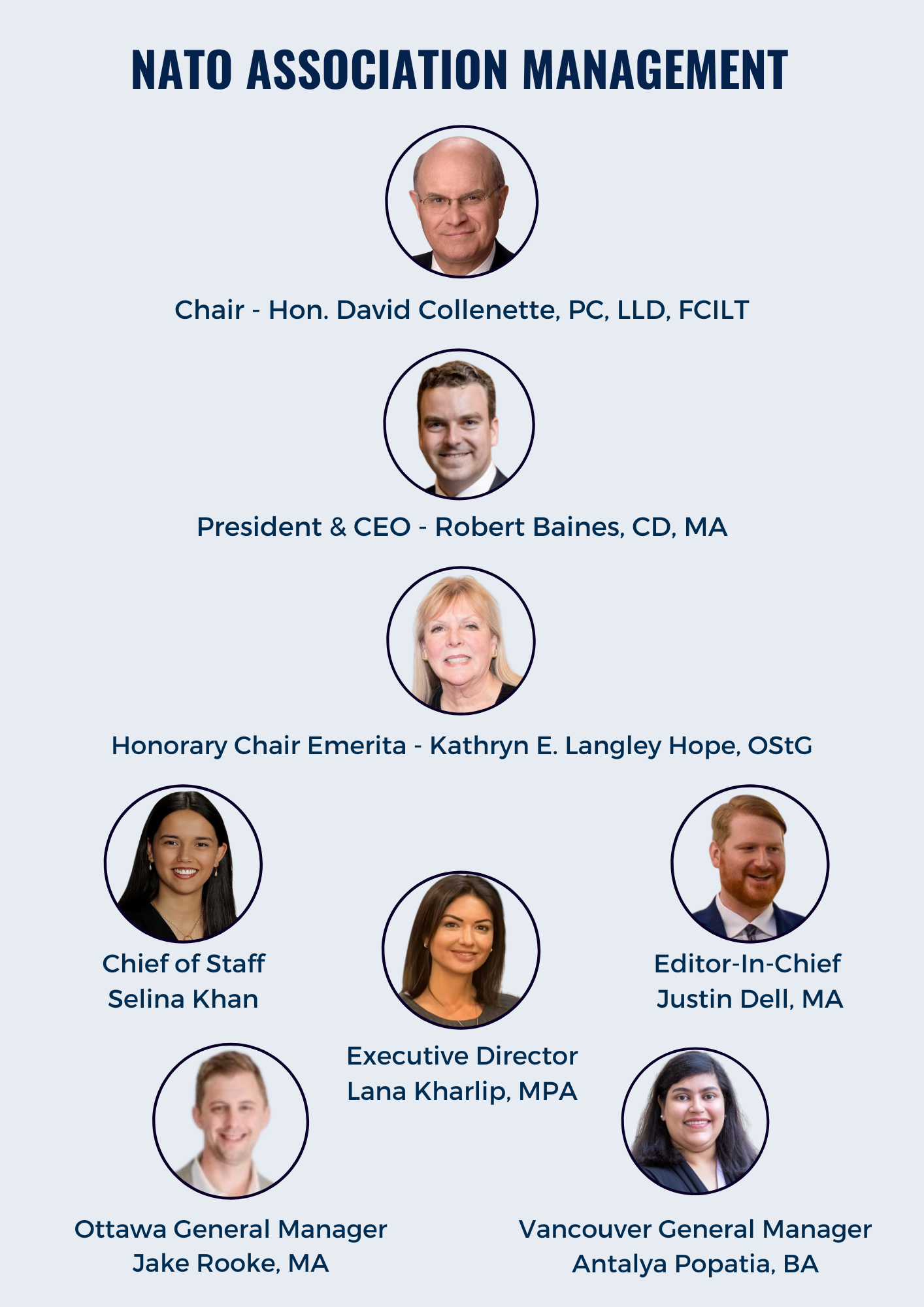
Meet the Team

Meet the Team