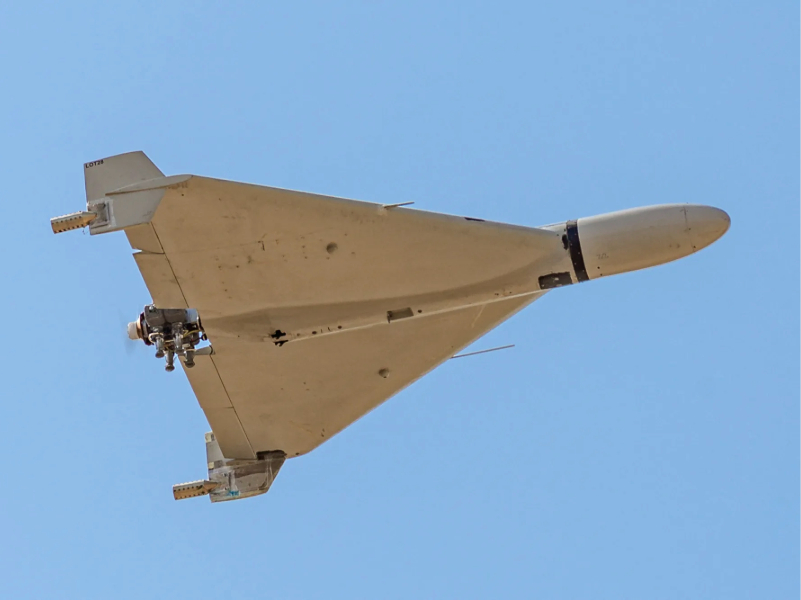
Drones are the new tool of Russian hybrid war. Having already deeply shaped the Russian way of war in Ukraine, the use of unmanned aerial vehicles (UAVs) is increasingly prevalent in Moscow’s grey-zone tactics against Europe. In recent months, there have been several incursions by Russian drones in NATO airspace. The first took place in Poland on September 9th 2025, during which the Polish armed forces shot down three UAVs. This prompted a response from NATO air forces, with Polish, Dutch, and Italian aircraft. Since then, Romania’s airspace has been violated by Russian drones several times.
Closely related is the significant number of incidents of small drones flying around critical infrastructure across Europe. Since September, a growing number of unidentified drones have been detected around military bases, power plants, and airports. Most recently, on December 4th, unidentified UAVs flew close to a French naval base that hosts nuclear ballistic missile submarines. While attribution for these events is difficult, if the accusations by many European countries are true, then they are likely conducted by Russian clandestine networks, which has been confirmed in some cases.
These drone incursions constitute an escalation in Russia’s hybrid warfare against Europe, which has for years sought to erode the NATO alliance, disrupt Eastern European states, and most recently interfere with the continent’s support for Ukraine. This comes as a result of the lack of progress toward success in Ukraine with no forthcoming peace agreement, pushing Russia to erode support for and divert attention away from Kyiv. Further, Moscow is taking advantage of uncertainty about US commitments to European defence to erode the cohesion of NATO.
For Canada, this drastic uptick in grey-zone aggression should not be taken lightly, as it displays Moscow’s willingness to upset European security and its motivation to achieve its objectives in Ukraine. Considering Ottawa’s diplomatic and economic interests associated with its European partners and its commitment to their defence through NATO’s Article 5, which commits all members of the alliance to come to the defence of others, these developments should not be ignored.
Russia’s hybrid warfare
For almost two decades, Russia has been taking various aggressive actions against European countries. Often coined as hybrid warfare or grey-zone operations, these acts are efforts to shape the political environment without resorting to war. The use of UAVs in this strategy is the latest development of this approach and is a marked increase in Moscow’s boldness.
Russia’s hybrid/grey-zone strategy against Europe has been based on staying below the threshold of war while influencing the political situation. This approach exploits the fact that under a certain level of significance, a state would be hard pressed to escalate toward a military conflict in response to a very minor act. By committing aggressive or disruptive acts at a small scale, Moscow hopes to progressively change the status quo in its favor.
It is likely that Russia has several aims for this strategy. Undoubtedly, since 2022, Russia has aimed to erode support to Ukraine by imposing costs on states that have provided aid and by disrupting the information and political environment to hamper the coordination efforts of the West. Before this, however, the objective was to prevent states from joining NATO and erode the cohesion of the alliance. President Putin has painted his country’s relationship with the West as a confrontation and has tied his legitimacy to defending Russia, which motivates Moscow to continue its aggressive actions.
Russia’s hybrid strategy is composed of a large variety of means that, while being under the threshold of war, undoubtedly go against established international norms of state behavior in peacetime. Many of Russia’s means have been intangible, such as the conduct of cyber operations and information warfare for over a decade, and the financing of far-right parties in hopes of shaping the political landscape. But Moscow has increasingly operated in physical space, removing buoys from its river border with Estonia and conducting an extensive sabotage campaign across Europe. This constitutes an increase in the potential effect of Russian’s tactics as they use increasingly impactful means. Further, it points to a progressive desensitization of what is considered outside the ordinary in Europe.
Moscow’s motives
Russia’s growing use of drones as a tool of hybrid warfare against Europe constitutes an escalation that follows the trend of increased physical interference in the affairs of other states. After years of grey-zone tactics, Moscow has increasingly desensitized the West to the point where it can now increase the magnitude of its aggression without triggering a strong response from NATO. This testifies to a possible erosion of the deterrence posture of the alliance.
It is likely that Russia has multiple motives for stepping up its hybrid warfare. Arguably, there is an intrinsic benefit to this escalation in the means of hybrid warfare. By normalizing such aggression, Moscow creates more room for it to operate in the future. It is possible that the drone incursions in Poland and elsewhere may be intended to test NATO’s readiness and ability to address air-based threats. Considering that these incursions have been repeated, they could constitute an effort to disrupt NATO air defence capabilities, akin to how China’s daily incursions in Taiwanese airspace have taken a toll on the island’s air force.
As for the small UAV incidents that could be conducted by Russian clandestine networks, these could be serving both operational and psychological objectives. Considering that recorded events have taken place around critical infrastructure, they may be intended as reconnaissance missions in support of the ongoing sabotage campaign or in advance of future strikes in the event of a conflict. The intended aim may only be to cause temporary paralysis as authorities respond to unidentified drones around sensitive sites. However, the target may also be the European population. Regular unattributed incursions could foment a climate of fear and uncertainty, which could erode popular support for Ukraine and shift the focus of governments toward their own defence.
Countering grey-zone aggression
The European Union and NATO have developed responses to these changes in Russia’s approach to hybrid warfare. Germany and Romania are updating their rules to allow for drones flying close to sensitive sites to be shot down. The EU has announced the development of a ‘drone wall,’ an envisioned air defence system which would be operational by 2027. It would be composed of a multi-layered network of sensors and weapons stretching from the Baltic to the Black Sea, capable of identifying and destroying UAVs. Meanwhile, NATO has launched Operation Eastern Sentry to improve response against air incursions, to which eight countries have committed military assets. Poland and Romania are deploying new air defence systems specifically designed to counter drones.
For Canada, these developments should garner attention and further monitoring as they foreshadow further complications to the European security environment. Drone incursions could progressively shape the outlook of European states as they focus on defending their own territory in lieu of supporting Ukraine’s war effort against the Russian invasion. Further, increased Russian aggression could impact Canada directly. This is due to the risk of escalation, which could trigger Article 5 commitments and the presence of Task Force Latvia, which is in close proximity to potential areas of incursions. Considering Ottawa’s economic and diplomatic interests related to its European partners, the prospect of further instability, disruptions, and potential conflict warrants consideration of what must be done in response to Russia’s increased aggression.
Photo: Iranian-made Shahed drone. Source: AFP / Getty Images.
Disclaimer: Any views or opinions expressed in articles are solely those of the authors and do not necessarily represent the views of the NATO Association of Canada