En temps de guerre, certaines formes de violence s’imposent immédiatement à l’attention : bombardements, combats de rue ou destructions d’infrastructures. D’autres formes de violence, pourtant comparables en termes d’impact social et politique, demeurent structurellement sous-intégrées aux cadres d’analyse sécuritaire. C’est le cas de la violence sexuelle, largement documentée dans de multiples conflits contemporains. Cette violence Read More…
Articles
The Parity Imperative: Why Women’s Political Representation is Imperative to NATO’s Peace and Security Agenda
Women’s political representation is an integral condition for achieving durable peace, however, progress toward parity has begun stalling recent years. This article examines the mechanisms through which women’s substantive political representation produces positive outcomes for NATO’s peace and security agenda. The NATO Alliance must cultivate a political order where women lead, not only as a gender equity imperative but as a peace imperative, as women’s leadership presents the surest defence against adversaries seeking to destabilize the Alliance.
Truly Transatlantic: German-Norwegian Submarines for a European-Oriented Canada
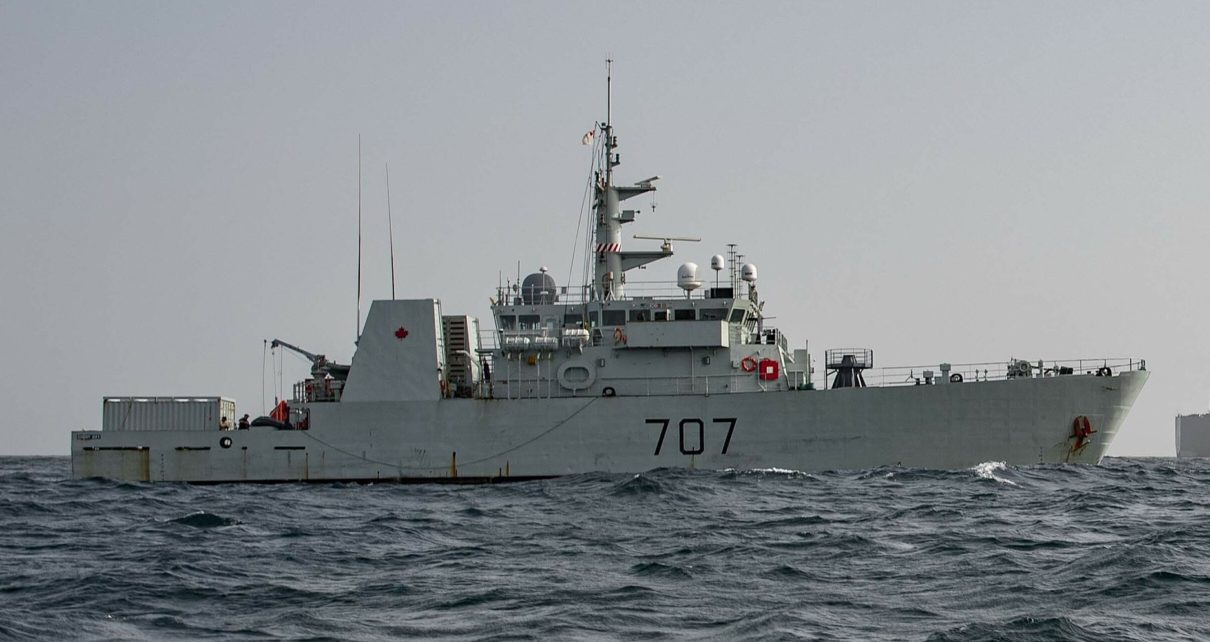
Like much else in the Canadian Armed Forces, the Royal Canadian Navy’s submarine fleet is rapidly aging out. The RCN’s second-hand Victoria-class diesel-electric submarines, built for the Royal Navy in the 1980s, will reach the end of their service life in the 2030s. The four Victoria-class submarines are already showing signs of their age, having become Read More…
Iran Precedent: Canada’s Support Without Participation
As the US and Israel’s campaign against Iran continues, it has potential to draw NATO, and Canada as a member of the alliance into uncharted territory. Canada finds itself walking a diplomatic tightrope: offering political support to its allies while firmly keeping its troops out of the fight. This “support without participation” stance has allowed Canada to preserve alliance solidarity and avoid military overreach, but it’s increasingly tested as missiles enter NATO airspace and resources grow thin across theaters. With European allies diverging in their responses, the big question remains: how long can political backing alone satisfy an alliance under mounting pressure? For now, Canada is banking on de-escalation but the Tehran precedent, though on a two-week pause, is still very much a work in progress.
Canada’s C7 and C8 Transition in the Context of NATO Modernization
This article examines Canada’s decision to replace the Canadian Armed Forces’ C7 and C8 rifles alongside similar service rifle modernization efforts in France, Denmark, and the United Kingdom. It examines that the replacement is not driven by age alone, but by the need for greater adaptability, compatibility with modern accessories, and continued effectiveness across different operational settings. Rather than pointing to a single NATO-wide process, these cases reflect a broader pattern among several allies seeking to update the equipment carried by frontline personnel. Together, they show that service rifle replacement has implications not only for readiness, but also for interoperability, training, maintenance, and longer-term defence planning.
Canada’s Dual Exposure to the Strait of Hormuz
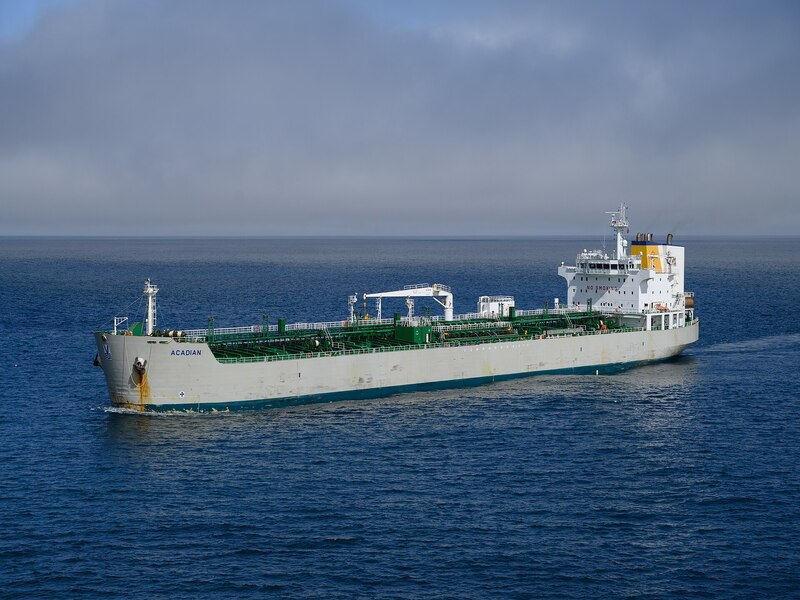
The Strait of Hormuz is barely 30 miles wide at its narrowest point, yet it is arguably one of the most consequential stretches of water on earth. Through this narrow corridor connecting the Persian Gulf to the Gulf of Oman flows approximately 20 million barrels of oil per day (b/d); roughly 20% of global petroleum Read More…
Title: New Fault Lines: Undersea Cables and the Fragility of Indo-Pacific Connectivity
Narayan Srivastava explores how the weaponization of subsea connectivity threatens the backbone of the global economy and cloud infrastructure across the Indo-Pacific region.
What’s Next for Canada and Carney’s ‘Variable Geometry’ Strategy in the Indo-Pacific?
What is Mark Carney’s ‘variable geometry’ strategy, and does it differ significantly from previous concepts of Canadian foreign policy? In this piece, Joel Sawyer (Indo-Pacific and NATO Junior Research Fellow) analyzes continuity and change in Canada’s Indo-Pacific engagement across the current decade, what variable geometry offers, and the challenge posed by worsening global economic conditions.
Canada’s Indo-Pacific Turn: What Carney’s Tour Signals for the Future of Canadian Partnerships
In his latest piece, Narayan Srivistava argues that Carney’s Indo-Pacific tour was a deliberate push to diversify Canada’s partnerships, improve ties with both developing and developed countries in Asia, and integrate Canada more securely inside the economic and geopolitical networks shaping the region’s future.
After the Lull: Why Renewed Chinese Military Pressure on Taiwan Matters
How should NATO respond to growing strategic links between the Taiwan Strait and the Euro-Atlantic theatre? In this article, Nguyen Bao Han Tran examines China’s calibrated military pressure on Taiwan and argues that NATO must prepare for the indirect consequences of a Taiwan contingency, from defence-industrial strain to cross-regional deterrence challenges.