NATO’s cyber defence community has spent the past two years treating civilian communications infrastructure as contested ground. Suspected Russian– and Chinese-linked vessels have severed undersea fibre-optic cables in the Baltic Sea at least four times since late 2024, prompting the Alliance’s first coordinated response to infrastructure sabotage. North Korean state operatives have built a multibillion-dollar scam economy that the U.S.Treasury says directly funds Pyongyang’s weapons programs. Against this backdrop, the wave of scam and spoofed phone calls hitting Canadian households looks less like a nuisance and more like the consumer-facing edge of a threat environment NATO already takes seriously.
For many Canadians, the smartphone has become less a tool of connection than a channel for new suspicions. Rampant scam calls spoofing banks, government agencies, and even family members have become routine, and older Canadians often face the greatest harm when these scams succeed.
NATO’s own institutions frame this problem explicitly. The Cooperative Cyber Defence Centre of Excellence (CCDCOE) researches and trains on exactly the kind of network-level exploitation that scam and spoofing operations depend on — vulnerable authentication, spoofable identifiers, and gaps between national telecom regimes that adversaries and criminal actors alike can exploit. NATO’s Strategic Communications Centre of Excellence (StratCom COE) in Riga studies how hostile state and non-state actors weaponise these same channels — including phone-based social engineering — to spread disinformation and manipulate populations, warning that “cognitive warfare” increasingly targets the trust citizens place in the calls they receive.
The Canadian Radio-television and Telecommunications Commission (CRTC) has consequently taken on a larger national-security role—not as part of Canada’s military or intelligence apparatus, but as the body shielding Canadians from caller ID spoofing, robocalls, and phishing. These scams aren’t just consumer nuisances; they’re social-engineering attacks on telecom infrastructure that manipulate trust and cause financial harm, placing them within the Alliance’s cyber and hybrid-threat mandate for a channel reaching nearly every household.
The CRTC’s most important step was mandating STIR/SHAKEN, a caller ID authentication framework for IP-based voice calls. These measures operate on the back-end of telecom networks, so Canadians need only enable the span-filtering feature offered by their providers. spam‑filtering features offered by their providers. The CRTC has also pushed providers to block calls with malformed or impossible caller ID information at the network level, shifting the burden from consumers to the networks that carry the traffic. This is precisely the kind of network-hardening the CCDCOE researches in other cyber domains.
Most notably,however, is the recent move toward AI-assisted call filtering. In 2020, Bell Canada received CRTC approval to test artificial-intelligence tools designed to analyse telecom traffic, detect anomalies linked to fraudulent robocall campaigns, and block suspicious calls at the network level. This marks a shift from static rules towards adaptive filtering, which is closer to the kind of tools used in email security and financial fraud detection. Public reporting later noted that Bell’s filtering systems blocked more than 1.1 billion fraudulent calls between July 2020 and October 2021, suggesting that network-level intervention can make a measurable difference when policymakers provide necessary backing for more aggressive techniques.
Still, Canada’s current system retains some flaws. STIR/SHAKEN applies mainly to IP-based calls, which means it cannot eliminate scam traffic routed through older infrastructure or foreign networks that use \different verification standards. In 2025 alone, Canadians lost between $7 and 14 billion to scam calls. Caller authentication also cannot stop every scam call from reaching consumers; in many cases, it simply helps identify the call as suspicious. This matters because many scam operations are transnational, low-cost, and highly adaptive, relying on spoofed numbers, voice-over-IP tools, and cross-border infrastructure to hide their origin and scale.
The Government of Canada states that fraud is the most prevalent crime against older Canadians, who are targeted more than other age groups. In 2024, the Centre again warned Canadians about the “grandparent scam,” in which a caller claims that a loved one is in trouble and urgently needs money, a tactic that often targets seniors through home phones and emotional pressure. Even where younger groups may report more fraud attempts overall, older Canadians often suffer deeper financial losses and greater emotional harm when scams succeed.
Although phone scams may seem far removed from traditional defence issues, they fit into a broader NATO conversation about resilience and the protection of civilian communications systems. NATO’s resilience agenda under Article 3 emphasises that allied security depends not only on military readiness, but also on resilient civil infrastructure, including telecommunications and cyber networks that can function under crisis conditions. Scam calls do not amount to collective-defence incidents, but they do exploit weaknesses in the same communications environment on which public trust and national stability depend. In that sense, Canadian efforts to strengthen caller authentication, enable network-level blocking, and support AI-assisted filtering align with a wider allied emphasis on protecting the civilian foundations of security. NATO and key allies increasingly treat large‑scale phone scams as part of the broader hybrid‑threat landscape targeting civilian communications.
The broader lens of resilience and allied security matters because scam calling is now a globalised industry. Canada cannot regulate its way out of the problem through domestic telecom rules alone. Where fraud networks rely on foreign infrastructure, false caller identities, and rapid adaptation, Canada will need tighter coordination among telecom regulators, the Canadian Anti-Fraud Centre, law enforcement, and international partners. A stronger public response should focus on three priorities: expanding AI-assisted filtering more consistently across carriers, improving public transparency about how many calls are blocked and by what methods, and designing senior-focused fraud awareness and reporting tools that are easier for older Canadians and caregivers to use.
The CRTC has already shown that this challenge can be tackled with a mix of regulation, technological innovation, and enforcement. Caller ID authentication, network-level blocking, and AI-assisted filtering have moved Canada beyond passive complaint systems and toward a more active defensive posture. Yet the persistence of spoofed and scam calls shows that Canada is still reacting to a fraud ecosystem that adapts quickly and preys on trust at scale. Guarding the line, then, is not just about stopping nuisance calls. It is about protecting Canadians—especially seniors—and strengthening the resilience of the communications systems on which public trust increasingly depends.
Although consumer phone scams are not themselves collective‑defence incidents, they sit close to issues that NATO increasingly identifies as hybrid threats and vulnerabilities in civilian infrastructure. Large‑scale social‑engineering campaigns, enabled by weak caller authentication and permissive global telecom routing, can be repurposed to spread disinformation, disrupt emergency communications, or erode public trust in official channels. In a crisis, the same techniques used to defraud seniors could be used to impersonate government authorities, emergency services, or even allied institutions, complicating crisis response and undermining confidence in legitimate warnings.
Looking ahead, Canada and its NATO partners could act on three fronts: standardising AI-assisted filtering and caller authentication across allied telecom networks, treating large-scale phone scams as a strategic vulnerability rather than a consumer issue, and building joint awareness campaigns for the most exposed groups, especially seniors. Together, these steps would shift Canada and its allies toward proactively hardening telecom infrastructure and coordinating internationally—cutting fraud while reinforcing public trust in the institutions people rely on.
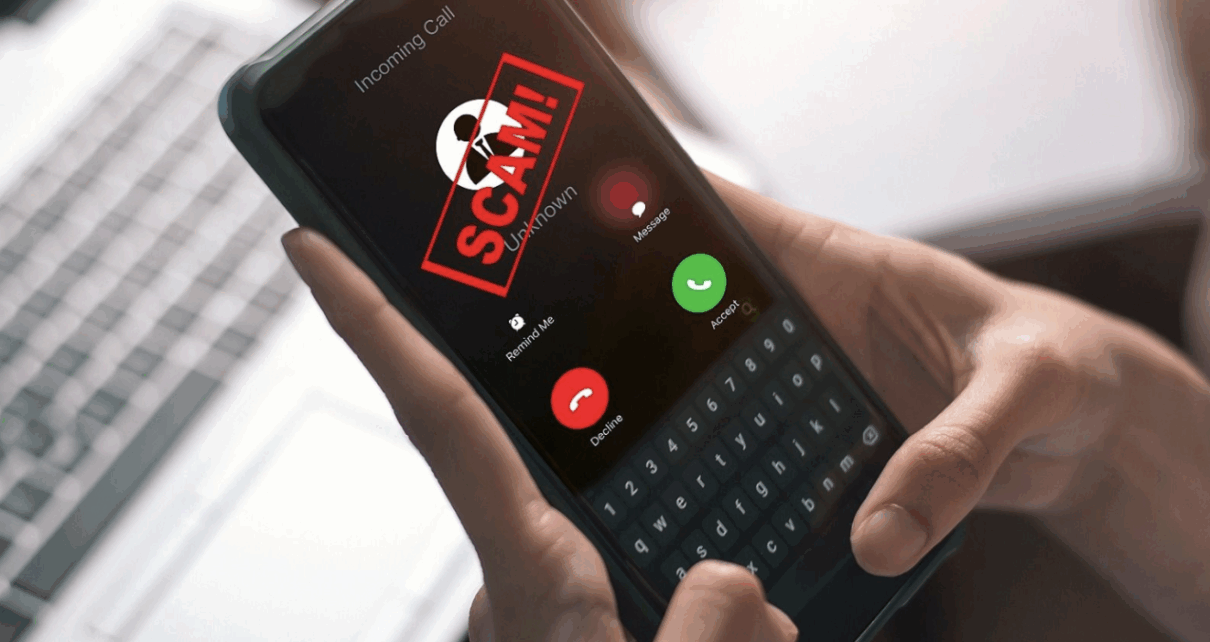
Photo: Scam Warning: Never Respond If Someone Calls You And Uses These Phrases
Disclaimer: Any views or opinions expressed in articles are solely those of the authors and do not necessarily represent the views of the NATO Association of Canada.