
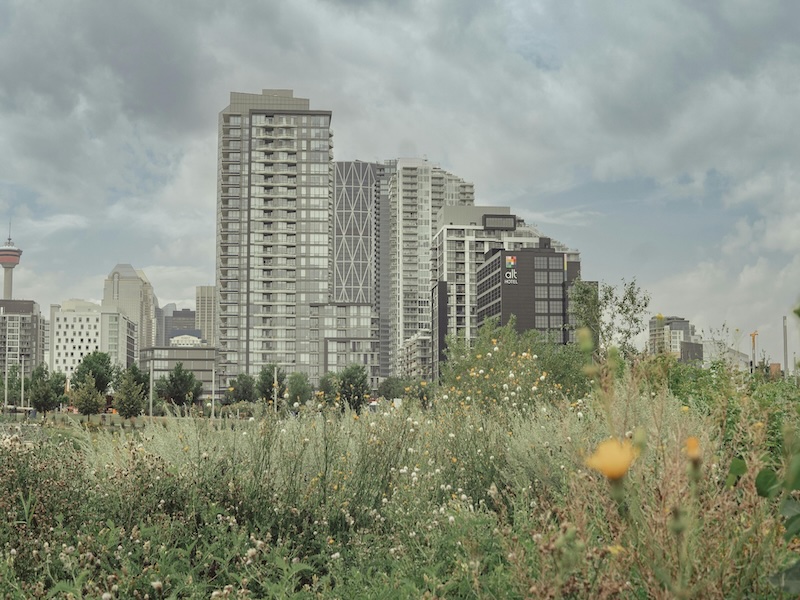
To understand the political realities of Canada and Germany today, one must begin with a map. In both countries, polarization takes shape not just in rhetoric but in the growing distance between city skylines and rural streets.
Politics has been reorganized by a new geography of power, with cities now concentrating population, investment, and cultural influence. In response, rural and post-industrial regions recognize that the state exercises its authority not only through the law but also through the deliberate allocation of space and resources.
By 2023, 82% of Canadians lived in urban centers. Germany follows a similar pattern, with more than three-quarters of its population in urban areas. Yet, the countryside in both countries has not vanished. Conversely, Canada and Germany were the only G7 nations to have positive rural population growth in recent years.
The people who live outside the metropolitan cores are still there – paying taxes, voting, and increasingly organized around the view that national priorities are written for someone else. The countryside is not emptying out; it is staying put and drawing a political conclusion – if benefits follow density, then the only reliable way to be heard is to vote as a bloc and to support parties that promise to restore national belonging and cohesion on their terms.
Spatial Statism
The result is a reconfiguration of how the state’s authority is perceived. The logic of spatial statism offers a solid lens for understanding why rural populations in Canada and Germany increasingly view national politics as a system that reallocates their resources toward urban centers and, consequently, newcomers.
Under this concept, the authority of the state is not assessed exclusively by legal outputs or budget totals, but by the visible geography of public investment and the lived experience of everyday life. When rural hospitals face budget cuts and regional infrastructure projects are delayed while new clinics, transit lines, and settlement programs proliferate in metropolitan areas, these patterns are not seen as isolated events. Rather, they are interpreted as a coherent signal that the priorities of the state align with urban interests and with the integration of immigrants, who largely reside in these cities. This perception is further intensified when national political discourse focuses on funding for settlement services, language courses, and multicultural programs in urban centers, while rural concerns are addressed through calls for patience or deferred promises.
For many residents outside the core urban cities this produces a sense that the social contract has shifted. Their tax contributions and willingness to comply with national priorities come to feel like they are supporting not only the growth of urban centers, but also the settlement and integration of migrants who are often viewed as outsiders to the established national community.
What matters here is not only how resources are distributed, but also the underlying message these policies communicate. When certain populations and places receive ongoing investment and attention, while others are repeatedly asked to adjust or accept less, it suggests to some that certain groups are consistently valued over others. This perceived hierarchy shapes how rural and peripheral communities understand their place in the nation and fuels the sense of being left behind. What may have begun as pragmatic frustration over infrastructure gaps or health care access evolves into a broader narrative about social worth and political belonging.
Mobilizing Rural Discontent
It is in this context that nationalist and right-populist parties have successfully mobilized rural discontent. Their appeal is rooted not just in opposition to urban and cosmopolitan elites, but in a promise to reallocate attention and resources back to ‘real’ citizens– those who perceive themselves as the historical core of the nation and are now sidelined by policies that prioritize urban growth and migrant integration. The electoral geography of recent years supports this theory, with parties that frame their message in terms of spatial rebalancing and national cohesion consistently performing best in districts where these grievances are most acute.
As citizens in the rural areas come to see themselves as the financiers of urban prosperity and the architects of national compromise without reciprocal benefit or recognition, the rural–urban divide deepens. Trust in the legitimacy of national institutions is eroded, and politics becomes increasingly organized around the contestation of space, identity, and belonging. As these internal divisions intensify, they not only threaten national unity but also complicate the country’s relationship with supranational organizations like NATO. Rural and nationalist skepticism towards global alliances often stems from a perception that such institutions primarily serve urban, elite, or cosmopolitan interests, reinforcing the sense that the ‘real’ nation is left behind. This realignment has profound implications not only for national unity and social cohesion, but also for the stability and reliability of the broader political system.
Immigration further intensifies this divide because its benefits and its visibility concentrate in metropolitan regions where newcomers reasonably choose to settle. So, for rural taxpayers who see little local investment, the optics are straightforward; public money appears to be mobilized quickly for integration in Toronto or Vancouver, while long-standing needs in rural Alberta are overlooked. This ends up fostering the belief that scarce resources are being reallocated to ‘outsiders’ rather than to residents whose industries are under pressure. This belief persists even when unemployment rates are comparable in both worlds. For example, northern Alberta’s unemployment rate hovers near 9.3% while Toronto sits near 9%.
From the vantage point of a worker in Fort McMurray, stagnant wages or job losses may be interpreted as evidence that immigrants are replacing local labor. Ultimately, payroll data and labor studies from urban centers show the real cause is not immigration itself, but corporate practices that exploit market vulnerabilities and undercut standards for all workers. Resentment, then, becomes mapped onto immigrants in cities and is framed as a spatial grievance, while the root problem lies in weak labor regulation and inadequate enforcement. Unless federal governments enforce equal pay, hold firms accountable throughout subcontracting chains, and impose meaningful penalties for wage violations, rural anger will continue to target immigrants as visible symbols of metropolitan favoritism, even though the underlying drivers are structural and regulatory, not demographic.
Cases from Germany and Canada
Germany’s present-day rural–urban divide is incredibly intertwined with the legacies of reunification and the spatial allocation of state resources. The solidaritätszuschlag, originally designed as an equalization levy to close the economic and social gap between East and West, is now widely regarded by eastern and rural residents as a persistent reminder that parity remains incomplete even after 35 years.
For many in these regions, it is not necessary to consult data to observe the enduring disparities. The evidence is found in lower wages, reduced public services, continued outmigration of youth, and the ongoing concentration of high-value employment, cultural opportunities, and political influence in western metropolitan centers. Each time Berlin allocates substantial funds to international assistance or to large-scale projects in established urban regions, rural voters are prompted to question why comparable urgency and investment are not applied to local needs such as affordable fuel, agricultural support, or the maintenance of secondary infrastructure.
The 2025 parliamentary election translated these longstanding frustrations into political outcomes, as right-leaning parties capitalized on these patterns of spatial neglect and framed themselves as champions of recognition and redress for communities that have seen little tangible benefit from decades of national commitments. This strategy proved effective, as extreme right-wing parties won approximately 20% of the national vote and secured over 150 seats in the Bundestag, with their greatest wins concentrated in rural and eastern districts, where perceptions of exclusion are most acute.
In Germany, the right has capitalized on similar sentiments but with the additional complexity of the east–west divide following reunification. Conservative messaging typically targets rural and eastern populations with a narrative that Berlin consistently favors the economic and cultural interests of cities, immigrants, and supranational agendas over the tangible needs of local German residents. These parties promise to restore national focus, protect traditional industries, and slow the pace of disruptive change are not just campaign slogans, as they serve to articulate a response to the widespread perception that rural communities are left to shoulder the burdens of uncertainty while state resources and political attention concentrate elsewhere.
This mechanism resembles the dynamics observed in Canada, where conservative parties gain traction in rural and resource-dependent regions that experience a similar sense of being bypassed by national progress. In both contexts, the persistent concentration of investment and opportunity in metropolitan centers creates a durable political fault line. Rural and peripheral voters increasingly see national policy as a system that rewards urban growth and international engagement while leaving their own interests on the margins.
The arrival of new immigrants further deepens these spatial divisions. In both Germany and Canada, newcomers predominantly settle in large cities, where integration programs, employment initiatives, and public investment are highly visible. Rural and eastern regions, witnessing demographic changes without equivalent investment, come to view the rapid mobilization of resources for migrants as further evidence of misplaced priorities. Political and right-wing media narratives often reinforce this perspective by attributing local economic and social challenges directly to immigration, using the figure of the newcomer to symbolize broader anxieties about being left behind.
The mainstreaming of these dynamics has transformed the rural–urban divide from a background demographic reality into a primary axis of political competition and identity. In Canada, conservative parties have cultivated a durable coalition among rural and resource-dependent voters by positioning themselves as defenders against policies associated with urban interests and more liberal governance. This approach is not limited to the specifics of fiscal redistribution or regulatory frameworks; it also signals a broader respect for communities that perceive themselves as consistently disadvantaged by national priorities. By challenging the narrative that prosperity should follow density, conservatives present themselves as advocates for those who believe their livelihoods and values are being traded away for metropolitan gains.
Spatial Equity
If the rural–urban divide has become the axis around which political trust and identity now turn, then any serious response must be spatial as well as social. This is not a call to slow urban development or to idealize rural life, but rather to govern with a deliberate, transparent commitment to spatial equity, one that is legible to citizens in their everyday lives.
Policymakers in both Canada and Germany must treat rural infrastructure and economic development as integral components of the national interest, not as discretionary add-ons. National policies should be assessed for their regional impact, and government action must prioritize visible parity in public investment, labor standards, and service provision across the entire map as social cohesion is not maintained by rhetoric alone. It is produced by policies that demonstrate every community matters, not just those clustered around urban centers. When the benefits of national belonging are distributed unevenly, and when those outside the core feel they are asked to subsidize the prosperity and integration of others, the legitimacy of national and international institutions suffers.
For alliances like NATO, this challenge is not easy. The strength and reliability of collective commitments depend on a broad, stable foundation of domestic support. When rural citizens doubt that the social contract includes them, skepticism extends beyond national debates and undermines consensus for foreign policy, security cooperation, and resource sharing. In an era where unity and credibility are prerequisites for international leadership, spatial inequality risks becoming a strategic liability. Only when spatial parity becomes a visible, measurable reality–when the countryside is not just present on the map, but present in the national project–will trust be restored, polarization eased, and the foundation for effective domestic and international cooperation secured. In this sense, the rural–urban divide is not just a domestic policy challenge but now serves as a question of national resilience, and ultimately, of how countries like Canada and Germany can fulfill their commitments to themselves and to their allies.
Photo: Buildings behind Meadow in Calgary in Canada.. Licenced under Creative Commons. Pexels.
Disclaimer: Any views or opinions expressed in articles are solely those of the authors and do notnecessarily represent the views of the NATO Association of Canada.