How can allied democracies inadvertently amplify each other’s friendly-fire of confusion and panic? What existential threat does this pose to content creators, journalists, or news anchors? Ji Young Kim examines how AI-generated misinformation shapes interpretation in the context of recent geopolitics and modern media culture.
Tag: AI
Copyright as Security: Lessons from Denmark’s Approach to Deepfakes
In this article, Soha Sarfraz explores how the rise of deepfakes is placing new strains on democratic resilience, using Denmark’s developing legal and policy response as a case study of how states may preserve trust and political legitimacy in the age of fake media, Soha examines what lessons Canada might draw from that model. She argues that deepfakes increasingly threaten not only individual reputations, but also electoral integrity and the broader information environment, contending that the challenge is no longer merely a technological, but fundamentally political and strategic.
Les algorithmes au pouvoir : comment l’IA redéfinit la guerre de l’information?
Dans l’espace numérique, l’information circule à une vitesse inédite. Les réseaux sociaux permettent à chacun de diffuser des contenus en quelques secondes auprès d’un public mondial, favorisant les échanges d’idées à grande échelle. Pourtant, ils facilitent aussi la propagation de contenus trompeurs. Avec l’essor de l’intelligence artificielle (IA), cette réalité a franchi un nouveau cap Read More…
How Fakes Become Facts In Three Steps
Disinformation does not always need trolls or hackers. Sometimes it only needs an algorithm. Build fake sites, get them indexed, and boost them through social media and AI. That simple formula can turn fiction into something that looks like fact. “You can’t outshout disinformation. You have to outsmart it,” says Viktoriia Romaniuk, Deputy Editor of Read More…
The Culture of Distrust: : How AI Disinformation Exploits Polarization and Democracy
The voice on the line sounded like the President of the United States. It carried his cadence, his gravel, even his familiar pauses. But the words were strange. “Save your vote for the November ballot,” it told thousands of citizens in New Hampshire ahead of the 2024 primary. In reality, the call was orchestrated by Read More…
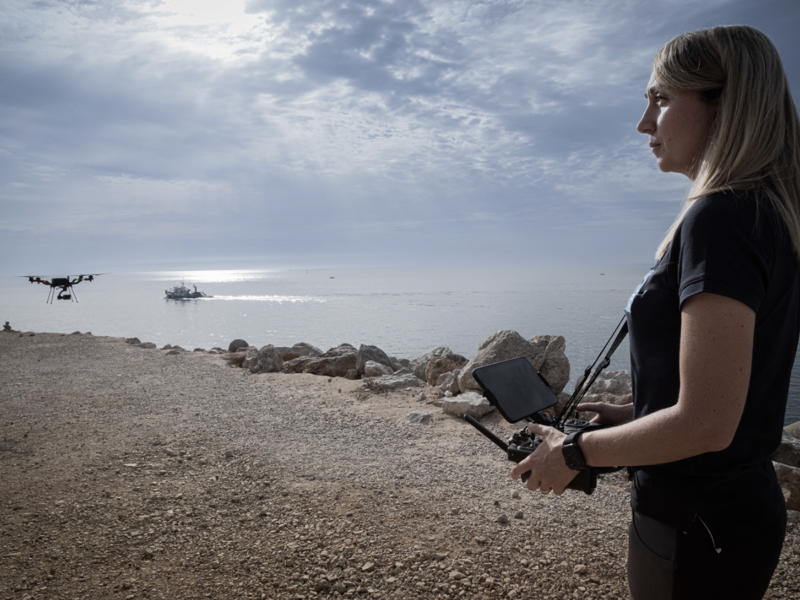
Special Report: Mass Competition, China and Russia’s Maritime Autonomous Systems
This is the second installment of the two part series on Maritime Autonomous Systems. See Part One, Special Report: The MAS Gap, Canada Falls Behind as Allies Adopt Maritime Autonomous Systems. The rapid development and deployment of Maritime Autonomous Systems (MAS) are transforming global maritime security. Canada is lagging behind its allies, partners, adversaries, and Read More…
Special Report: The MAS Gap, Canada Falls Behind as Allies Adopt Maritime Autonomous Systems
This is Part One of a two part series on maritime autonomous systems. Introduction As the geopolitical landscape becomes increasingly complex, with rising global competition and evolving security threats, Canada must take decisive steps to enhance its maritime capabilities by adopting Maritime Autonomous Systems (MAS). While our allies, including the United States, France, and NATO Read More…
A Deeper Look at the Canadian AI Talent Brain Drain
While Canada’s AI startups face increased competition from foreign scale-ups and BigTech in the enterprise market, the general lack of data readiness among enterprise customers compounds the weakness of Canadian tech entrepreneurs vis-à-vis larger international players.
MADCOMs: Human or Machine?
Tiffany Kwok explores the fresh topic of MADCOMs in the field of artificial intelligence, and ties in possible consequences for democracy.
The Strategic Race for “Algorithmic Warfare” and AI Development
President Putin calls artificial intelligence “the future” and has increased R&D for militarized AI. Another technological race for global supremacy is on.