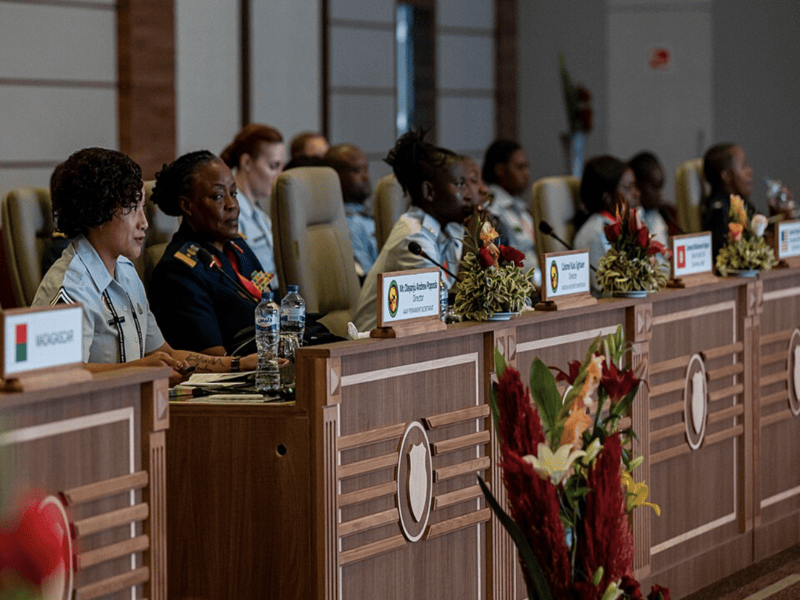
NATO has just launched LeadInSecurity, its first Alliance-wide leadership accelerator for women in defence and security. In this article, Tessa McDermid explores how the program offers NATO an opportunity to close the sector’s gender gap and uphold its Women, Peace and Security (WPS) commitments. Since LeadInSecurity has no internal track record to draw on, she looks to comparable programs to argue that its long-term success depends on outcome tracking, integration into NATO’s existing accountability frameworks, setting numeric targets, and running as a recurring, multi-year initiative rather than a standalone initiative.
Author: Tessa McDermid
Resilient to the Manosphere: How NATO Can Counter Algorithm-Driven Threats to Women’s Security
The manosphere is a network of communities united by opposition to feminism that has expanded from fringe corners of the internet into mainstream public discourse. In this article, Tessa McDermid presents how social media algorithms are mainstreaming manosphere ideology among Gen Z men, and how this poses threats to the safety and participation of women in NATO’s armed forces and to the Alliance’s Women, Peace and Security (WPS) commitments. Addressing these risks requires NATO to update its WPS policy to explicitly incorporate manosphere produced threats, expand counter-radicalization programmes to recognize online misogyny as an extremist pathway, and to invest in digital and gender literacy training for military personnel.
Encoded Bias: How Gender Analysis Benefits NATO’s AI Expansion
Military AI technologies have the potential to replicate gender bias due to the ways AI machine learning encodes patterns in data. In this article, Tessa McDermid argues that as NATO expands its investment in military AI technologies, it must equally commit to monitoring how these systems risk reproducing gender bias. By adopting corrective frameworks that align its AI Strategy with core Alliance values, NATO can meet its goals in advancing the Women, Peace and Security Agenda.