By: Simon A. Miles
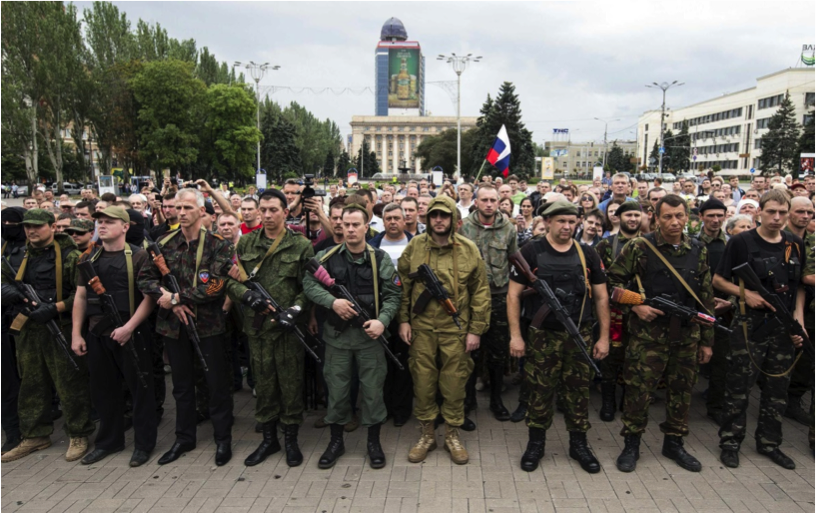
This round of Russian elections were not intended to produce a surprise result. A “managed democracy” such as Russia with its hobbled opposition, muzzled media, and rampant vote rigging is by its very nature supposed to hand sizeable victories to the ruling party: Vladimir Putin’s United Russia. However, the Duma (parliamentary) election on 4 December produced an upset. United Russia’s share of the vote fell from 64% to under 50%, giving it only a slim majority. Shortly thereafter, demonstrators took to the streets in the biggest protests Russia has seen in years, prompting the regime to send in troops to quell dissent. All of this constitutes the biggest crack in the Russian regime since Putin came to power in 1999.
There were signs which indicated that all would not go as smoothly as the Kremlin would have hoped. Following the not at all surprising announcement that Putin would return to the presidency following Dimitri Medvedev’s term he was booed attending a martial arts contest. This prompted him to cancel future public appearances; but his surrogates were duly booed in his stead. The Kremlin took notice. Election day began with a massive cyber-attack on the websites of Ekho Moskvy, a popular radio station, and Golos, an independent election monitor that Mr Putin earlier likened to Judas. Nevertheless, the internet (chiefly through social media websites) was awash in exemplars of election-rigging. In some regions turnout exceeded 140%. In Chechnya, run by a pro-Kremlin strongman, United Russia garnered 99.5% of the vote. A similar result was reported in a Moscow psychiatric hospital. It is ironic that this comes almost exactly 20 years after the signing of the 1991 Belovezh Accords which officially dissolved the USSR and laid the shaky foundations of a democratic state.
To date, Putin’s ability to hold onto power has rested on two key elements. Firstly, his personal charisma and general popular appeal. His current popularity figures hover around 40%, indicating that he will likely win the presidency come March. Secondly, his ability to continue to increase, however incrementally, most Russians’ standard of living. This, too, no longer seems to be feasible, begging the question of how the Kremlin will respond to this new state of affairs. To date, repression has not been overly brutal — certainly when compared with the paranoid antics of the leader of neighbouring Belarus, where Alexander Lukashenko remains Europe’s last dictator.
The recent accusation that US Secretary of State Hillary Clinton had sent “a signal” to “some actors in our country” to incite unrest following the elections by Putin does not bode well for the future of Russia’s relations with the rest of the world. The “reset” strategy of the Obama administration — already sputtering — now seems destined for failure. The Public Chamber of Russia, a state oversight committee with consultative powers, has decried the protest movements and the suggestions that the elections be nullified. The members also declared that they oppose all public discussion of the election’s outcome. It is not impossible to see Putin playing the role of Nicholas II in this tragicomedy, but it remains unlikely. He has always favoured deploying money rather than force in order to keep himself in power, but as the tide turns against him, he has shown his willingness to use the military to break up demonstrations, the security services to hamstring the opposition movement, and his party’s youth wing to physically dominate public spaces.
Further Readings: The cracks appear; Voting, Russian-style; Putin Contends Clinton Incited Unrest Over Vote; Annulling elections a road to chaos – Public Chamber; Election results keep fuelling public indignation
Disclaimer: Any views or opinions expressed in this article are solely those of the author and do not necessarily represent those of the NATO Council of Canada.