Introduction & Procurement Details
The Canadian government has undertaken one of the largest naval procurements in the country’s history: 12 conventionally-powered submarines capable of under-ice operations for the Royal Canadian Navy (RCN) to replace its aging Victoria-class fleet. Expected to exceed $60 billion across its lifecycle, this program represents a renewed commitment to Arctic security and defence spending in the face of shifting geopolitics.
This acquisition aligns with Canada’s 2024 defence policy update, “Our North, Strong and Free,” which prioritizes Arctic security as a central pillar of the national defence strategy. The initial request for information received 25 responses from major international defence contractors. Following this process, the government selected South Korea’s Hanwha Ocean and Germany’s ThyssenKrupp Marine Systems as the two suppliers now competing for the contract. The under-ice capability requirement is particularly significant, as it would enable year-round operations beneath Arctic ice: a critical capability as climate change opens new maritime routes and resource competition intensifies in the region.
The procurement process is structured around a multi-year timeline designed to prevent a complete loss of submarine capability. In July 2024, the federal government formally launched the Canadian Patrol Submarine Project (CPSP), followed by a September 2024 request for information to refine the technical, industrial, and operational scope of the program. By August 2025, the government had shortlisted two qualified suppliers who will advance to the next stage of competition. A final contract award is expected by 2028, with the first submarine scheduled for delivery no later than 2035. During this period, the Victoria-class fleet will undergo a modernization program designed to maintain a minimal underwater capability until the new boats enter service. Without this bridging effort, Canada would face an extended period with a submarine force that is entering obsolescence.
A defining element of this new program is Canada’s commitment to domestic sustainment. Unlike the Victoria class, which relied heavily on foreign shipyards for maintenance, the new fleet is expected to be supported in Canada throughout its life cycle. This will expand domestic shipyard capacity and force significant investment in infrastructure, training pipelines, and specialist technical labour. Canada would effectively be creating a long-term submarine industrial base, which is an essential shift for a fleet expected to remain in service late into the late 21st century.
Implications
The implications of this procurement extend far beyond fleet replacement. Strategically, it marks a fundamental restructuring of Canada’s defence posture following its earlier 2025 commitment to the NATO-wide 5% defence investment pledge by 2035. This increase from Canada’s historical defence spending levels (<2%) reflects both pressure from NATO allies and recognition that the international security environment has fundamentally changed, with Canada being underprepared both technically and logistically. NATO’s posture on Arctic security is “monitor-and-respond,” focusing on enhanced intelligence collection and monitoring capabilities, which is a strategy that requires technology that Canada currently lacks: only one of the four Victoria-class boats is reliably operational. This leaves a gap in Canadian operational capabilities and creates a dependence on allies, particularly the United States, for surveillance in its own waters. In the midst of increasing Russian and Chinese undersea activity in the Arctic and North Pacific, this procurement not only aims to restore Canada’s operational independence but also contributes to NATO’s broader security strategy in the High North.
Economically, the program will become one of Canada’s most significant sources of high-skilled defence employment. Domestic sustainment and integration work will distribute benefits across shipyards and the advanced manufacturing sector, therefore increasing the demand for domestic workers. Once received, maintaining a fleet of twelve submarines requires a multi-generational workforce. This will ensure stable employment and push Canadian firms to expand capabilities in naval engineering and electronics.
This project also has many implications from a financial standpoint. The 2025 federal budget established the new Defence Investment Agency (DIA) to streamline major procurement, but it has not yet allocated any dedicated funding for the submarine program. For broader context, Canada’s Budget 2025 allocates $81.8 billion in defence spending over five years, which helps build an understanding of where this procurement fits in with Canada’s wider defence investment plan. According to recent analysis from the CDA Institute, the DIA provides a mechanism but not a specific budget line for the CPSP. Additionally, Hanwha publicly suggested a cost of around $2 billion per submarine, however, TKMS has not disclosed pricing. The government must also factor in the cost of the upgrade of the Victoria fleet when considering budget needs for the program. Many procurement experts have predicted that the total CPSP could exceed $100 billion. This raises political uncertainty about the program, especially about the government’s ability to foresee and sustain a procurement of this scale over multiple budgetary cycles.
Importantly, this procurement carries significant geopolitical implications, as it will deepen Canada’s ties with whichever supplier ultimately wins the contract. Choosing Germany’s TKMS aligns with NATO’s European focus and existing collaborations, but partnering with South Korea’s Hanwha Ocean newly positions Canada within the Indo-Pacific as the region’s defence industrial capacity accelerates. As of 20 November 2025, formal instructions were delivered to both companies, informing them of the key factors that will inform the final decision. Fifty percent of the company’s score depends on sustainment after purchase, 20% is weighed on the platform itself, 15% counts for the company’s financial wherewithal, and 15% depends on additional economic benefits offered beyond the contract.
Hanwha Ocean has taken a proactive approach to pitching the KSS-III Canadian Patrol Submarines (CPSP), a newly-launched submarine built for the South Korean Navy. This diesel-electric submarine relies primarily on lithium-ion batteries and an air-independent propulsion (AIP) system for extended submerged endurance. The South Korean company has delivered unsolicited detailed proposals to the federal government, and during PM Carney’s tour in October, flew a Canadian flag from the mast of the submarine as part of its pitch. Hanwha Ocean offers an accelerated timeline, pledging to deliver four KSS-III Canadian Patrol Submarines (CBS) before 2035, with an additional eight to follow at a rate of one per year. This enables the earlier retirement of the former fleet, resulting in savings on maintenance and support costs.
On the other hand, TKMS is offering Canada the Type 212CD submarine. With the earlier Type 212A already operating in several NATO allies, including Norway, this submarine builds upon proven capability and reliability in the Arctic, thereby providing a lower technical risk. A partnership with TKMS also builds upon established industrial partnerships, such as the recent German acquisition of the Canadian CMS 330 combat management system.
Canada’s decision between Germany and South Korea, with company responses expected by March 2026, will determine both the technical direction of the fleet and the strategic trajectory of Canada’s defence policy. Either path symbolizes a diversification of Canadian procurement relationships away from an exclusive reliance on the United States. This will enhance Canada’s strategic autonomy and credibility on the global scale and increase its presence within allied defence networks. The submarine acquisition also reflects a broader shift toward Arctic security as a central pillar of national defence, ensuring Canada can operate independently in increasingly contested northern waters. At the same time, it addresses long-standing capability gaps, aligning Canada with NATO’s evolving expectations.
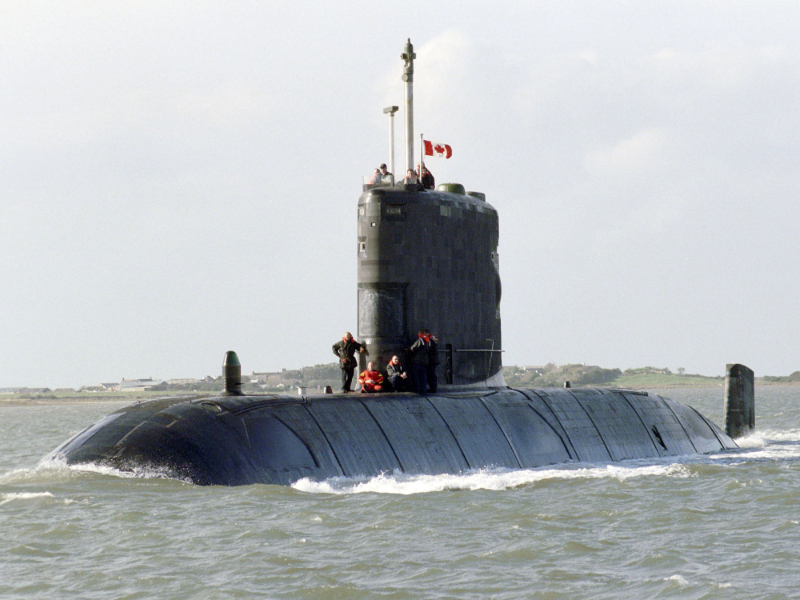
Photo: HMCS Windsor, a Victoria-class submarine of the Royal Canadian Navy. Source: Alan Rowlands / Canadian Forces Maritime Command.
Disclaimer: Any views or opinions expressed in articles are solely those of the authors and do not necessarily represent the views of the NATO Association of Canada