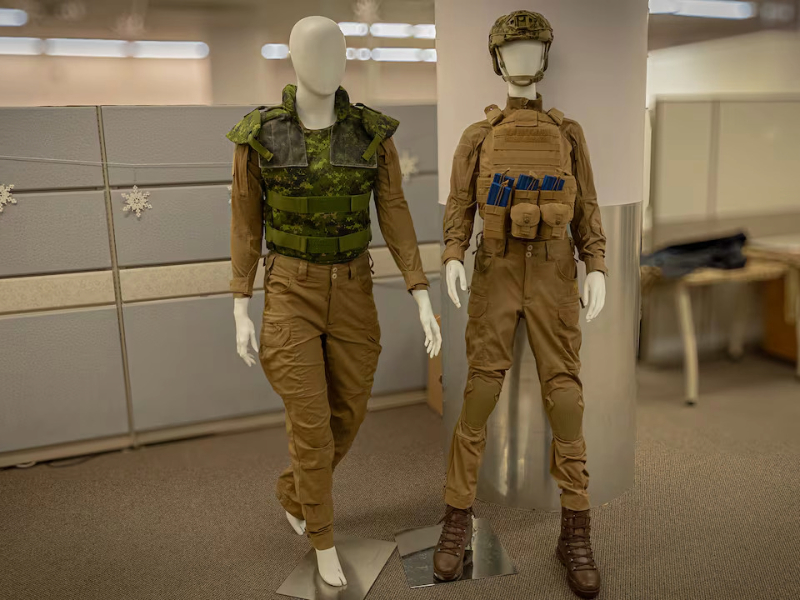
For much of the Canadian Armed Forces’ (CAF) modern history, combat clothing and personal protective equipment have been developed using standardized sizing systems intended to serve the force as a whole. This approach assumes that differences between bodies can be addressed primarily by scaling measurements up or down. However, NATO anthropometric research has shown that male and female body proportions differ in consistent ways, particularly in hip breadth, shoulder width, and torso length. As a result, equipment designed around male body proportions does not simply fit women when produced in smaller sizes. Instead, resizing can create new fit and mobility issues. As women represent a growing share of the CAF, equipment systems that rely on simplified sizing models risk introducing avoidable strain into training outcomes, performance, and personnel sustainability.
In recent years, the Canadian Armed Forces have begun to acknowledge these limitations as part of broader modernization efforts. After decades of relying on equipment designed for a more homogenous force, the CAF has initiated updates to combat clothing and personal protective equipment that reflect the realities of a mixed-gender military. Senior leaders and human factors specialists have increasingly framed equipment fit as an operational concern, emphasizing its impact on mobility, endurance, and effectiveness in training and operational contexts. This signals an institutional shift from viewing fit as an individual adjustment issue toward recognizing it as a system-level requirement tied to performance and readiness.
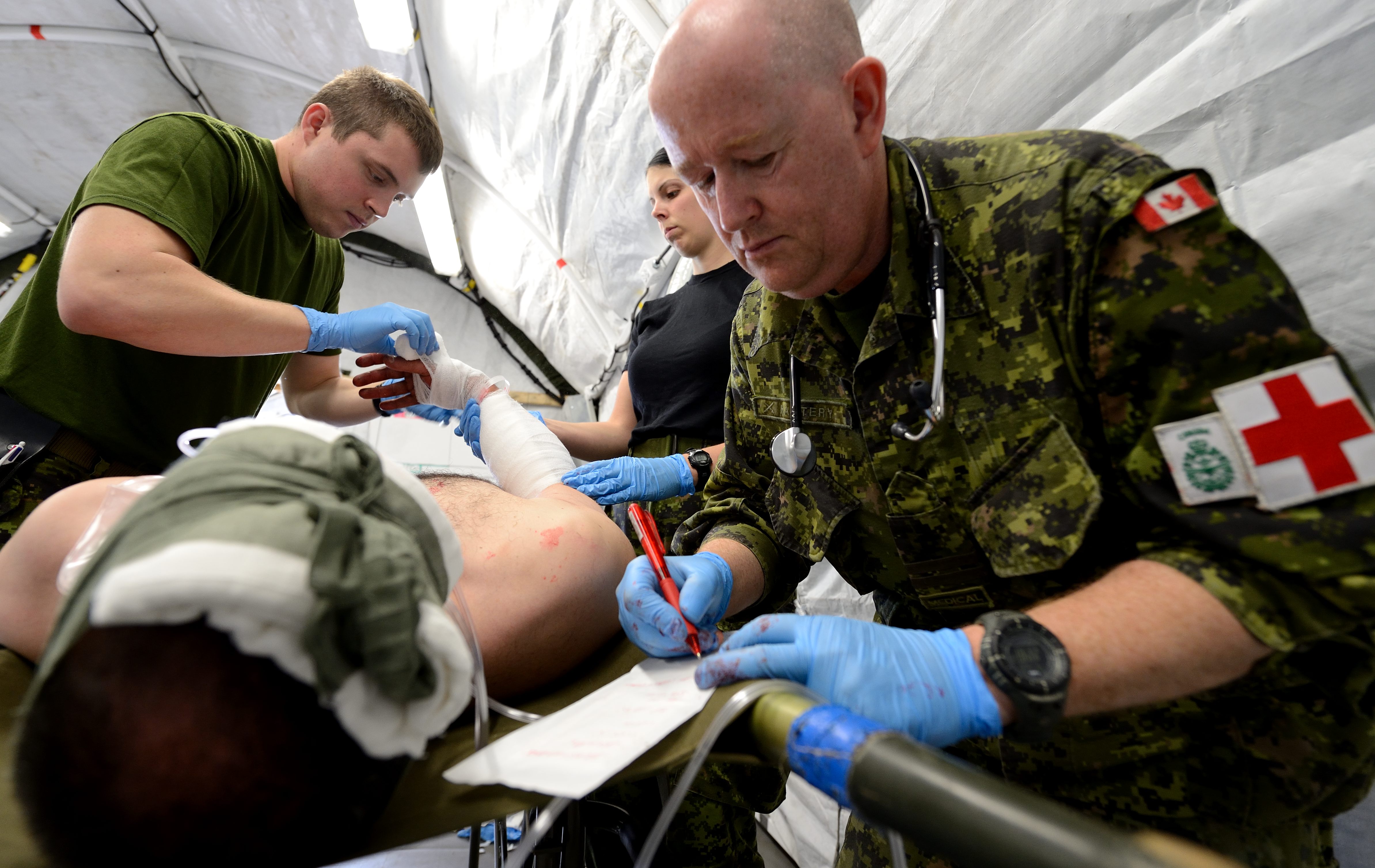
These design limitations become most apparent in physically demanding contexts where combat clothing and protective equipment are worn alongside body armour, load-bearing systems, and weapons for extended periods. When equipment does not align with the body, it can restrict shoulder or hip movement, shift weight distribution, or create pressure points that interfere with basic tasks. Rather than causing immediate failure, poor fit degrades performance gradually by increasing fatigue and reducing endurance. In training environments involving repeated load carriage and sustained exertion, these inefficiencies can compound, affecting both individual performance and overall training effectiveness.
Recent developments in Ukraine provide a useful comparative example of how these issues manifest under sustained operational pressure. As women assumed expanded frontline roles during the war, the Armed Forces of Ukraine identified limitations in combat clothing and protective equipment adapted from male-centred designs. In response, Ukrainian manufacturers developed women’s combat uniforms with revised grading systems, proportions, and size ranges rather than relying on resized men’s designs. Adjustments to torso length, shoulder fit, hip and waist ratios, and the integration of uniforms with body armour reduced restriction of movement and improved comfort during extended wear. For women in combat roles, these changes translated into improved mobility, reduced fatigue, and comfort during prolonged training and operational tasks.
Ukraine operates under very different procurement conditions than the Canadian Armed Forces, with changes driven by immediate operational need rather than long-term modernization planning. Even so, its experience demonstrates how poor equipment fit can undermine performance once women are placed in sustained combat roles.
Within the CAF, these considerations intersect with ongoing efforts to expand and sustain women’s participation. As of late 2024, women accounted for approximately 16.6 percent of Regular and Reserve personnel, with representation notably higher in the Navy and Air Force than in the Army. While the CAF has committed to increasing women’s representation to 25 percent by 2026, progress has been uneven and remains sensitive to retention pressures. As the number of women serving in operational roles grows, equipment systems that do not support effective performance across a wider range of body types risk compounding challenges related to training continuity and personnel sustainability. In this context, addressing equipment fit supports not only individual performance, but also broader force-generation objectives tied to maintaining an effective and resilient workforce.
Taken together, these considerations underscore the need to treat equipment fit as a system-level requirement rather than a one-time sizing issue. While the CAF already incorporates fit testing and human-systems considerations into equipment development, greater emphasis on how uniforms and protective equipment perform together during sustained use can strengthen existing practices. Fit-related issues tend to emerge gradually through discomfort, restricted movement, or inefficient load distribution, particularly when equipment is worn repeatedly under operational conditions. Recognizing these cumulative effects helps ensure that equipment design decisions remain aligned with training continuity and evolving operational demands.
Ultimately, women-specific combat clothing and protective equipment should be understood not as departures from standardization, but as refinements that support effective force generation. Aligning equipment design with operational realities strengthens the CAF’s ability to train, retain, and deploy personnel by reducing avoidable performance constraints. In this way, properly fitted combat clothing and protective equipment function as force enablers, contributing to readiness and long-term personnel sustainability rather than imposing unintended limitations.
Photo: Brown prototypes of the new combat clothing system for the Canadian Army and Royal Canadian Air Force. Source: Brian Morris / CBC News.
Disclaimer: Any views or opinions expressed in articles are solely those of the authors and do not necessarily represent the views of the NATO Association of Canada