“In a dangerous and divided world, Canada and Europe are elevating our defence partnerships to rapidly procure new equipment and technology, accelerate NATO targets, and catalyse tremendous opportunities for our defence manufacturers. Canada’s participation in SAFE will fill key capability gaps, expand markets for Canadian suppliers, and attract European defence investment into Canada.”
– The Rt. Hon. Mark Carney, Prime Minister of Canada
Europe’s rearmament means many things for Canada as its close ally, both in political and economic senses. ReArm Europe is restructuring the industrial architecture that is critical in deciding who gets financed to produce what. Through the European Defence Industrial Strategy (EDIS) and its new European Defence Industry Programme (EDIP), the European Union (EU) is moving away from ad hoc crisis management towards harmonised industrial policy designed to expand intra-EU defence trade and ensure that a growing share of member states’ procurement comes from the European Defence Technological and Industrial Base (EDTIB). At the same time, Canada has become the first non-European country to join the EU’s Security Action for Europe (SAFE) common procurement instrument and has formalised a Security and Defence Partnership with the EU. While SAFE grants Canada special access to Europe’s rearmament architecture, the EDIS is explicitly designed to reduce reliance on non-European suppliers. What would securing real durable industrial relevance in this system look like for Canada? It is a critical question, especially for the wider NATO political economy of deterrence that outlines and depends on collective industrial capacity and supply-chain resilience, shifting focus from only stockpiles that sustain production capability.
Europe is building a more coordinated, more European, more politically managed defence economy. Under the Readiness 2030 or ReArm Europe plan, the Commission-led framework to expand and coordinate EU defence, a shift towards a coordinated EU-directed system is marked, replacing fragmented national procurement. The EDIS sets a significant goal to source at least 50% of their defence procurement from within the EDTIB by 2030, rising to 60% by 2035. This goal is operationalised through the EDIP, adopted in December 2025, and both are essential market-shaping tools that direct demand towards European suppliers.
The primary mechanism, SAFE, a €150 billion loan facility, is designed to finance urgent, large-scale common procurement. While it is an EU-centric instrument, it is the primary gateway through which Canada is participating in this new system. Its entry, however, differs from other non-EU nations through an agreement allowing Canadian content to comprise up to 80% of a SAFE-financed contract, while others are capped at 35%. The agreement also includes a participation fee, whereby Canada incurs a 15% charge on the value of its Canadian content in contracts “where European content represents less than 65%”. This provision can erode the value of the expanded Canadian content allowance in contracts with insufficient European participation. If Canadian firms are only winning lower-margin component work or short-term participation, then a 15% participation fee at the state level could make participation less attractive over time. If, by contrast, firms win higher-value, strategically important roles then that contribution can be more reasonable for a long-term gain.
By remaining outside the Defence Industrial Readiness Board, the responsible governing body and regulators of procurement priorities, Canada ultimately lacks the means to shape how priority projects are identified. Not being a part of the structure shaping this market makes Canada’s role more reactive than formative. In the general NATO political economy, Canada’s participation in SAFE is a test case for whether a non-EU ally can meaningfully embed itself in Europe’s rearmament without sacrificing its industrial sovereignty or its interoperability with the United States. As defence procurement analysts have alluded to, it is still early to determine if this preferential access will translate into the durable industrial relevance Canada needs to remain more than simply a trusted vendor to Europe.
Ultimately, success in the SAFE framework for Canada cannot be measured solely on total contract value. True success can be defined by the depth of strategic integration in sectors where Canada holds comparative advantages. Canada offers technological and defence strengths that are useful, complementary and, in some areas, difficult to rapidly replace. From Europe’s perspective, Canada can stand out for the security and reliability of its supply chain as it is a politically aligned ally, and is formally tied to the EU via several agreements. Its capabilities include aerospace, training and simulation, maritime and Arctic capabilities, and advanced technologies, all of which are identified as useful complements to Europe’s industrial push.
On the mineral front, Canada’s new Defence Industrial Strategy highlights that it produces 10 of the 12 defence-critical raw materials identified by NATO. In October 2025, Canada designated these minerals as national security priorities under the Defence Production Act, allowing for stockpiling and supply collaboration with allies. This positions Canada as a stronger partner for the EU’s strategic autonomy goals, which seek to diversify away from single-source foreign dependencies for critical minerals. In Arctic domain awareness, Canada presents strength in its role in NORAD modernisation, where it provides advanced persistent surveillance and early-warning infrastructure. The capability gaps in Arctic surveillance and remote-area sensing are becoming more relevant as Russian and Chinese activity in the High North intensifies. Additionally, Canada is less likely than some non-EU partners, such as South Korea, to compete directly with large European firms in hardware (e.g., submarines), and is more likely to be relevant in high-tech subsystems (AI, sensors, minerals) and complements. To build durable relevance, these comparative advantages are where strategic integration should be concentrated within the EU.
However, frictions do exist that create misalignment between Canada and the EU’s goals of reducing reliance on the U.S. market. The deep entanglement between Canada’s defence industry and the U.S. through the International Traffic in Arms Regulations (ITAR) presents an obstacle. Under ITAR exemptions, Canada has long enjoyed license-free access to sensitive American military technology. This can present tension as Europe aims to buy equipment they can use, maintain, adapt, and re-export with fewer third-country constraints and dependency. In that environment, when a Canadian product depends heavily on U.S.-controlled (ITAR) components or permissions, a European buyer may see it as less attractive compared to a product that offers more freedom of action. For larger firms, they are more likely to have the fiscal capacity to redesign systems to reduce dependence on U.S. parts. Though, a large portion of Canada’s defence base is composed of Small and Medium Enterprises (SMEs). Smaller firms are likely to have more difficulty absorbing the legal and compliance complexity needed, potentially leading to them missing out on the most lucrative SAFE contracts. Firms may be structurally sidelined regardless of their technical superiority due to export-control dependencies, making it a growing disadvantage in some cases.
Canada is unlikely to become indispensable to Europe across the whole defence market. For real durable industrial relevance, a realistic goal is to concentrate on sectors where Canada is more likely to be complementary rather than directly substitutable. Becoming embedded in joint projects, co-production arrangements, and higher-value subsystems that are harder to swap out once a programme is underway, should be the aim. If Canada can do that, SAFE could become a platform for durable sustainable relevance. If it cannot, Canada’s special status may end up meaning less than it appears today.
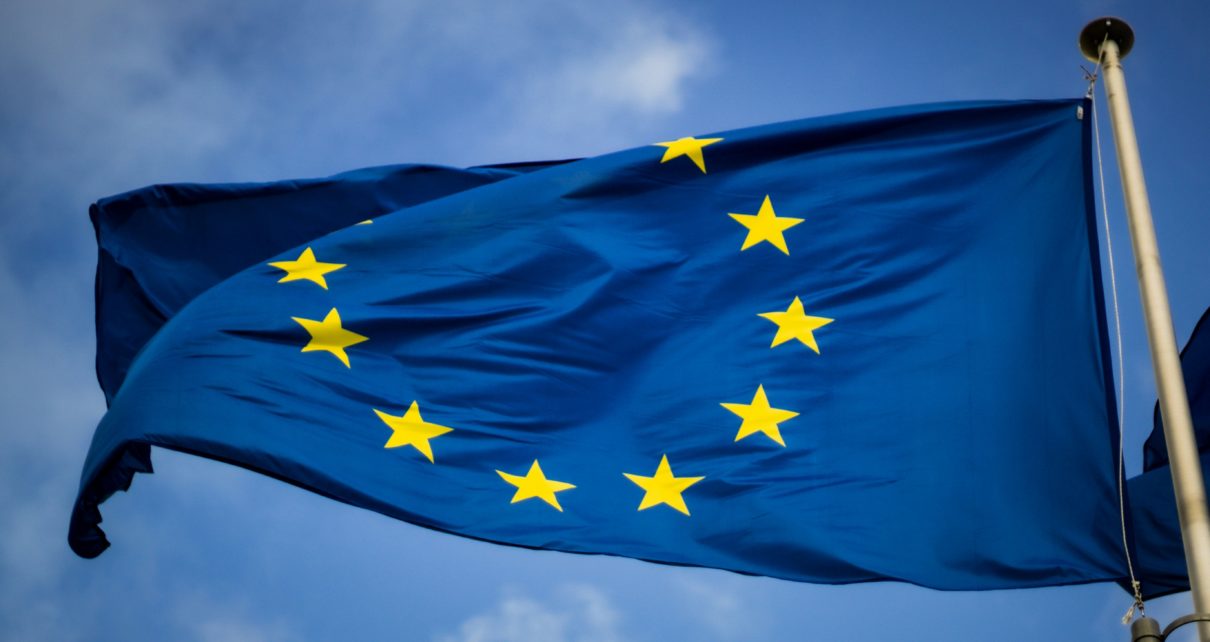
Photo: European Union Flag, by Christian Lue via Unsplash. Used under the Unsplash license.
Disclaimer: Any views or opinions expressed in articles are solely those of the authors and do not necessarily represent the views of the NATO Association of Canada.