How will the Pacific Islands feature in Canada’s refashioned variable geometry partnership model? In January, Canada opened its first-ever foreign mission to Fiji, establishing a Canadian High Commission in Suva, the Fijian capital. Whilst the announcement of the opening lacked the ticker-tape fanfare that followed Prime Minister Mark Carney’s March tour of India, Australia, and Japan, it remains an important signal of Canada’s motivation to strengthen engagement with Fiji and the rest of the Pacific Island Countries (PICs).
Canada is already an active, if not quiet, diplomatic player in the Pacific Islands. The January High Commission opening follows previous Canadian financial support provided to the Pacific Islands, including $4 billion in bilateral international assistance since 2021. Canada is also a donor party to the Kiwa Initiative, which works to strengthen the climate-change resilience of Pacific Island ecosystems, communities, and economies.
But there is more to do. Whilst it is true that Canada is not completely absent-minded of the Pacific Islands, the intensity of diplomatic engagement and uniquely Canadian initiatives lags behind the presence shown in other areas of the Indo-Pacific, such as Southeast Asia. If Ottawa is electing to deprioritize the Pacific Islands in its variable geometry strategy due to the region’s geographic distance, slow gross domestic product growth, or the perceived marginality of the region to Canada’s strategic interests, then it is making a mistake. The Pacific Islands are increasingly becoming a zone of competition between China and ‘the West’, whilst, at the same time, climate change strains the region’s biodiverse ecosystems, which are essential for regional and global food security.
Relatedly, there are two primary impetuses to increased Canadian engagement in the South Pacific.
The first is geostrategic. Traditional regional donors and Canadian partners, including Australia, New Zealand, France, Japan, and the United States, now compete with China for preferred partner status, especially in infrastructure financing. China’s regional financing strategy has since shifted away from the large concessional loans it was known for in the early 2010s toward a re-focused model that prioritizes smaller-scale grant financing; however, it remains second only to Australia in terms of bilateral donor aid amounts. Many of Beijing’s financing options don’t require PICs to adopt Washington Consensus-Esque policy prescriptions contingent to the release of funds, such as good governance and human rights reform.
The second is as pertaining to the existential threat of climate change. The oceanic waters of the Pacific Islands are home to over half the world’s tuna stocks, which many PICs rely on for food security and national development. Warming water temperatures are already pushing tuna’s migratory patterns further eastwards beyond the exclusive economic zones of PICs like Kiribati, potentially causing a dual crisis of food and economic deprivation.
Despite geographic distance, Canada is affected by these trends. Geopolitical competition, namely, increased Chinese grant-based infrastructure funding, crowds out demand for Ottawa’s limited spending on infrastructure development initiatives. Whilst this isn’t necessarily a novel finding, Canada cannot compete dollar-for-dollar with China, even if it wanted to; it does highlight that China sees the region as strategically significant as to warrant continued investment. If investment translates into influence over critical minerals and deep-sea mining agreements, for example, Canada risks ceding crucial negotiating bandwidth to China in the region.
Canada should also be concerned about a possible climate change-induced regional humanitarian crisis. The devastation of regional economies from rising and warming seas, including the complete physical loss of some island nations to the ocean, would require the relocation of entire communities, and possibly nations, abroad. This is not some theoretical possibility; Tuvalu recently signed the Falepili Union Treaty with Australia, which provides Tuvalu residents with a pathway to Australian permanent residency and citizenship, recognizing that by 2050, half of the main atoll of Funafuti will likely be underwater. Whilst Canada does not maintain the same regional ties as Australia does, it is a self-proclaimed ‘Pacific Nation’, and that entails a degree of shared responsibility to help tackle the issues the region and its peoples face.
To this end, Canada’s variable geometry strategy will only gain traction in the Pacific Islands if it can adequately mobilize the capital needed to support the region’s development and security.
A necessary first step is developing a specific, nuanced rationale for engaging the PICs. Whilst the 2022 Indo-Pacific Strategy (IPS) is useful to a degree in that it does mention the Pacific Islands as a primary focus of Ottawa’s engagement, the PICs are only fleetingly mentioned in favour of a greater emphasis on North and Southeast Asia. This rationale does not have to be a formalized document, such as in the style of Australia’s ‘Pacific Step-Up’ strategy; however, there should be a consistent modus operandi that guides the nature of interaction around specific common interest terrain, whether that be human development, climate mobility arrangements, or donor aid assistance.
It remains pertinent to note that, whilst lacking in economic size and heft, the Pacific Islands hold enormous strategic heft that is being recognized by other global players. Canada has work to do in the region, and that will begin with a sharper articulation of what interests Ottawa and the PICs can realistically and sustainably cooperate on. Only then can Canada’s ‘Indo-Pacific’ approach be truly robust, both conceptually and practically.
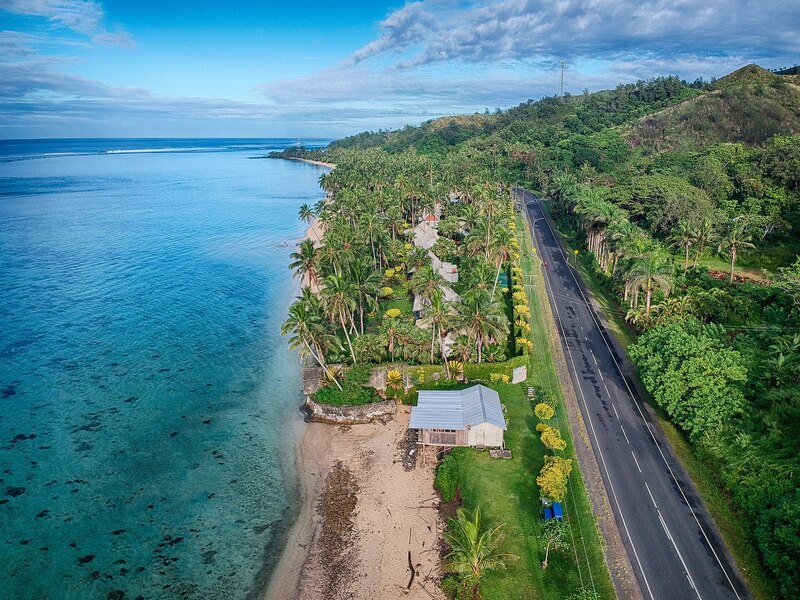
Photo credit: Maksym Kozlenko. Licensed under Creative Commons Attribution – Share Alike 4.0 International License
Disclaimer: Any views or opinions expressed in articles are solely those of the authors and do not necessarily represent the views of the NATO Association of Canada.