On February 28 2026, U.S.-Israeli strikes on Iran began a conflict that has rapidly escalated, with global implications. Iranian retaliation through missile attacks, maritime disruption, and strategic threats to the Strait of Hormuz quickly transformed the war into a global security issue. While the immediate battlefield remained concentrated in the Gulf, the broader consequences reverberated across international energy markets, alliance planning, and military readiness. For Beijing, the war offered more than a distant geopolitical crisis; it became a live strategic case study in how modern warfare functions under conditions of precision strike competition, supply-chain vulnerability, and political strain.
Much like previous conflicts such as Russia’s invasion of Ukraine, the Iran war demonstrated that weaker actors can still impose serious military, political, and economic costs on stronger coalitions. Iran did not need to defeat the United States outright to influence global calculations. Through repeated threats to commercial shipping and instability around Hormuz, one of the world’s most vital energy chokepoints, Iran successfully generated economic volatility and strategic disruption. This reinforced a critical lesson for Chinese planners: superior military power does not guarantee quick or low-cost victory.
For China, this lesson has direct implications for Taiwan. Beijing’s long-standing strategic assumptions have often centered on the possibility of a rapid military campaign capable of overwhelming Taiwanese resistance before external powers could effectively intervene. However, Taiwan’s increasingly asymmetric defence posture complicates this assumption. Taiwan’s recent defence reforms emphasize drones, anti-ship missiles, reserve mobilization, civil resilience, and gray-zone response. Like Iran or Ukraine, Taiwan may not need outright victory to succeed strategically; it may only need to impose sufficiently high military, economic, and political costs to undermine Beijing’s objectives.
This evolving reality should make China more cautious. If Beijing concludes that Taiwan could sustain prolonged resistance, disrupt Chinese military operations, and trigger extensive international fallout, then the prospects of a clean annexation become far less certain. In this sense, the Iran war strengthens deterrence by warning against simplistic assumptions of easy conquest.
Yet the war also presents a second, more dangerous lesson for Beijing. Prolonged U.S. military engagement in the Middle East consumes finite strategic resources, including missile stockpiles, naval deployments, industrial production capacity, and political attention. Throughout the conflict, concerns emerged regarding the strain placed on U.S. munitions inventories and delivery systems, even as Washington maintained public assurances that Taiwan remained a strategic priority.
For Chinese leadership, this dynamic may suggest opportunity. Taiwan’s deterrence depends not only on American political commitments but also on visible operational capacity. If Beijing perceives U.S. military bandwidth as overstretched, distracted, or politically constrained, it may conclude that the balance of strategic risk is shifting.
Rather than encouraging immediate amphibious invasion, however, this perception may instead push Beijing toward more coercive options below the threshold of total war. A blockade, maritime quarantine, cyber disruption, coast guard encirclement, drone swarms, economic coercion, and intensified information warfare may all appear increasingly viable. These methods reduce the immense military risks associated with direct invasion while exploiting Taiwan’s structural vulnerabilities, particularly its dependence on maritime trade and imported energy. They also allow Beijing to steadily escalate pressure without necessarily provoking immediate full-scale military intervention from allies.
The Iran war has also underscored the growing importance of low-cost military technologies. Iranian reliance on drones and missile systems demonstrated how affordable asymmetric tools can challenge technologically superior militaries. China has similarly expanded its drone and unmanned systems capabilities, including platforms capable of saturating Taiwanese defences while imposing costly interception burdens. This suggests that the conflict may be accelerating Beijing’s preference for blockade and gray-zone coercion over conventional invasion.
Energy security further reinforces this strategic logic. China’s own economy depends heavily on stable maritime energy flows, limiting its interest in uncontrolled regional escalation. While Beijing benefits from ties with Iran, it has simultaneously opposed severe disruptions to critical shipping routes. Taiwan, meanwhile, remains highly dependent on imported liquefied natural gas and vulnerable maritime supply chains. This creates a strategic environment in which blockade or shipping disruption could impose immense pressure without requiring direct conquest.
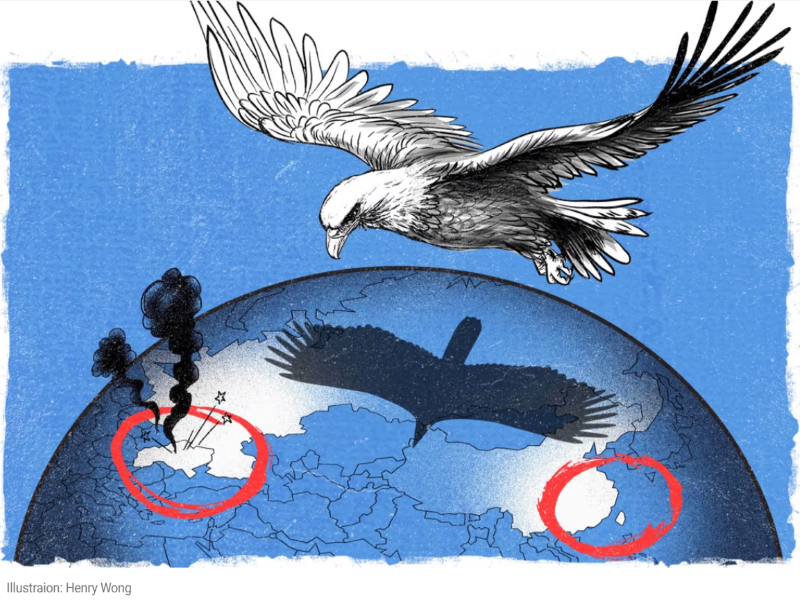
Such interconnectedness demonstrates that Middle Eastern and Indo-Pacific security can no longer be treated as isolated theatres. What occurs in Hormuz increasingly shapes strategic thinking in the Taiwan Strait.
A strong counterargument remains that the Iran war could increase the likelihood of Chinese aggression by exposing U.S. limitations. If Beijing interprets American force strain as temporary weakness, it may perceive an opportunity for stronger action. This concern is legitimate. Yet it also risks oversimplifying Chinese calculations. Beijing must still account for the enormous risks of sanctions, coalition responses, Japanese regional involvement, and the unpredictable consequences of escalation.
For this reason, the more likely strategic outcome is not immediate invasion but adaptation. The Iran conflict appears more likely to shift China toward coercive alternatives that maximize pressure while minimizing military and political risk.
For Canada and Indo-Pacific allies, the policy implications are increasingly urgent. First, Middle Eastern and Indo-Pacific contingencies can no longer be treated as separate security files. They are linked through munitions stockpiles, logistics, energy markets, maritime chokepoints, and alliance credibility. Second, allies must accelerate efforts to rebuild depleted reserves, strengthen defence-industrial production, and avoid unnecessary strategic overextension in avoidable conflicts that consume critical deterrence resources. Third, Canada and its partners should invest more heavily in asymmetric defence, scalable drone capabilities, and counter-UAS systems, drawing practical lessons from both Ukraine and the Iran war rather than clinging exclusively to prestige platforms. Finally, Indo-Pacific allies should deepen coordination on resilience planning, maritime security, civil defence, and strategic logistics to ensure deterrence remains credible across multiple theatres simultaneously.
Ultimately, the Iran war does not make Chinese action against Taiwan clearly more or less likely. Instead, it complicates Beijing’s calculus. China is learning that weaker actors can impose substantial costs, that U.S. capacity is finite, and that coercive pressure below the invasion threshold may offer more practical strategic returns than outright war.
As conflicts across regions become increasingly interconnected, Beijing’s evolving Taiwan strategy reflects a broader transformation in international security. Geography alone no longer defines strategic relevance. For Canada, NATO, and Indo-Pacific partners alike, the future of deterrence will depend on resilience, adaptability, and the recognition that crises in one theatre can rapidly reshape calculations in another.
Disclaimer: Any views or opinions expressed in articles are solely those of the authors and do not necessarily represent the views of the NATO Association of Canada.
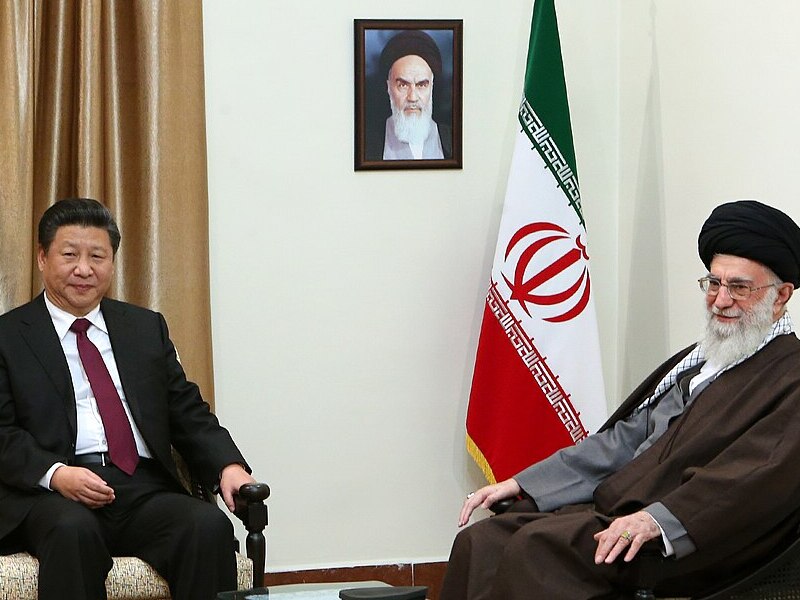
Image Credit: Xi Jinping, General Secretary of the Chinese Communist Party, and his accompanying delegation meet with Supreme Leader of Iran Ali Khamenei in Tehran, Iran, January 23, 2016. Photo by Khamenei.ir, accessed via Wikimedia Commons. Creative Commons Attribution 4.0 International License. Image dimensions adjusted.


.jpg)
