The Middle East is entering a period in which its two lifelines, oil and water, are pulling the region in opposite directions. Oil still anchors political power, while water is its most fragile point of failure, especially in states dependent on oil-fueled desalination. Gulf governments now rely on a small number of plants to meet freshwater demand, and the region accounts for nearly half of global desalination capacity sustaining roughly 100 million people. For NATO, this means that even a limited strike on interdependent energy and water infrastructure could trigger simultaneous humanitarian and energy‑security crises, forcing the Alliance to manage cascading shocks far beyond the region.
This vulnerability is already shaping conflict behaviour. From blockades in the Strait of Hormuz to missile strikes near major desalination plants, the U.S.-Iran confrontation has shown how quickly resource systems becomes entangled in coercion and escalation. The Alliance must therefore prepare for a future in which these two flows – one industrial, one biological – act as mutually reinforcing drivers of instability, drawing civilians into resource-driven crises and requiring expanded NATO capabilities for civilian protection and non‑combat response.
Resource Weaponization and Emerging Vulnerabilities
Water-related violence is rising sharply: the Pacific Institute records a nearly 20 percent year-over-year increase in 2024, while transboundary clashes have overtaken cooperation since 2017. Without stronger deterrence tools, adversaries will continue exploiting the legal grey zone around resource flows, leaving NATO reactive rather than preventative in the face of hybrid attacks. Given this trajectory, NATO must act pre‑emptively by strengthening early‑warning systems and expanding monitoring of threats to oil and water infrastructure.
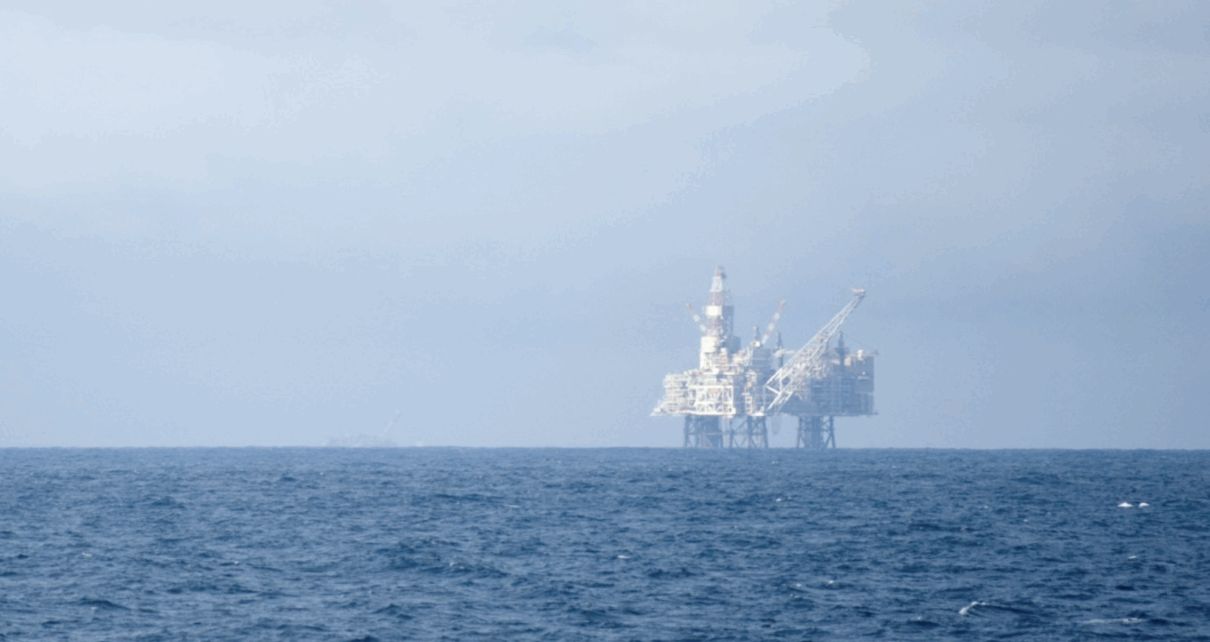
Oil remains the world’s most coveted resource, and in several Gulf states it powers the desalination plants that keep cities alive. This interdependence creates multiple points of failure, with the Houthi attacks on Saudi Arabia’s Shuqaiq desalination plant and Aramco’s Abqaiq oil facility illustrating how adversaries exploit essential civilian infrastructure for strategic leverage.
The result is a dual‑resource system in which oil and water can be weaponized or leveraged as collateral. For NATO, a simultaneous attack on both could overwhelm partner‑state capacity, disrupt global markets, and forcethe Alliance to balance crisis‑response demands with the risk of escalation in a politically constrained region. These dynamics heighten the urgency for supporting partner‑state resilience and improving infrastructure protection in states heavily dependent on oil for essential services.
How Flow-Driven Instability Reaches NATO
The risk for NATO unfolds along two axes. First, resource‑driven instability will reverberate outward: water insecurity can drive migration and geopolitical friction, while oil disruptions destabilize global markets. Crises in the Strait of Hormuz and Iranian attacks on energy infrastructure, which sent global oil prices soaring despite unprecedented reserve releases, illustrate how quickly regional shocks impose strategic and economic costs. Yet NATO’s response is constrained by mandate, geography, and the need for consensus.
Second, resource pressure will reshape NATO’s operating environment. The Alliance’s Climate Change and Security Impact Assessment warns that resource scarcity will force personnel to operate in extreme environmentswith degraded infrastructure and limited water availability; moreover, severe water insecurity beyond the NATO’s borders could trigger mass displacement and humanitarian crises, pushing large‑scale migration into conflict spaces and across the Euro‑Atlantic area.
NATO also lacks a fully developed early‑warning architecture for monitoring cross‑border resource flows. Gaps in intelligence integration, attribution of hybrid attacks, and monitoring of non‑NATO infrastructure hinder rapid response, reinforcing the need to strengthen legal mechanisms and sanctions to deter resource targeting, including support for international efforts to criminalize attacks on water and energy infrastructure.
Futures of Flow-Driven Conflict
These dynamics point towards three plausible scenarios that shape NATO’s exposure and required posture.
- Oil remains dominant while water insecurity grows unevenly.
Attacks on oil production could undermine desalination capacity as collateral. NATO must treat energy and water infrastructure as interconnected civilian‑protection priorities and maintain readiness to operate in water‑scarce conditions.
- Water becomes the central driver of regional tension.
Climate change accelerates scarcity, transboundary disputes intensify, and water‑driven displacement strains NATO’s southern flank. This scenario underscores the need to support partner‑state resilience andintegrate water considerations into long-term stabilization efforts.
- Oil and water become simultaneous chokepoints.
Climate extremes and geopolitical competition create overlapping vulnerabilities. A coordinated attack could trigger parallel energy and humanitarian crises, stretching NATO’s ability to conduct stabilization and civilian‑protection missions. This scenario highlights the importance of legal and sanctions tools, crisis vigilance, and robust early‑warning mechanisms.
Where NATO Can Adapt – and Where It Must Innovate
NATO can adapt existing tools by extending the advisory framework used in NATO Mission Iraq to include desalination plants, pipelines, and oil-water interdependencies, ensuring converged resource flows are treated as central to destabilization. Preparing for civilians to be drawn into resource conflicts builds on NATO’s Policy for the Protection of Civilians, which can be adapted to anticipate the humanitarian effects of oil or water disruptions. Scenario‑based planning, including exercises built around desalination outages, would strengthen crisis response.
Supporting partner-state resilience is an area where NATO can move quickly by leveraging its Defence Capacity Building packages to strengthen governance, infrastructure protection, and crisis management. Some areas, however, require new investment. Early warning systems like that of the Climate Change and Security Centre of Excellence can be expanded to track indicators of oil‑ and water‑flow disruption, while operating in water‑insecure environments builds on existing climate‑adaptation efforts and arid‑environment protocols, but requires Alliance-wide operational standards.
Finally, strengthening legal mechanisms and sanctions to deter resource targeting can build on NATO’s support for international humanitarian law. Existing frameworks do not fully capture the weaponization of resource flows; NATO can help advance emerging legal instruments that criminalize attacks on water and energy infrastructure and reinforce sanctions against actors who manipulate resource flows as a form of coercion.
Toward a Coherent NATO Response
The Middle East is entering an era where the most decisive battles may be fought through the systems that move its oil and water flows, rather than across borders. If the Alliance fails to integrate oil‑ and water‑flow vulnerabilities into strategic planning, it risks being blindsided by crises that originate outside the Treaty area but reverberate directly into Euro‑Atlantic security. NATO’s ability to anticipate and withstand shocks will depend on how well it prepares for their convergence as a single, volatile system of power.
Disclaimer: Any views or opinions expressed in articles are solely those of the authors and do not necessarily represent the views of the NATO Association of Canada.
Photo Credit: Wikimedia Commons