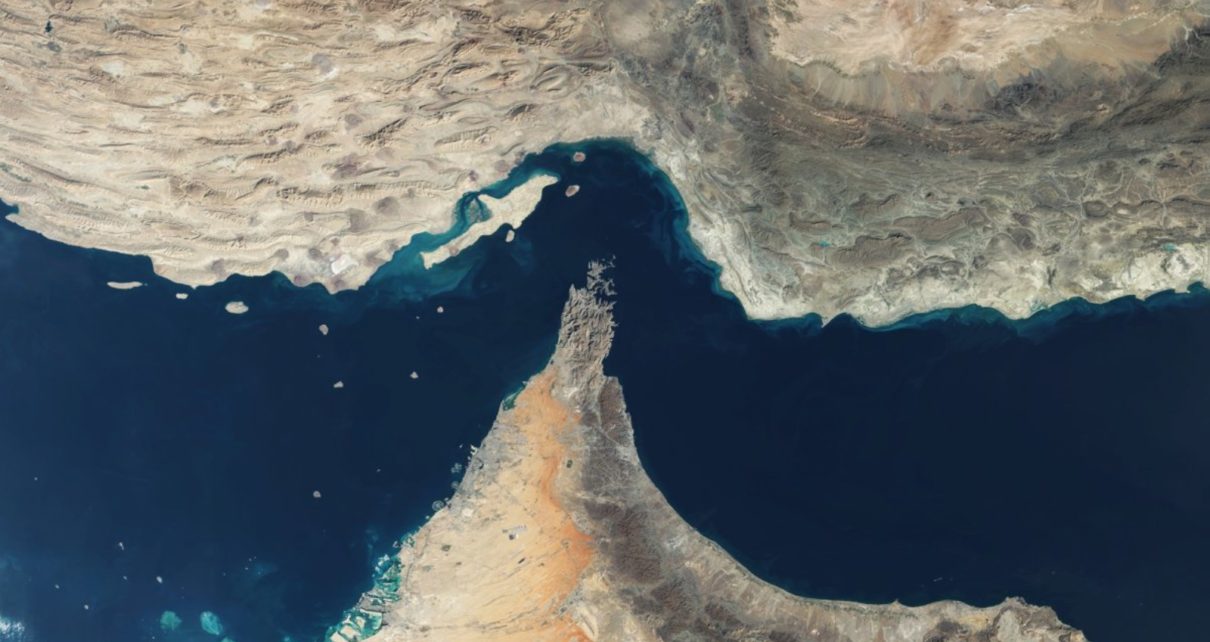
The Strait of Hormuz is barely 30 miles wide at its narrowest point, yet it is arguably one of the most consequential stretches of water on earth. Through this narrow corridor connecting the Persian Gulf to the Gulf of Oman flows approximately 20 million barrels of oil per day (b/d); roughly 20% of global petroleum consumption and over a quarter of all seaborne oil trade. Add that to an estimated 25% of the world’s liquified natural gas (LNG), most of it originating in Qatar, and the picture becomes clear: the Strait functions as something close to a circulatory system of the global energy economy and Canada is more exposed than it appears. Closing the Strait reaches deep into Canadian fuel prices, defence budgets and supply chains. Yet, Canada is one of the few countries positioned to help stabilize global energy supply. Understanding this dual exposure, as both economic vulnerability and strategic opportunity, is key to understanding what Canada owes its North Atlantic Treaty Organization (NATO) allies.
A Strait closure does not wait for diplomats or world leaders to respond. War-risk insurance premiums for oil tankers have surged to US$2-3 million per voyage in recent disruption scenarios and in some cases, coverage has become unavailable. In a related disruption, vessels have been rerouted around southern Africa to avoid Iran-backed Houthi rebel attacks in the Red Sea, adding weeks to each journey and driving up shipping and fuel costs. While Saudi Arabia and the United Arab Emirates maintain bypass pipelines (rerouting backup systems), these routes provide limited relief: even with the Petroline (carrying crude oil) running at full emergency capacity, the region can redirect at best five million b/d to export terminals. That leaves a gap of millions of barrels without an alternate route with no other existing LNG bypasses. When the Strait is threatened, the whole world pays a price.
Canadians might reasonably assume that, as one of the world’s largest energy producers, their country sits safely above this global turbulence. That assumption deserves scrutiny because oil is a globally priced commodity. Regardless of where a barrel is extracted, its price is set by international benchmarks, principally Brent Crude and West Texas Intermediate. When the Strait tightens, these benchmarks spike and that price signal travels instantaneously to every market in the world. Canadians feel these spikes at the pump not because they are buying Gulf oil, but because the oil they are buying is priced against markets that are. According to Andre Cire, a University of Toronto professor, Canada both exports crude oil and imports approximately 30% of its refined petroleum products from the United States; adding another layer of vulnerability to these global price shocks. The implications for Canadian defence readiness warrant closer attention. Modern militaries are fuel intensive; aircraft, naval vessels and armoured vehicles require great volumes of oil to operate. Surge fuel costs drain operational budgets, potentially constraining the Canadian Armed Forces’ ability to sustain deployments or fulfil collective security commitments when needed.
Canada also lacks a strategic petroleum reserve (SPR) and is currently the only G7 nation without one. This SPR vacancy is a policy choice built on the assumption that net exporters do not need one. The International Energy Agency’s 90-day import reserve requirement does not apply to net exporters and Canada has long been exempt from those grounds. Critics argue this arrangement leaves Canada without a “surge supply” to offset domestic or global disruptions and the current crisis gives those critics considerable argument. A prolonged Hormuz closure, combined with elevated insurance premiums and rerouted shipping, could tighten North American oil markets faster than Canadian producers can respond. Beyond fuel, the ripple effects into supply chains are profound. Disruptions impact helium (essential for semiconductors) and global fertilizer production, potentially leading to food insecurity and higher inflation.
The same global repricing that strains Canadian households also strengthens Canada’s hand as a producer. Higher global oil prices benefit Western Canadian Select as it is the heavy crude benchmark tied to Alberta production. As Asian refiners rush to replace the threatened Iraqi and Gulf supplies, the differential between light and heavy grades tends to narrow, as buyers have fewer options and are willing to pay more. With these deviations, Canada now has an opportunity to respond; the Trans Mountain Expansion (TMX) pipeline, now operating at high capacity, can shift Canada’s position. By tripling capacity to 890,000 b/d, the TMX allows Canadian crude to reach Asian markets without transiting the Strait of Hormuz. The TMX provides a “genuinely independent supply corridor” for oil buyers in Japan, South Korea and China, who are otherwise dependent on the Gulf. For Canada to be a stabilizer, it would need to leverage its geographic position, offering stable supply from a G7 democracy beyond the reach of unpredictable actors.
Canada’s most distinctive contribution to NATO might not be measured in fighter jets; it may be measured in oil. The Strait closure has left European allies searching for alternative suppliers; Canada, with its stable, G7-backed resources is naturally positioned to fill that role. However, Canada lacks the pipelines and specialized harbours on its east coast required to supply Europe directly. To close this gap, Canada could lead in developing the “GIUK gap” (Greenland-Iceland-UK: a deep-water passage through which transatlantic energy supply chains commonly flow and which Russia has been surveilling) as a critical logistic region, possibly anchoring a transatlantic supply chain through seaport-connected facilities and oil refineries. With Gulf supplies suddenly uncertain, the GIUK gap transforms from a background strategic concern into a frontline energy corridor. Helping close the GIUK gap has the potential to transform Canada from an energy producer into an energy partner for NATO in the fullest sense.
Canada is no longer simply an aspiring LNG exporter. Since June 2025, LNG Canada’s facility in British Columbia has been shipping cargoes to Asian markets, operating close to its full capacity of 14 million metric tonnes per year. The Pacific corridor is open, but Canada still lacks the east coast pipelines and specialized export terminals required to supply European allies directly. As Gulf oil grows increasingly unreliable, European allies that have spent years trying to reduce their dependence on Russian pipeline gas now face a compounded vulnerability. Canadian LNG, exported from a stable G7 democracy with no territorial disputes or regional entanglements, offers something structurally different from either Russian or Gulf supply: reliability grounded in political stability. Developing the Atlantic-facing export infrastructure to deliver that supply is a tangible NATO contribution and is, in short, the kind of policy alignment between energy and foreign affairs that Canada has historically been reluctant to pursue and which the current moment arguably demands.
The Strait of Hormuz is far away, but its disruption reaches into Canadian fuel prices, defence budgets and supply chains. Canada is neither purely a victim nor purely a beneficiary of what happens in the Gulf region; it is both at the same time. That ambiguity is precisely what makes its choices in the coming years so important. Canada, with its resources, NATO commitments and geographic advantages has options that most nations do not; the question is whether it will treat those options as the strategic assets they are.
Photo: The Strait of Hormuz (2025), by Gallo Images/Orbital Horizon/Copernicus Sentinel Data via Centre for Strategic and International Studies. Public Domain.
Disclaimer: Any views or opinions expressed in articles are solely those of the authors and do not necessarily represent the views of the NATO Association of Canada.