Censorship, polarization, and exclusion are not usually qualities that define a healthy democracy. However, the growing trend of divisive policies amongst democracies are blurring the lines between democratic and undemocratic values. For NATO members in particular, this growing trend threatens domestic and global security by promoting division, polarization, and social fragmentation.
Alberta’s new book ban is the latest example of a divisive policy that diverges from the values upheld by the Alliance. This past August, the Alberta government sent a directive to public school libraries within the province to remove books containing explicit sexual content by October 1st. In their original order, the broad language of the directive widely encompassed classic literature, including feminist literature such as The Handmaid’s Tale, I Know Why the Caged Bird Sings, and The Colour Purple. Only after public outrage from teachers, authors, and parents was the ban paused.
In their new revised order, the government has focused specifically on books which contain explicit images. However, such language still targets literature that often appeals to women and members of the LGBTQ+ community. For example, graphic novels such as Gender Queer, Fun Home: A Family Tragicomic, and Blankets are books that are now restricted for school-aged children in Alberta. These graphic novels revolve around themes including gender identity and expression, sexual orientation, and young adulthood. Despite other heteronormative graphic novels definitely falling under this criteria, these particular books were identified and targeted in the press release.
Similar Bans Outside of Canada
Book bans have gained prominence in multiple places, most notably in the United States. In 2024, there were 10,046 reported instances of attempted book bans in the US. Commonly targeted amongst these bans are books that contain sexual language, explicit imagery, or LGBTQ+ representation. This includes attempts to ban influential books such as The Perks of Being a Wallflower, Looking for Alaska, and Canadian author Rupi Kaur’s Milk and Honey.
While attempts to restrict these books for children might be considered valid at face value, many of these texts explore strong themes of feminism, anti-racism, and queer belonging. Restricting access to these texts may push school-aged children to look to unreliable and unsafe sources of information. Additionally, this may promote a culture of fear, where students may feel less inclined to ask questions and seek help on topics that are developmentally important to them. For marginalized youth especially, books can be a safe way to access information and feel validated in ways they can’t through other means. As a result, the growing trend of censorship practices amongst western democracies has had a disproportionate effect on both women and members of the LGBTQ+ community.
Alberta’s ban is one of the first examples of a Canadian provincial government legislating widespread censorship of a particular topic or area. Such censorship calls into question the growing encroachment of western democracies, particularly NATO members, into censorship practices that the Alliance tries so hard to protect against. Book bans that target similar literature have been a policy and growing trend in Russia, China, and Iran. In Russia, for example, state-imposed censorship of LGBTQ+ books was enforced on bookshops and publishing houses. While less aggressive and widespread than state-wide censorship, the growing trend of provincial school bans among democracies raises concerns on the manner of censorship in NATO countries. This raises the uncomfortable question of the credibility of NATO countries in opposing censorship within hostile actors.
Effect on NATO’s Values and Mission
According to NATO’s Policy on Women, Peace, and Security (WPS), gender equality is promoted as a reflection of the Alliance’s core values and priorities. The policy notes how gendered disinformation and narratives pose a security threat and challenge the democratic values of the Alliance. Such types of narratives are noted as increasing polarization and targeting social cohesion. The discourse surrounding ‘harmful’ literature for school-aged children is an example of a gendered narrative that increases polarization and targets social cohesion. By targeting books that often appeal to women and members of the LGTBQ+ community, the Alberta book ban undermines the Alliance’s core values and priorities by limiting public access to ideas of gender equality.
Divisive policies such as this pose the question on how NATO countries are pushing division, polarization, and social fragmentation on themselves. Often, the Alliance looks toward hostile actors as the source of division and accuses them of sowing seeds of mistrust amongst NATO members’ populations. While this remains true, domestic policies such as Alberta’s latest ban beg the question of how NATO nations must also look internally to evaluate their adherence to NATO values, including the WPS agenda. While gendered disinformation and narratives may be sourced from outside actors, it is also sourced internally from domestic policymakers and influential individuals. Thus, strengthening social cohesion and community within NATO countries requires critical reflection of internal policies that undermine the values that the Alliance is built upon.
Any views or opinions expressed in articles are solely those of the authors and do not necessarily represent the views of the NATO Association of Canada.
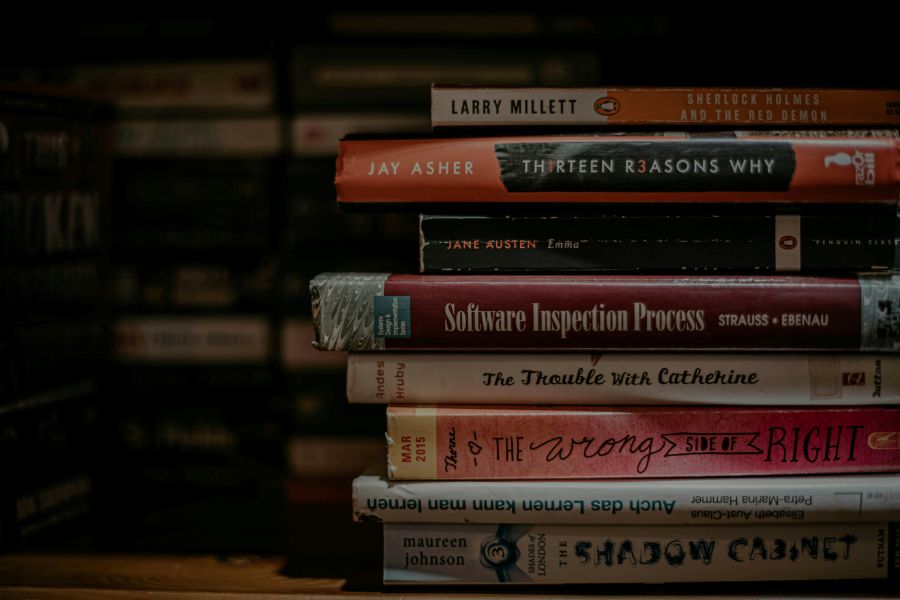
Photo: Piled Books on Brown Wooden Shelf. January 2021. QingYu. Accessed via Unsplash, licensed under Unsplash License.