Centre For Disinformation Studies

The Price of Shelter: How Canada’s Housing Crisis Fuels Disinformation

Canada’s housing crisis has made the public more susceptible to scapegoating and disinformation. Ji Young Kim examines how Russia’s Tenet Media operation exploited domestic culture wars, weakening societal resilience and undermining Canada’s reliability within NATO.

Centre For Disinformation Studies Environment, Climate Change, and Security

Weaponizing Climate Uncertainty: Climate Disinformation as a Hybrid Threat

While climate change is undoubtedly an urgent security challenge for NATO, its risks extend beyond physical and environmental consequences. This article examines climate disinformation as a hybrid threat that exploits uncertainty to delay climate action, divide allies, and undermine trust. Rather than attempting to convince populations to reject climate change entirely, climate disinformation can create enough doubt and disagreement to weaken collective action.

NATO and Canada

Stay or Leave? The Threat of Russian Influence in Albertan Separatism

What’s in it for Russia? As Russian involvement in the promotion of Alberta separatism comes into sharper focus, Zev Wood argues that it reflects a long-standing strategy employed by Russia aimed at covertly weakening its adversaries. He examines the ensuing implications for Canada’s sovereignty and economy as well as the knock-on effects on NATO.

NATO and Canada

Pay to Play: What the PJBD Suspension Reveals About U.S. Alliance Reliability and Canada’s Strained Defence Integration with Washington

Rachel Potter analyzes the Trump administration’s suspension of the Permanent Joint Board on Defence, arguing that it marks a qualitative shift in U.S. alliance behaviour in which shared defence institutions are weaponized as instruments of coercion, revealing a strategic logic that goes beyond burden sharing disputes and instead reflects an effort to reshape the institutional architecture of continental defence on American terms.

Security, Trade and the Economy

Should CANZUK be a goal for Canada? Part 2: The Free Trade Angle

* The second in a three-part series Post-WWII planners accepted free trade as a hallmark of Western prosperity, in part as insurance against war due to the economic interdependence it fosters. However, this institution has not only been challenged, but in the eyes of some, proven to be the product of naive liberal utopianism, and is Read More…

NATO and Canada

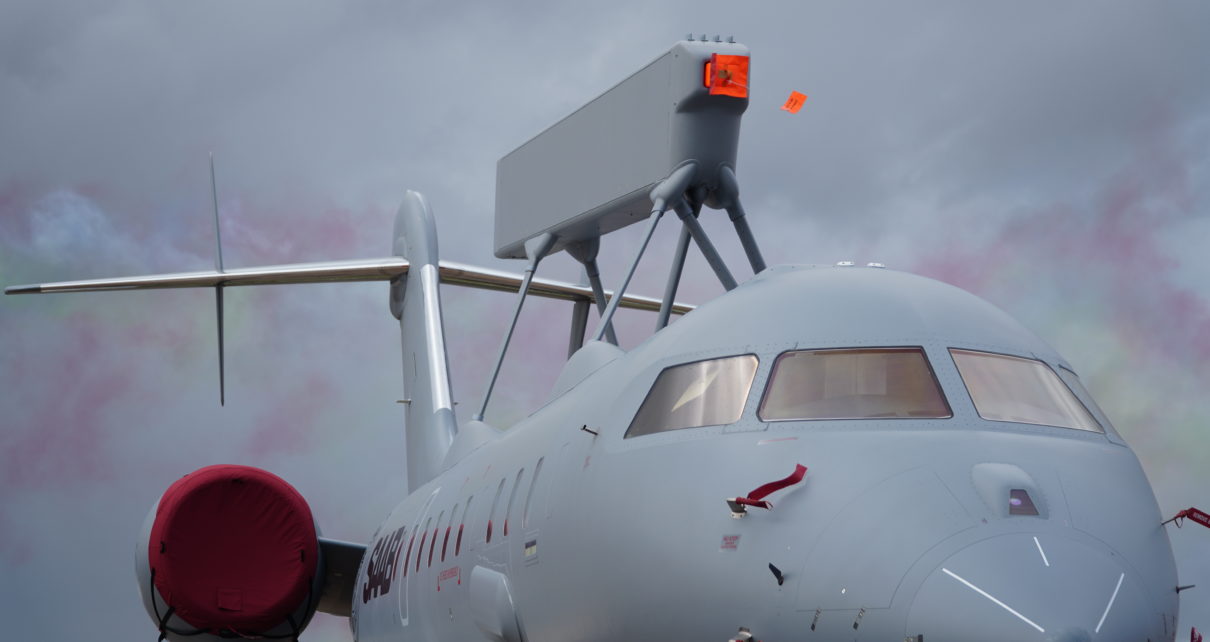
Charting a New Road: What the NATO Acquisition of the GlobalEye Means for Canada

In this article, Zev Wood examines the NATO and Canadian-level implications of NATO’s decision to replace its aging Boeing E-3 Sentry surveillance fleet with the GlobalEye. He argues that the deal, while reflecting NATO’s desire to improve its military capacity, points to a broader realignment away from the United States. He underscores that this moment provides Canada with a strategic window to entrench itself as a reliable alternative to the United States and a burgeoning defence manufacturing nation.

Centre For Disinformation Studies

Democracy and Disinformation, Part 1: A Structural Disadvantage

Can democratic states effectively counter disinformation without undermining the principles they seek to protect? Dominique Arseneau-Bruneau examines how legality, legitimacy, and institutional complexity shape democratic responses in the information environment.

Canadian Armed Forces

2 Years On: What “Our North, Strong and Free” has — and hasn’t — Delivered  

This April marks two years since the Department of National Defence released its updated policy titled “Our North, Strong and Free: A Renewed Vision for Canada’s Defence,” which pledged $8.1 billion over five years and $73 billion over 20 years in national defence, signifying a new commitment to a military that had previously been underfunded Read More…

Security, Trade and the Economy

What does the Venezuelan Oil Situation mean for Canadian Energy Security in the NATO Alliance?

In this article, Kaya Dupuis examines how the U.S. seizure of Venezuelan oil reserves in January 2026 creates an unprecedented opportunity for Canada to reshape North American energy dynamics. Can Canada move fast enough to capitalize on Venezuela’s decade-long recovery timeline and secure its position as the continent’s energy supplier before the window closes?