One of Canada’s greatest social and economic challenges today is its housing crisis. The nation is facing a housing shortage, rising construction costs, higher mortgage rates, and home prices that have outpaced average incomes. As a result, economic anxiety is increasingly widespread among Canadians of varying backgrounds—not only among low-income Canadians, but also among higher-income Canadians. Overall, roughly 60% report feeling anxious simply when thinking about their personal finances. Younger generations, around 63% of 18-24 year-olds, report feeling that owning a home is out of reach, around double those aged 55 and older who share the same sentiment. Younger generations also hold more pessimism towards immigrants for the housing crisis; Randy Besco, an associate professor of political science at the University of Toronto, argues that the rise in pessimism among younger people towards immigration reflects their overwhelming concerns about housing affordability. For many young adults, buying a first home is a major marker of adulthood, and the realization that homeownership will be delayed, forcing them to rent longer and live paycheque to paycheque, intensifies their concerns about immigration during a period of perceived scarcity, as well as their status anxiety in feeling that their future is shrinking.
While data indicates that young adults don’t exclusively blame immigrants for the housing crisis, attributing the problem to other factors such as poor government management, they remain highly susceptible to framing that highlights one hyper-visible variable: population growth versus housing supply. The sheer visibility of population growth makes it one of the easiest variables to latch onto, as the argument that “more people competing for a fixed number of homes causes rents to rise” is intuitive and directly observable from the lack of growth in housing supply relative to population growth.
Despite widespread criticism of the government’s handling of immigration, many Canadians still direct their frustration toward newcomers themselves, believing that their arrival intensifies competition for scarce resources. Polling reflects this tension: in 2025, 59% of Canadians agreed that the country should prioritize helping unemployed Canadians over recruiting skilled immigrants—a figure that has fluctuated over recent years but consistently demonstrates a perception of zero‑sum competition during periods of economic strain. This combination of economic stress and feelings of scarcity creates a receptive environment for disinformation, making Canadians more vulnerable to actors who amplify and reinforce these narratives.
In September 2024, the U.S. Department of Justice unsealed an indictment exposing Tenet Media, a Tennessee-based startup, in a sophisticated foreign influence operation. On the outside, Tenet Media looked like any normal, independent North American company generating political videos on the internet; however, it was secretly receiving funds of nearly $10 million USD from the Russian government through hidden bank accounts. The platform company used these funds to hire prominent Canadian right‑wing commentators to produce content that amplified cultural wars and polarizing narratives about immigration, national identity, and government failure. By inserting these narratives into Canada’s already tense housing crisis discourse, Tenet Media’s operation sought to exploit a prolonged period of heightened emotional vulnerability by redirecting public frustration toward internal scapegoats and exacerbating social and political divides.
This operation is an example of substrate wedging, which is described as an asymmetric method of influence in which an external state deliberately exploits divisions inside a rival’s domestic society. The external actor inserts itself into the target’s internal environment—often by secretly funding or supporting local citizens, businesses, or specific voices—to intensify existing conflicts and weaken the country’s social cohesion. The goal is to fracture the target’s internal unity so severely that it cannot support, or be supported by, its allies.
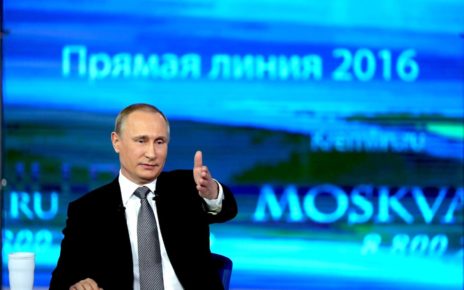
Russia, the external actor, covertly funnelled $10 million USD through employees of its state-backed media network, Russia Today (RT), to finance Tenet Media, which had been founded by Canadian YouTuber Lauren Chen and her husband Liam Donovan. Tenet Media then used this money to hire popular heterodox and far-right commentators, including Canadian YouTuber Lauren Southern, to mass-generate videos on culturally and emotionally sensitive topics that explicitly targeted Canadian sensitivities, including immigration and housing, using alarmist narratives to convince viewers that their country was collapsing. Commentators exploited real domestic issues and dilemmas in Canada; they were not spreading overt lies, but rather manipulating context and stripping away alternative explanations, such as the structural economic factors behind the crisis, to effectively place their audiences in an echo chamber. The goal was for Canadians to attribute the consequences of domestic systemic flaws to foreigners, creating misattributed anxiety, political polarization, and volatility.
While Tenet Media’s particular case likely has moderate implications on Canadian society, Russia’s substate wedge strategy remains a cost-effective way to covertly decay open democracies by exacerbating existing domestic issues. Rather than inventing a grievance from scratch, posing an overt attack, or spreading explicit propaganda, Russia’s Tenet Media operation was notably difficult to detect because local Canadian citizens were used as proxies. By weaponizing free speech in an open democracy, Russian operations could bypass corporate and legal defences of free speech because they were shielded by the authenticity of Canadians. Canada’s established ecosystem of internationally influential right-wing commentators makes this form of proxy influence especially consequential. Its exploitation can foster public cynicism, political exhaustion, and disengagement, forcing open democracies to confront a central paradox: foundational values like free speech can be weaponized against the very systems they sustain.
As Canada has one of the world’s largest Ukrainian diasporas and has been one of Ukraine’s strongest financial and military allies, if Russia uses Canadian voices to convince other Canadians that their country is a “hellhole” due to housing scarcity and immigration, it could effectively reduce public support for sending aid overseas or accepting newcomers. One of the biggest challenges to NATO democracies’ future preparedness against such covert tactics, exacerbated by the rise of artificial intelligence, is inequality in citizens’ ability to assess reliable information, especially on social media. The caveat is that expanding access to information and media literacy could worsen cynicism, further intensifying political polarization and discouraging political participation. Instead, NATO allies should enforce stricter anti-money-laundering regulations requiring media companies to verify that their funding comes from legitimate sources, while also devoting as much attention to addressing domestic issues as they do to countering international threats, since both can undermine national security.
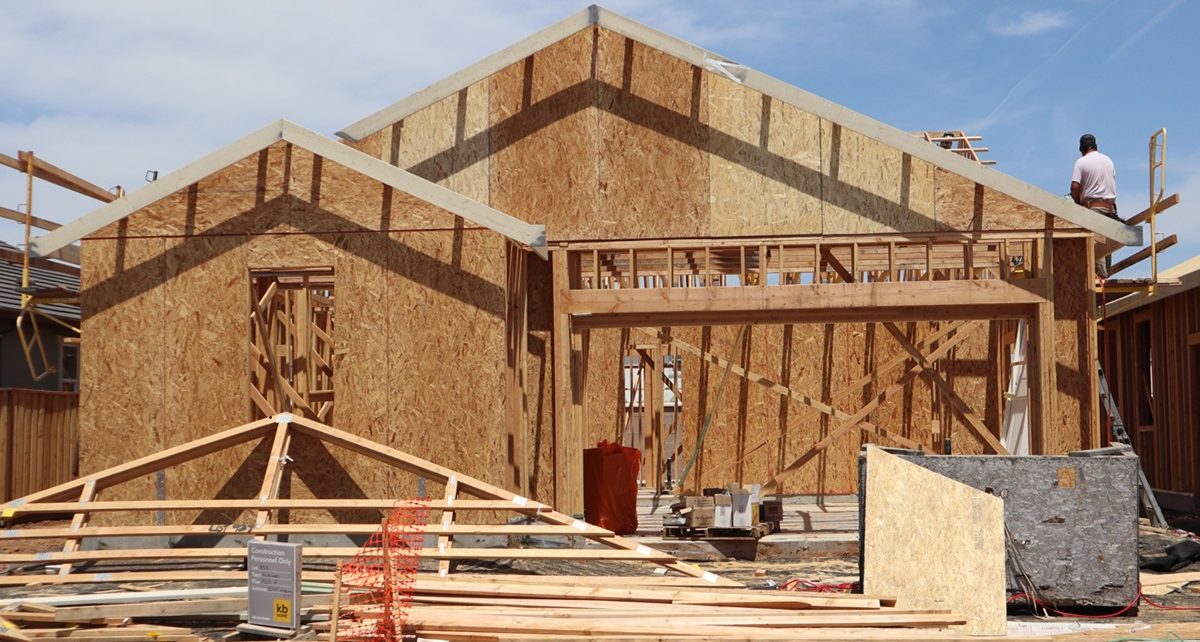
Photo: “New Home Construction in Elk Grove” (2026), by D Goug via Pexels. Licensed under the Pexels License.
Disclaimer: Any views or opinions expressed in articles are solely those of the authors and do not necessarily represent the views of the NATO Association of Canada.