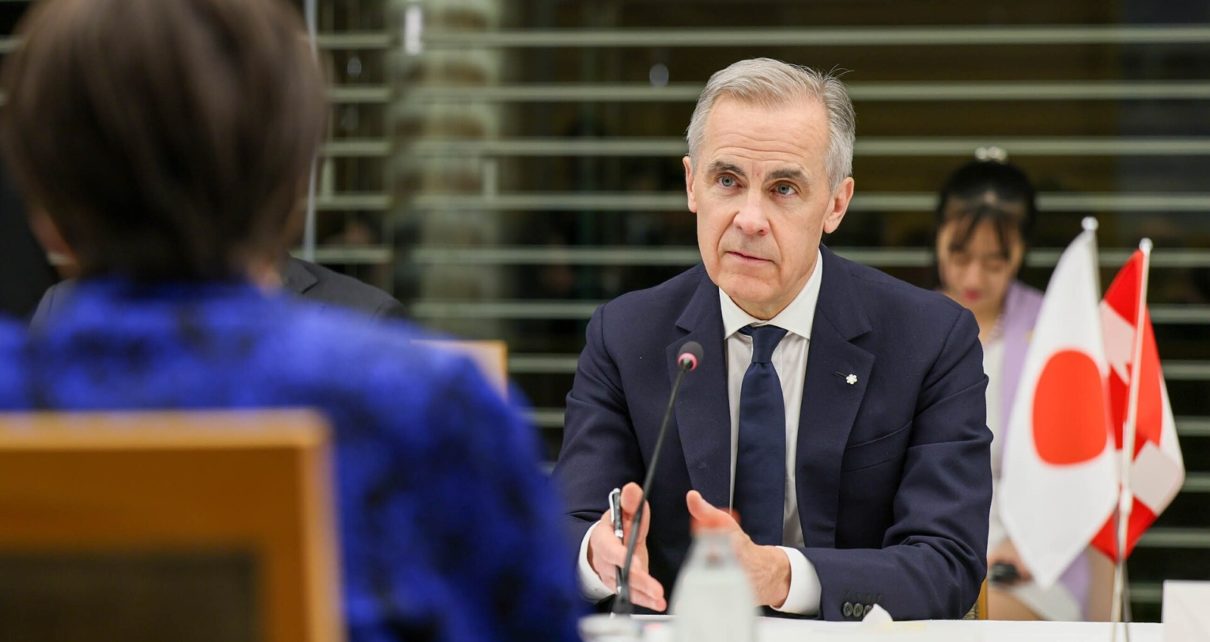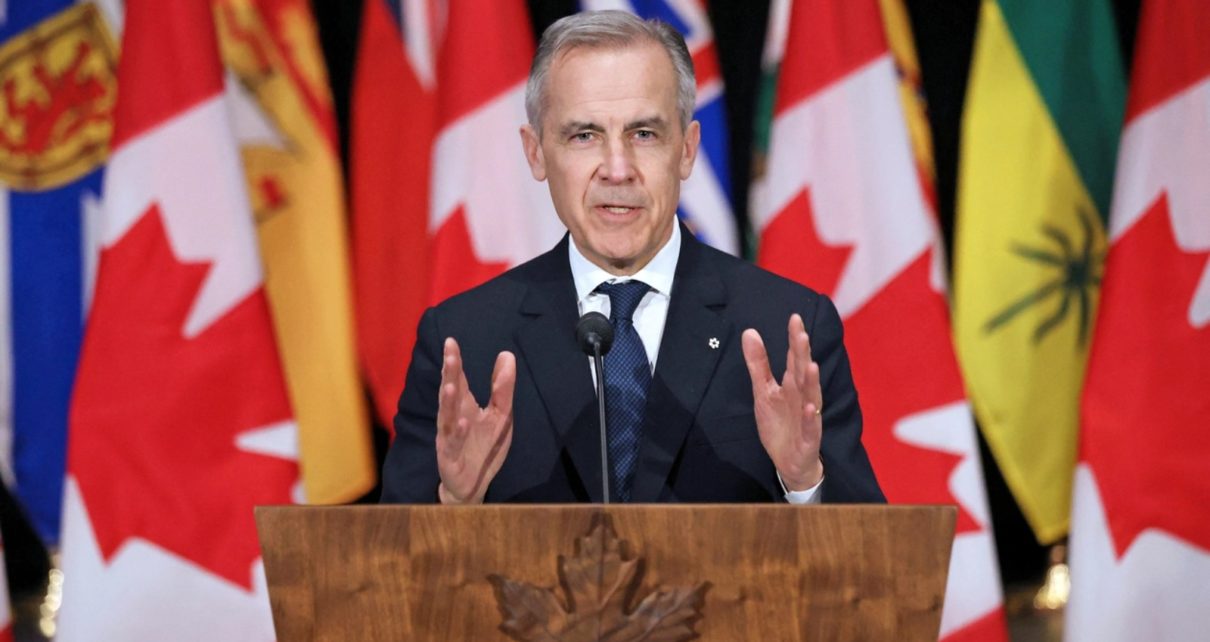
What does Mark Carney’s decision to re-engage China signal about Canada’s strategic options in a more coercive global economy? Tasneem Gedi argues that Ottawa’s limited recalibration with Beijing reflects an unavoidable strategy of hedging amid U.S. unpredictability. While such engagement may expand Canada’s room for maneuver in an increasingly coercive global economy, it carries risks and thus must be pursued narrowly, conditionally and in close alignment with Canada’s alliance commitments.
Tag: Security
Global Peace Summit of Emerging Leaders: Reflections on Peacebuilding, Youth Leadership, and Canada’s Role in Global Security
From 20–23 January 2026, the interns of the NATO Association of Canada, Nataliia Dikalchuk, Isabelle Zhu and Matthew Reddock attended the 5th Global Peace Summit of Emerging Leaders in Bangkok, Thailand. The event was organized by Humanitarian Affairs Asia at the United Nations Conference Centre. The Summit convened approximately 400 young leaders from over 60 Read More…
Shifting Priorities in Ukraine: Is NATO’s WPS Agenda Under Threat?
WPS policies are often disregarded when matters deemed of higher priority emerge, despite NATO’s high engagement of WPS values through public diplomacy, military, and political means. Russia’s invasion of Ukraine has posed the biggest security crisis to NATO in decades, and considering the gendered dimensions of the war, which has seen high rates of sexual and gender
based violence, NATO’s limited WPS response leaves the future of the Agenda in question. As a core tenet of NATO’s values, WPS must not be disregarded; member states that have adopted FFPs, such as Canada, should continue to drive the WPS agenda forward. This article makes key recommendations, including shifting to a human rights-based approach (HRBA) and employing more intentional language in operational directives, to support Ukraine’s current WPS policies.
Divide and Conquer: How Gender-Based Disinformation Weakens Western Militaries
This article examines misogyny and broader anti-gender ideology as under-recognized vectors of hybrid warfare that undermine NATO’s democratic resilience, military cohesion, and Alliance legitimacy. It argues that foreign adversaries exploit entrenched patriarchal and exclusionary narratives through gender-based disinformation to exacerbate polarization, target political actors, weaken trust in defence institutions, and delegitimize NATO. The article concludes that the principles of NATO’s Women, Peace and Security (WPS) policy counter foreign disinformation by limiting the impact of harmful gendered narratives and reinforcing pluralism, and what can be done to strengthen democratic resilience and NATO’s collective defence in an era of hybrid conflict.
Algorithmic Profit Disclosure Regulation: Corporate Responsibility for Disinformation
Increasingly, NATO countries have begun to describe digital media disinformation not as a discrepancy in communication between formal and informal state actors, but as a risk to national security. This shift is reflected in the Cyber Threat Assessment for Canada 2025, which notes that foreign state actors are using artificial intelligence (AI) to manipulate information, Read More…
Arctic Sovereignty and Geopolitical Competition
As the Arctic transforms from a frozen frontier into a contested geopolitical arena, questions of sovereignty, environmental responsibility, and security have converged into one of the most pressing challenges in the 21st century. Once referred to as a remote, ice-covered expanse, the region is now a stage where the impacts of climate change intersect with Read More…
The Economics of Maritime Risk and its Impact on Prices
The London market’s Joint War Committee (JWC), a highly influential advisory group of market practitioners, designates the Listed Areas or areas with “increased risk of war-related perils.” Voyages through Listed Areas must be notified to hull insurance underwriters by shipowners which ultimately triggers a negotiation for an additional premium (AP) for war risk coverage, usually quoted as a % of hull value for a 7-day period. Faced with Read More…
Treating Freshwater as Strategic Capital For Canada’s Agri-food Reliability
Water is becoming one of the hard limits on how much food the world can reliably produce. For Canada and its trading partners, that turns water into a constraint that shapes resilience, trade strategy and security. How Water is Moving Up The Security Agenda Across countries, water is moving from background resource to strategic constraint on economic resilience and stability. Agriculture accounts for roughly 70% of Read More…
The Impossible Wall: Exposing Holes in European Strategy Against a Russian Drone Swarm.
Year 2025 has seen unprecedented cases of Russian incursions into NATO territory, with dozens of Unmanned Aerial Vehicle (UAV) sightings forcing airports to shut down, causing significant delays and financial damage. More so, these incidents reveal the new dimension of the hybrid warfare Moscow is waging against Europe that risks tipping the balance of power on the continent. Responding Read More…
When Narratives Undermine Security: How Disinformation Shapes the Environment Around Canada’s Defence Decisions
Modern adversaries no longer need to cross borders to weaken Canada’s security. They focus instead on the environment in which defence decisions are made. Public trust, ideas about cost, and perceptions of Canada’s place in the world become strategic targets. When the informational space around defence policy is filled with confusion or mistrust, even the Read More…