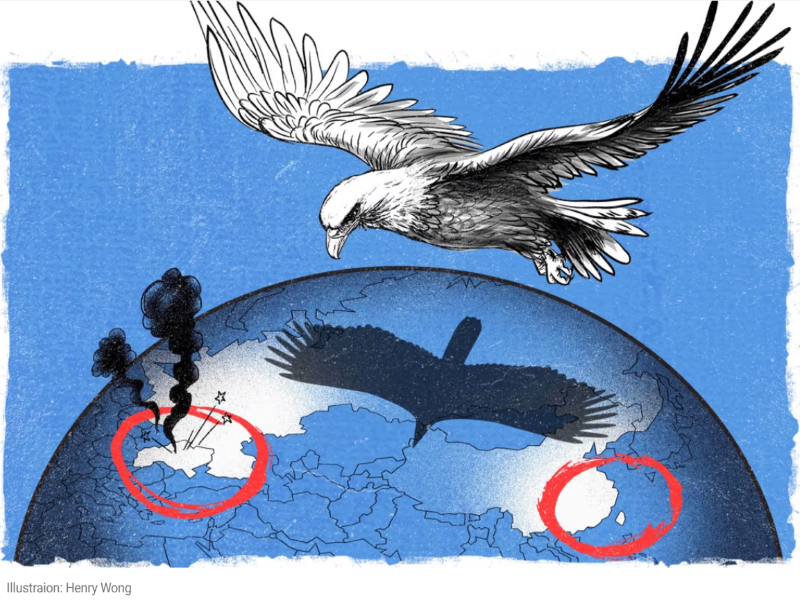
Following the Xi-Trump meeting, the US and China have achieved “strategic stability” via various trade commitments, such as the purchase of 200 Boeing airplanes and of agricultural products. On the geopolitical front, Washington has decided to pause a 14 billion dollars arm sale to Taiwan. Canada, as a Middle-Power, is hence situated among its allies between the two superpowers. To navigate and to persevere amidst pressure from both sides, defending Canadian interests has been met with various difficulties in recent years.
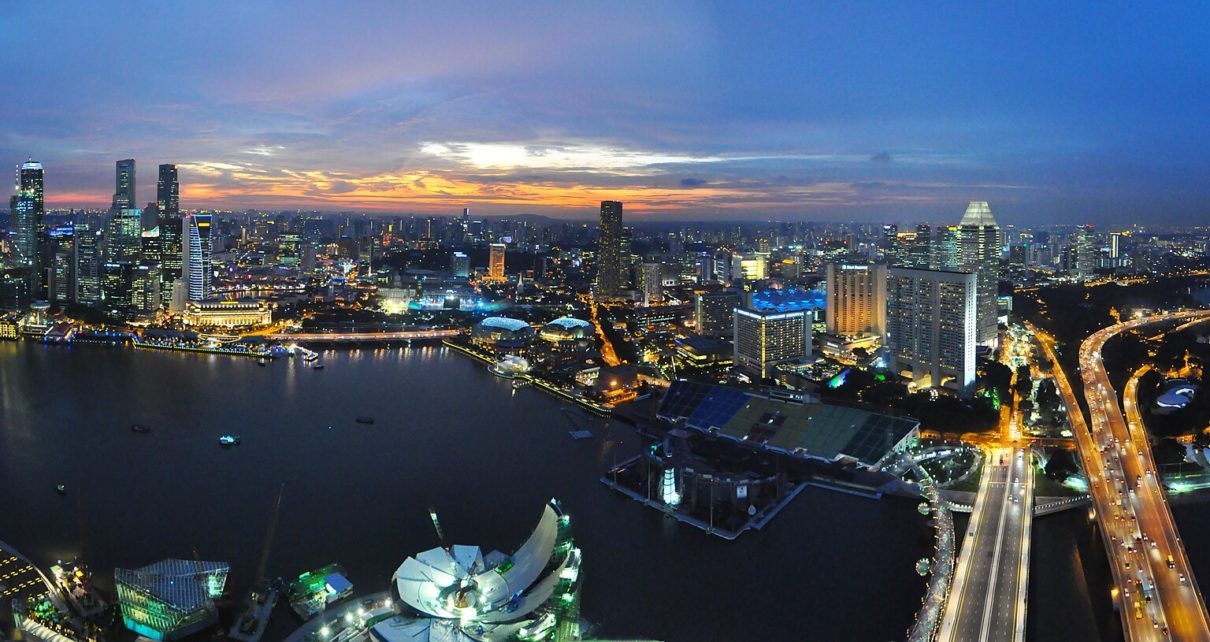
Both countries have tariffs on Canadian products. China has a combined tariff rate of 14.9% on Canadian canola seed, despite a significant decrease from the previous 85%. At the same time, Washington is embroiled in a trade war against its northern ally, an economic conflict originating from February 2025, which saw Canada retaliate with counter-tariffs. Last year, the US President threatened an invasion and incorporating Canada as the 51st State, whilst geopolitical tensions with China have been omnipresent in the past decade. The same economic difficulties have been met by European Middle-Powers such as France and Germany. Yet, Singapore, a small state in South-East Asia with a population of 6.11 million, has achieved a balance in its relationship vis-à-vis the US and China.
Singapore possesses a stable and predictable relationship with both the US and China amidst great power competition. It cooperates with America on a security level via joint-military exercises, whilst receiving preferential market access to Mainland China. Its ability to hold a strong bargain despite its size rests on Singapore’s strong economic status, and importantly, its multilateral alliance with ASEAN. When ASEAN countries were subject to tariffs by the US, it obtained a free-trade agreement with China as a response. Singapore thrives when China and the US share common commitments, allowing the Southeast-Asian nation to take position on matters accepted by both Beijing and Washington. Singapore and the US share a strong bilateral military partnership, with the recent US sales of arms to Singapore which includes aircrafts and torpedoes.
With China’s growing influence in the region, Singapore and its ASEAN allies desire to retain its sovereignty and their own domestic political systems. As such, numerous countries in the region have partnered with the US in defence, which includes new defence cooperation initiatives. It is through a coalition of regional powers that a bloc can be formed, with the former primarily being an economic organization. Being a non-threat to both Beijing and Washington allows for a middle positioning, however its relevance remains sizeable enough to avert both sides from interfering with its domestic politics.
Attempting to achieve similar results for Western middle-powers may contradict the conventional world order established post 1945. Yet, Singapore’s model serves as an interesting option to be explored, with the Trump administration being unpredictable via its economic and military threats to America’s long-time allies.
Canadian Prime Minister Mark Carney has recently deepened relations between Canada and middle powers, from the EU to Japan, and Korea. Middle powers, however, have yet to form a united geopolitical bloc. Propositions such as CANZUK, or a new alliance between likeminded nations could mimic Singapore’s relation with its Southeast Asian neighbours, allowing Canada more manoeuvrability in face of geopolitical adversity.
In lieu of a need for diversification, Ottawa has sought to improve trade ties with China. Canada is bound to receive Chinese-made EVs at reduced tariffs, benefitting the Canadian consumer. China, on its end, has made the decision to buy a large amount of Canadian canola, following Mark Carney’s meeting with Xi Jinping. Carney’s China strategy mirrors Singapore’s, in its ability to reach trade pacts. However, Washington has made clear that it will not allow Chinese EVs to enter US territory for sale via Canada. Being a traditional US-ally, and situated in its geopolitical hemisphere, the Canadian government does not enjoy Singapore’s geographical distance from Washington. Carefulness in balancing a trade rapprochement with Beijing with accounts to American sensitivities could permit for a well-balanced result.
Both China and the US have agreed upon the necessity of re-opening of the Strait of Hormuz. With a US President adamant on the need for NATO members to participate in global defence activities, Ottawa could seek to further boost its defence spending. Improving spending on defence, akin to Singapore’s purchase of American weaponry, could quell Washington’s anxiety on its perception of Canadian inactivity.
Canada, throughout history, has benefitted from acting independently on the international arena. From the likes of John Diefenbaker’s wheat policy vis-à-vis China, Brian Mulroney’s position on Apartheid South-Africa, to Jean Chrétien policy on the Iraq War. An execution of realpolitik in its purest form, like Singapore’s founding father Lee Kuan Yew’s US-China policy, would position Canada in a favourable position. Navigating a trade rapprochement with China alongside a continuous security alliance with the Americans, whilst advocating for a new alliance with likeminded nations, would re-create a Singapore infrastructure in the North-Atlantic for Canada.
Any views or opinions expressed in articles are solely those of the authors and do not necessarily represent the views of the NATO Association of Canada.
Image Credit: Chensi Yuan, “Singapore city night skyline from Marina Bay Sands panorama 2010”, licensed under the Creative Commons Attribution-Share Alike 3.0, accessed via Wikimedia Commons.