Violent extremism is one of the most pressing challenges the world faces today, with tens of thousands of people dying every single year as a result of Violent Extremist Groups (VEGs). Unfortunately, one of the most underappreciated challenges in combating violent extremism is addressing the role women play. Addressing violent extremism requires a multifaceted lens: physical, social, political, economic, and cultural factors can all play a role. Both men and women can become involved in extremist groups. Women can become victims, as well as perpetrators and enablers. They can both participate in and help prevent extremist activities. For this reason, applying a gender-responsive lens to preventing violent extremism (PVE) is critical to understanding and addressing the complex dynamics at play.
Drivers of women being recruited into violent extremist groups can generally be categorized into push and pull factors. Push factors are those conditions and circumstances that marginalize women and drive them to join extremist organizations.
Push factors can be divided into three main areas: economic and educational factors, limited decision-making, and social and cultural barriers. Women who have limited access to employment and education become more susceptible to recruitment by extremist groups, as they can provide financial stability and support that is otherwise not available. Women who are excluded from political, community, or family decision-making may begin to feel isolated and marginalized, which can lead them to seek agency and power through joining extremist organizations. Social and cultural practices rooted in patriarchal norms, misogyny, and/or gendered violence can cause women to turn to violent extremists as a means of challenging the stereotypes imposed upon them of being weak and submissive and to attain greater independence and autonomy.
While push factors prompt women to leave their previous lives behind, pull factors are additional incentives which make extremist groups attractive to join. This can include promises of wealth, support, a sense of purpose, a sense of belonging, or romantic adventure. Violent extremist groups are a means of escape for women looking to find identity, purpose, and a sense of belonging, which are often unavailable to them within their family and local communities. An example of recruitment by violent extremist groups is the Nordic Resistance Movement (NRM), a pan-Scandinavian neo-Nazi organization established in 2016. Women in these movements are called “race warriors” and are encouraged to share their activities online, helping make the group appear normal and attractive to potential recruits. On social media, they present them as empowered, strong, and independent, making it more relatable and socially acceptable. However, the empowerment is confined within patriarchal boundaries, where they are expected to participate in the bounds of extremist male-dominated goals.
Women are often the first to notice behavioural and ideological changes within their families and communities. In their roles as mothers, wives, community leaders, and informal mediators, they detect early signs of radicalization. They also provide stability, support, and emotional insight to family and community members. Women serve as community leaders by providing essential services such as healthcare or by leading advocacy and support programs like workshops and peace walks. This makes them a strategic advantage for stakeholders seeking to implement intervention and prevention programs within local communities.
This has prompted many organizations to support women in countering violent extremism within their communities by giving women the capacity-building training to recognize early warning signs of radicalization. MotherSchools: Parenting for Peace is a programme developed by Women without Borders that has opened over 80 projects across 40 countries. It empowers women at the community level through weekly workshops of 3 to 4 hours over a period of 4 to 5 months, building the necessary skills to become active agents of change in preventing radical influences. While women can be the first to notice these behavioural and ideological changes, these programs empower them to recognize that these may be caused by radical influence. The program takes a gender-responsive approach by working with local women in the community to build awareness and understanding of violent extremism, empowering them to be active agents in preventing it. Programs like MotherSchools highlight how there needs to be more women-led counter-extremism efforts.
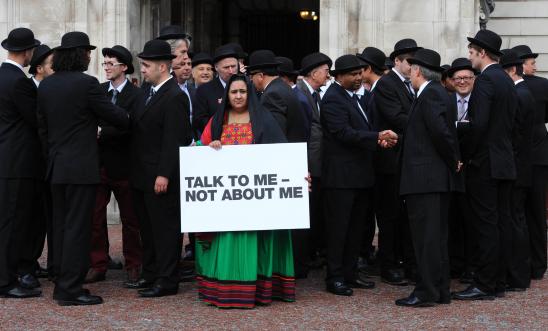
Gender-blind PVE projects often lack meaningful engagement of women within the communities that are targeted for long-term design, monitoring, and evaluation of programs. Moreover, when women are consulted in these programs, they are often treated as an afterthought- used mainly to help reach male targets rather than being meaningfully involved in designing, leading, and shaping the program. Gender blindness limits the organization’s ability to implement successful interventions, as they fail to take into account how PVE initiatives impact women and men differently. A gender-blind PVE perspective fails to consider women’s needs, concerns, and the significant role they play as victims, perpetrators, and enablers of violent extremism.
One of NATO’s current WPS efforts focuses on increasing women’s participation in the security and defence sector. The assumption that simply increasing the number of women in peacekeeping missions and the armed forces will advance gender equality and integrate a gender perspective is not realistic. Although the share of women in NATO member and partner militaries rose between 1999 and 2016, scholars argue that numbers alone do not translate into influence over policy or decision-making. For NATO and its partners, it is essential not only to focus on integrating women into the armed forces but to recognize and support the vital role women play in community-led counter-extremism and prevention efforts.
One recommendation for future initiatives is to make sure women involved in peacebuilding and PVE initiatives have an active role in developing these programs. This means that NATO works alongside women to recognize early warning signs of radicalization. This directly aligns with NATO’s WPS Agenda, Article 28, which stresses that working with local women’s organizations and civil society strengthens and speeds up conflict-prevention and military planning. Stakeholders need to understand how gender shapes violent extremism, and how a gender analysis helps reveal those dynamics. This requires stakeholders to build relationships with local women to understand their needs and concerns-relationships based on empathy, trust, respect, adaptability, responsibility, and clear communication. Once these relationships are in place, local women, whether community leaders, mothers, educators, or youth representatives, can work alongside stakeholders to use these insights and findings to meaningfully participate in different stages of PVE initiatives, including curriculum design, planning, delivery, and monitoring. An advisory board is one way to support this, giving women an active role before, during, and after implementation to ensure long-term commitment and local ownership.
A holistic gendered lens is critical for addressing and preventing violent extremism, as women are not only vulnerable in ways that differ from men, but can also be active agents in preventing it. In PVE, adopting an intersectional approach that considers how gender, culture, and class intersect to shape women’s experiences and challenges within peacebuilding and PVE efforts. This means building relationships within the community to understand local realities and gather the insights needed to design targeted and local context-driven interventions. As the world faces ongoing uncertainty, conflict, and rising geopolitical tensions, women play a vital role in supporting PVE efforts across NATO countries-not only as mothers or wives, but also as community leaders and key contributors to long-term peace and security.
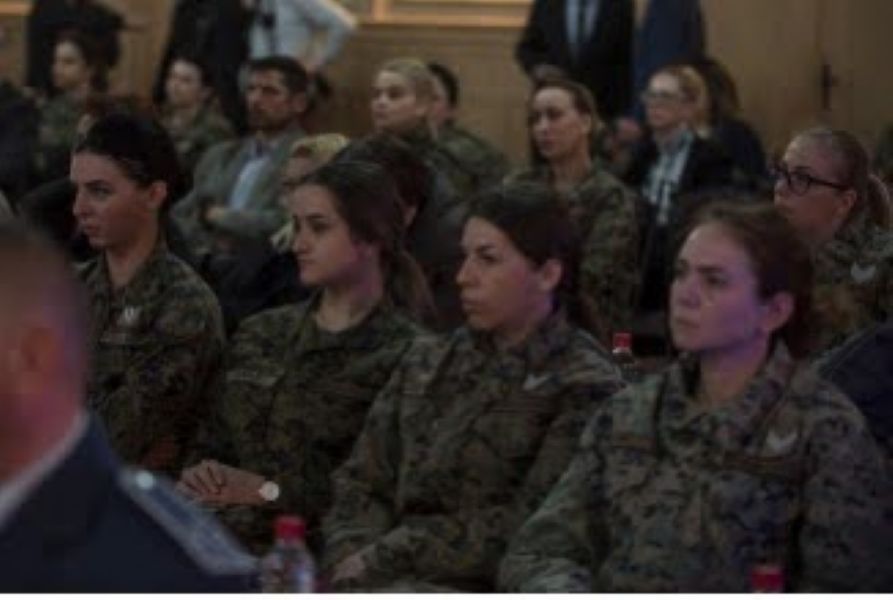
Photo: Women, Peace and Security CHoD Network Conference (2019) via Wikipedia Commons Licensed Under Public Domain
Disclaimer: Any views or opinions expressed in articles are solely those of the authors and do not necessarily represent the views of the NATO Association of Canada.



.jpg)
