NATO has consistently recognized climate change as a profound security threat. Yet when Allies convened at The Hague in 2025 to commit to what is perhaps their most ambitious defence spending target in history, climate adaptation was conspicuously absent from the conversation.
The new framework targets 5% of GDP annually by 2035, introducing a new 1.5% GDP category for defence-related resilience spending whose scope remains largely undefined, raising a crucial policy question: what should count?
Given NATO’s own recognition of climate change as a direct threat to military readiness, infrastructure, and operational effectiveness, the Alliance should formally recognize climate adaptation as eligible spending within the 1.5% framework, particularly as Allies prepare for the plan’s 2029 review. Canada, as host of NATO’s Climate Change and Security Centre of Excellence (CCASCOE), is institutionally well positioned to lead this push within the Alliance and would benefit strategically as an Arctic country facing growing climate-driven security threats.
An Ambiguous Spending Category
The 1.5% defence spending category remains largely open-ended and therefore offers a crucial policy opening. The Hague Declaration describes the category as ancillary, aiming to “protect our critical infrastructure, defend our networks, ensure our civil preparedness and resilience, unleash innovation, and strengthen our defence industrial base.” Beyond this general language, however, NATO has provided no further guidance on what expenditures qualify – in contrast to the 3.5% requirement, which the communiqué explicitly ties to direct military planning and NATO Capability Targets.
In response, policy analysts at the Atlantic Council have called on NATO to better define the category’s substance ahead of the 2026 Ankara Summit, including by more precisely defining critical infrastructure and establishing common reporting mechanisms among Allies. Without clear guidelines, Allies risk devoting this spending to projects largely irrelevant to collective security and inconsistent with NATO goals. Italy has pitched a €13.5 billion suspension bridge to Sicily as part of its 1.5% expenditure, for instance, a proposal which has been criticized as serving domestic economic interests rather than Alliance security.
Left under-defined, the 1.5% category risks being claimed by projects of limited security value and crowding out precisely the kinds of investments – such as climate adaptation – that would most directly strengthen Allied readiness and infrastructure.
A Political Gap, not a Conceptual One
The absence of climate from the new defence spending framework is striking given NATO’s broader stance on the issue in recent years. Since at least the 2010 Lisbon Summit, Allies have collectively recognized climate change as an accelerating threat with ambitions to integrate adaptation into NATO policy. This trend was shown most notably at the 2021 Brussels summit, where Allies agreed to the Climate Change and Security Action Plan (CCSAP), recognizing climate change as a threat multiplier affecting Allied security.
If NATO’s agenda has included climate for decades, with heightened attention in recent years, then why is it absent from the most significant update to the Alliance’s spending framework? Climate’s exclusion from The Hague framework is not a reflection of Alliance-wide consensus but rather a political accommodation to Washington: the Trump administration’s retreat from climate security led directly to the topic’s removal from the Summit agenda. NATO’s institutional climate commitments, such as the CCSAP and its resultant annual impact assessments, remain formally intact.
The case for inclusion rests on NATO’s own assessments, which have consistently identified climate change as a direct threat to the infrastructure the 1.5% category is designed to protect.
Climate Adaptation as Alliance Resilience
NATO’s 2024 Climate Change and Security Impact Assessment documents climate change as a profound and growing threat to Allied security across multiple dimensions. Climate concerns can indirectly drive or exacerbate domestic and geopolitical conflicts by applying new economic and sociopolitical stressors. Extreme weather events such as heatwaves, floods, and wildfires strain Allied resilience, damage critical infrastructure, and hinder NATO’s primary tasks. Under such conditions, weapons systems require more frequent and costly maintenance, military personnel face health risks that limit operational capacity, and crucial civil transportation and telecommunications networks are frequently disrupted.
The North Warning System (NWS) offers an illustrative example. As a joint Canada-US radar network tasked with surveilling Arctic airspace, it plays a crucial role in maintaining Canada’s Arctic sovereignty. Yet permafrost thaw, flooding, and coastal erosion endanger the system’s infrastructural integrity and disable safe access to many of its sites. Protecting this infrastructure against a changing climate is therefore an essential defence imperative, and precisely the kind of investment that the 1.5% resilience category should incentivize.
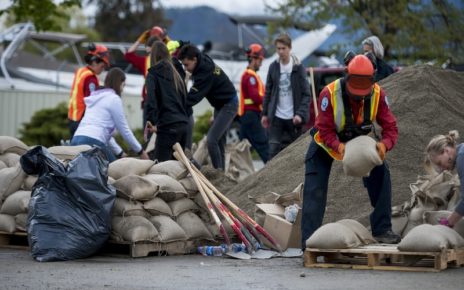
Climate change also strains Allied civil preparedness. As Allied forces are increasingly deployed to assist civil authorities when climate-related disasters strike, personnel and resources are diverted away from other defence concerns. In 2023 alone, NATO forces responded to 29 climate-related emergencies across 14 countries, and Canada’s own 2023 wildfire season required military personnel to be deployed for 131 days. Investing in climate adaptation in the present therefore reduces the long-term burden on Allied militaries.
In this context, many climate adaptation measures fit naturally within the 1.5% category, whose core objectives include critical infrastructure protection, civil preparedness, and resilience. Indeed, the CCSAP invokes precisely the same language when it explicitly commits NATO to incorporating “climate considerations into its work on resilience, civil preparedness, defence planning, capability delivery, assets and installations, standards, innovation, training, exercises, and disaster response.” As the Council on Strategic Risks has warned, “if resilience investments fail to account for climate risks […], NATO countries risk reinforcing yesterday’s threats while remaining exposed to tomorrow’s shocks.”
Why Canada Should Lead
Amidst a political environment where the United States continues to sideline climate concerns, other well-positioned Allies bear a particular responsibility to reintroduce climate policy into NATO’s agenda. Canada has both the institutional standing and the strategic motivation to lead the push for climate adaptation within the 1.5% framework.
As host of CCASCOE, Canada already possesses a credible platform and network through which to advance the argument that climate adaptation belongs in the new spending framework.
Strategically, many of Canada’s most acute security concerns reside in the Arctic, which faces growing threats to sovereignty as it warms at roughly four times the global rate, resulting in permafrost thaw, rising sea levels, and shifting coastlines. The threat to the North Warning System is only one example of the many adverse security effects posed by a warming Arctic. Canada’s Our North, Strong and Free defence policy explicitly recognizes that strong Arctic security requires investment in climate resilience; pushing for inclusion in the spending framework would allow Canada to make good on that claim.
Looking Ahead to 2029
The Hague Declaration stipulates that the trajectory and balance of the 5% spending plan will be reviewed in 2029 in light of the evolving strategic environment. The 2029 review offers a realistic opportunity to formally incorporate climate adaptation into the 1.5% framework. This definitional work should begin now, ahead of the 2026 Ankara Summit.
Formally recognizing climate adaptation within the 1.5% framework would more closely align NATO policy with existing Alliance commitments and doctrine. Canada is uniquely positioned to champion this push and should make the case before the 2029 window closes.