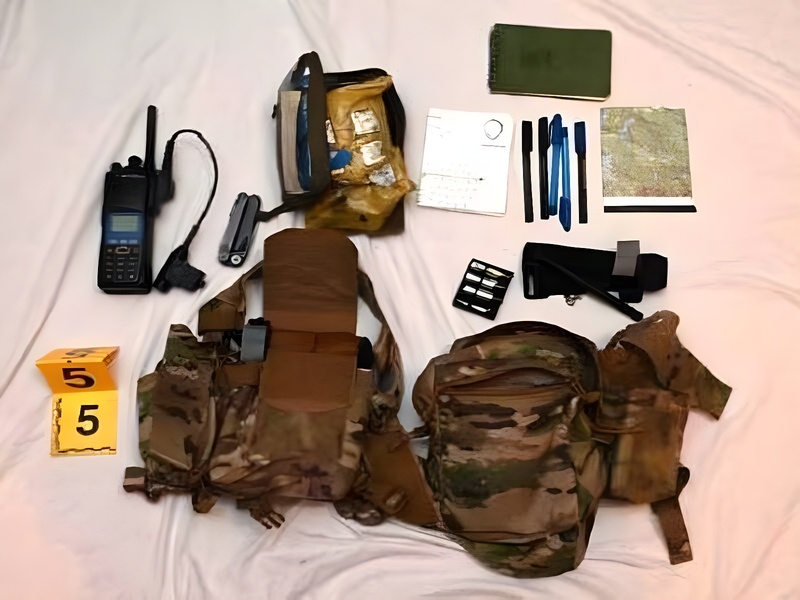
In the early morning hours of July 8th, 2025, the Royal Canadian Mounted Police (RCMP) arrested four men in Quebec. The men in question had been building up a stockpile of weapons. Over 11,000 rounds of ammunition, 83 firearms, and over a dozen explosives were found. They had, for years, been engaged in military-style training to form an anti-government militia and forcibly take over land near Quebec City. Soon after, it was revealed that all four men had intimate connections to the Canadian Armed Forces (CAF). One was a veteran, another a civilian instructor, and two others were active service members stationed just outside of Quebec City.
A History of Extremism in the CAF
The Quebec City case marks the first time a Canadian soldier has been charged with terrorism, but there is a history of far-right extremism within the CAF. Since 2015, repeated investigations have found ties between members of the CAF and far-right organizations. In 2015, several CAF members who had served in Afghanistan founded the Islamophobic group, La Meute. A CBC investigation showed that 75 members of the group’s Facebook page were current or former military personnel. Two years later, in 2017, news organizations exposed five members of the armed forces as members of the Proud Boys, a far-right group that Canada has since designated a terrorist organization. In 2019, a Winnipeg reservist was exposed as a member of the neo-Nazi group, The Base. Less than a year later, a member of the Fourth Canadian Rangers rammed his truck into the gates of Rideau Hall while armed in an attempt to ‘confront’ former Prime Minister Justin Trudeau.
Extremism within the forces has also found its presence online. CAF members have been frequent posters on neo-Nazi websites such as Iron March, and expressed support for far-right groups such as the Three Percenters and the Soldiers of Odin. These groups have been known to be Islamophobic, anti-immigration, and – in the case of the Three Percenters – believe in overthrowing the government. Some members were engaged in recruitment through these far-right platforms, encouraging sympathizers to join the CAF. As recently as March of this year, CAF members were found to have profiles on the ‘whites only’ dating site, WhiteDate.
Tackling the issue of far-right extremism within the military is of utmost importance. Its presence hurts cohesion and morale within the forces, hampers attempts to recruit more women and people of colour, and undermines the trust that the Canadian public and international allies have in the CAF. NATO’s effectiveness is tied to the trust in, and reputation of, its member states. The presence of far-right extremism within any member state’s armed forces undermines NATO’s own stated goals of diversity and inclusion, and hurts public trust in the alliance at large.
The issue of extremism in the military is not unique to Canada. Several NATO countries including Germany, Belgium, and the United States, have had to grapple with the threat of extremism within their armed forces in recent years. This trend is not surprising given the rise in far-right extremism over the past decade. A rise in civilian levels of extremism can be expected to be reflected in the country’s military as well.
The skills and duties that military service involves can entice members of the far-right. Experts on extremism have consistently warned that extremist movements are attempting to join, and recruit from, the armed forces. The technical skills, such as how to fire a gun and construct a bomb, as well as the legitimacy military service brings, are seen as a benefit to their cause. As one army reservist wrote on a neo-Nazi website, “They pay you to teach you the methods you need to destroy them.” As long as there are incentives for extremist groups to join the army, they will continue to do so.
The Problem Persists
Canada, like many other NATO countries, has taken the threat of extremism within its ranks seriously. Since 2020, the Department of National Defence (DND) has completed numerous reports exposing white supremacy, sexism, and discrimination within its ranks, and recommended a range of responses on how to combat these challenges. DND has been consistently clear that extremist beliefs have no place in the armed forces. Yet, despite this forceful pushback, the issue remains prevalent.
The CAF’s recruitment process is notoriously long and complex. It includes multiple personality evaluations and one-on-one interviews, which are intended, among other things, to rule out those with discriminatory and extreme beliefs. Recruitment officers, however, require more in-depth training on how to recognize members of the far-right and effectively rule them out. This is especially pressing as far-right organizations have become increasingly covert. As mentioned in DND’s reports, adherents to these ideologies are aware of the roadblocks to their recruitment and make convincing attempts to hide their true beliefs.
Once they become a part of the army, the recruit will often find a disconnect between official statements and actions at the ground level. A 2022 report on sexual misconduct, authored by the incoming Governor General Louise Arbour, found that instruction on how to combat discrimination and extremism was often not taken seriously by military instructors. The general culture of the military has remained largely unchanged, and discrimination often goes unchallenged. Members of the army wishing to report extremism in the ranks are often unsure of who to report violations to. When the army takes disciplinary measures, it is often applied on a case-by-case basis and does not always meet the severity of the infraction. The five members of the CAF who were found to be affiliated with the Proud Boys in 2017, for instance, returned to regular duty with probation. The Proud Boys organization viewed this decision as a victory, publicly calling it a “win.”
Solutions and Pathways Forward
The CAF has already taken significant steps towards combating extremism within their ranks. In 2020, they introduced a public tracking system for reports of hateful conduct, providing transparency. In that same year, they expanded the definition of hateful conduct to include affiliation with a hate group, including while off duty or online. More recently, in 2025, the CAF announced the introduction of a probationary period for all new recruits. This measure meets a key recommendation of past reports on discrimination within the forces and is a promising step in the right direction.
Still, more effective steps should be taken to both prevent recruiting far-right extremists and to monitor potential extremist activity within the CAF. The CAF recruitment process is already extensive. Adding additional steps to recruitment would only further delay an already slow process. Instead, recruiters and leaders at all levels of the military should be given more rigorous and in-depth training on how to spot the signs of extremism. To this end, strategic partnerships with the RCMP and the Canadian Security Intelligence Service (CSIS), who have more direct knowledge of extremist organizations, would be advantageous. Further, more resources must be given to regular members of the CAF. Officers and military instructors must clarify extremism to their troops, including who it should be reported to. It should be reinforced that any form of retribution against whistleblowers will not be tolerated. Most importantly, disciplinary measures against those who profess hate speech or extremist beliefs must be standardized and severe. The CAF must adopt a true no-tolerance policy on extremism that takes disciplinary decisions out of the hands of individual commanders.
Other NATO members, including Germany and the U.S., have recently taken similar actions to combat extremism in their armed forces. In 2023, Germany passed a new law making it easier to dismiss army members who held extremist beliefs. In 2025, the US clarified the definition of extremist activity in their armed forces and instituted a mandatory reporting process for those believed to have extremist links. If Canada adopts the above policies, it has the chance to be a leader in combating extremism within NATO and pave the way for other countries to follow suit.
The widespread changes needed to remove extremism from the armed forces will be hard fought by some members. Yet, it is absolutely imperative to do so. Far-right extremism within the CAF threatens the trust of the Canadian military and NATO more broadly. As we address an increasingly unstable geopolitical climate, trust is paramount. Canada’s increased defence spending and recruitment strategies mean that more eyes will turn towards the composition and conduct of the Canadian Armed Forces. It is important that they represent our core values.
Image credit: Example of seized military equipment – Item 5. (2025) via Royal Canadian Mounted Police. Public Domain.
Disclaimer: Any views or opinions expressed in articles are solely those of the author and do not necessarily represent the views of the NATO Association of Canada.