Year 2025 has seen unprecedented cases of Russian incursions into NATO territory, with dozens of Unmanned Aerial Vehicle (UAV) sightings forcing airports to shut down, causing significant delays and financial damage. More so, these incidents reveal the new dimension of the hybrid warfare Moscow is waging against Europe that risks tipping the balance of power on the continent. Responding to these attacks and relative ease that Russia gained access to points of critical infrastructure across Europe, EU officials unveiled plans for a Drone Wall to better prepare against such attacks. Why exactly do drones pose danger to the European economy? how well-suited is EU’s Drone Wall against potential Russian attacks, and are there any alternatives?
On the battlefield, drones are hardly a recent innovation, yet the sheer scale and impact of their use by both Russia and Ukraine since 2022 have indicated a change in the nature of modern warfare. An estimated three-quarters of all combat casualties taken by Russia now come from drone warfare, and many attacks on civilian and military infrastructure are now perpetrated by drones across Ukraine and Russia, causing significant damage. But to understand what these weapons are capable of, it is first important to evaluate the drone arsenal that Russia could unleash on Europe’s critical infrastructure and its economic arteries.
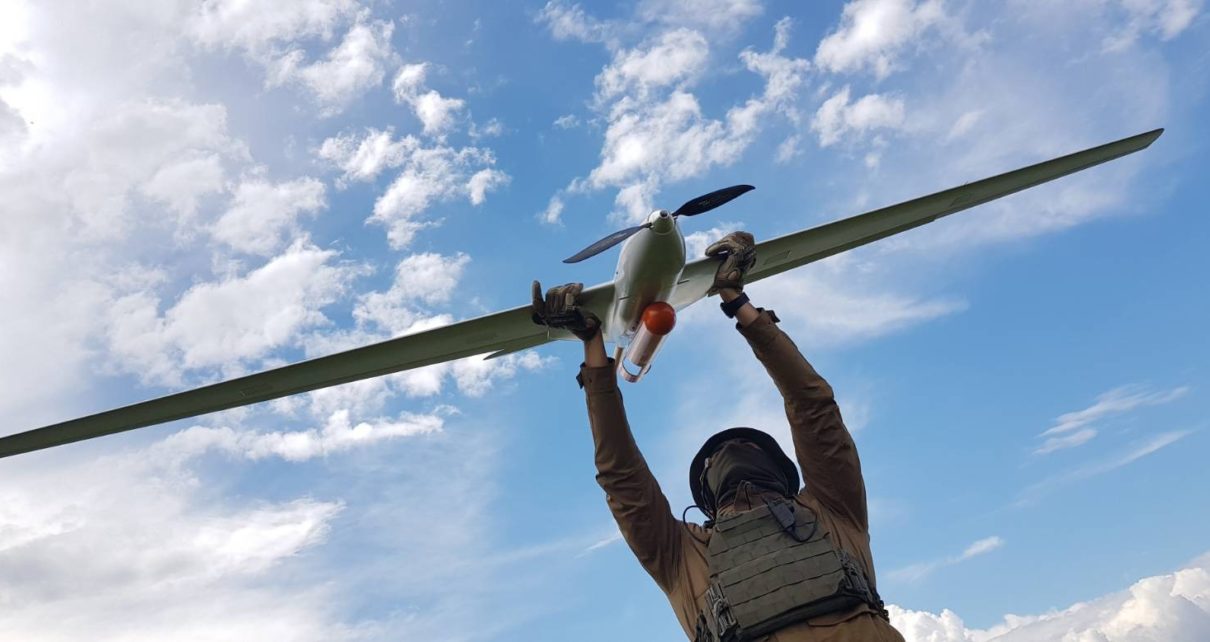
Moscow has primarily relied on using the Iranian-produced Shahed-136, as well as its domestically adapted and manufactured Geran-2 drones to attack critical infrastructure. These armaments have no crew and are completely remotely operated. Both Shahed-136 and Geran-2 are loitering drones – they carry an explosive payload and detonate upon impact with their targets. They can fly at low altitudes, thus avoiding detection by radar systems conventionally designed for missile interception. Most commonly these drones are made from cheap materials and have a honeycomb-resembling internal structure, which explains their impressively modest price tag as low as $20,000 apiece. Because of such a low cost, they are extremely scalable in production, with Russia producing about one million units per year, with estimates showing this capacity could increase up to several million. What makes drones a unique danger to critical infrastructure is that Moscow is able to simply outnumber conventional anti-air defence systems. Russia deploys hundreds of drones for each attack and earlier this year launched 477 drones within a single day across Ukraine, overwhelming its anti-air defences.
In early September, more than 20 Russian drones breached Polish airspace and penetrated deep within the country, one reportedly flying over the presidential palace. Drones used in this attack were not armed, and some of them simply crash-landed in open fields. Still, such a brazen violation of Polish sovereignty raised alarm across NATO, and multiple NATO member states’ jets were deployed to shoot them down. With these attacks, European leaders recognized that current defenses are not ready to repel such an attack without significant depletion of their crucial anti-air ammunition and cannot effectively safeguard Europe’s critical financial centres, energy infrastructure, and other critical civilian. Enter the Drone Wall.
Current plans by the EU encompass installing and upgrading systems of integrated low-altitude detection radars, spoofing and diversion systems along with more anti-air weaponry, stretching from the Baltic to the Black seas and inoculating NATO’s European territory from Russia and Belarus. However, NATO’s eastern boundary stretches over 3000 kilometers from Finnmark to Dobruja, the sheer scale of area that would need to be covered by detection and defence systems indicate that the Drone Wall would hardly be impenetrable. The European Commission rebranded the Drone Wall as the European Drone Defence Initiative to include drone defence systems all across the continent, not just the East, with estimated completion date of 2030. These plans now include detection systems targeted at drones like cameras, noise detection and Artificial Intelligence powered identification systems. But will this be enough?
Questionably so. First, even if the EU were to extend coverage of low-altitude and complex radars paired with drone identification systems, the spotted drones still need to be shot down or disabled. According to experts and even the EU’s Defence and Space commissioner Andrius Kubilius, expensive conventional missiles are limited in supply are most efficiently used against enemy fighters or cruise missiles, not mass drone attacks. For example, drones that breached into Poland are valued at just $35,000, while missiles used to shoot them down cost about $1 million, and while drones are easily replaceable, the state-of-the-art air-to-air missiles are not.
One of missiles fired at a drone in Poland reportedly missed its target and instead damaged a residential unit, spurring further questions on the efficacy of conventional anti-air warfare. With the current Drone Wall and the European Drone Defence Initiative, investments are made into laser technologies and jamming, however their real efficiency against drones could be overstated. The impact of these systems could also come under scrutiny as Moscow is capable of swiftly modifying its versatile drone arsenal to counter advances in anti-drone warfare, a strategy Russia has widely used in Ukraine.
Second, there is hardly any consensus on actual implementation of the Drone Wall between EU member states. France and Germany are reportedly skeptical of handing more power over defence to the Commission and others states stress that coordinating defence initiatives has been a prerogative of national governments and NATO. In a case of Russian attack on the continent, measures currently taken by the EU are unlikely to prevent massive damage to critical infrastructure across the continent. Alternatives to countering Russia’s current UAV advantage must be considered.
Striking the nest, not individual wasps – could be one of such alternatives. Drone launch sites in Kaliningrad, Crimea, and UAV production sites across Russia would be prime targets for offensive operations that can disable Moscow’s ability to produce and use drones in mass numbers. A change in who is leading the effort might also be needed. Procuring defense investments fall out of EU mandate according to some states, and the slow progress of the Drone Wall or its derivative projects show that Europe might be left unprepared. Intelligence sharing, pooling detection information across countries and coordinating a unified approach to targeting drone sites would be more effective through NATO’s existing unified command structure rather than EU’s more decentralized modus operandi that requires slow consensus-building. Procurement and defence investments at the same time need significant contributions from member states that have so far failed to achieve full agreement. Focusing on building coalitions between individual member states with more vested and expressed interest in anti-drone measures could prove fruitful in accelerating deployment of physical infrastructure designed to counter drone attacks and eventually strike Russia’s means of producing them.
As Russia’s brutal invasion of Ukraine progresses, drones have proven to be a crucial weapon in the modern battlefield due to their sheer scale. While EU officials have tried to address dangers posed by Russia’s expanding drone arsenal, Brussel’s plans are under increasing scrutiny and would be insufficient. Leveraging NATO and individual member states to build the defence infrastructure across the continent and securing the means of targeting Russian drone production sites ought to be considered as strategy alternatives to EU-led approaches.
Disclaimer: Any views or opinions expressed in articles are solely those of the authors and do not necessarily represent the views of the NATO Association of Canada.