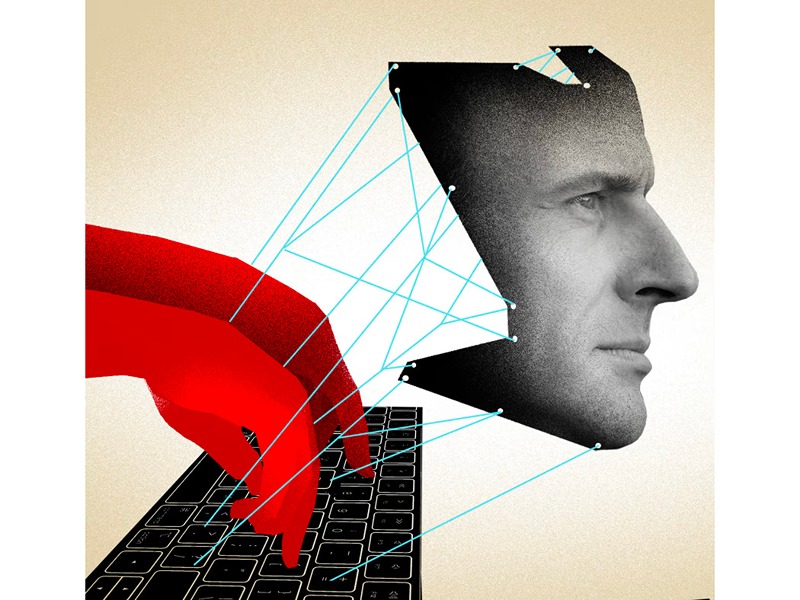
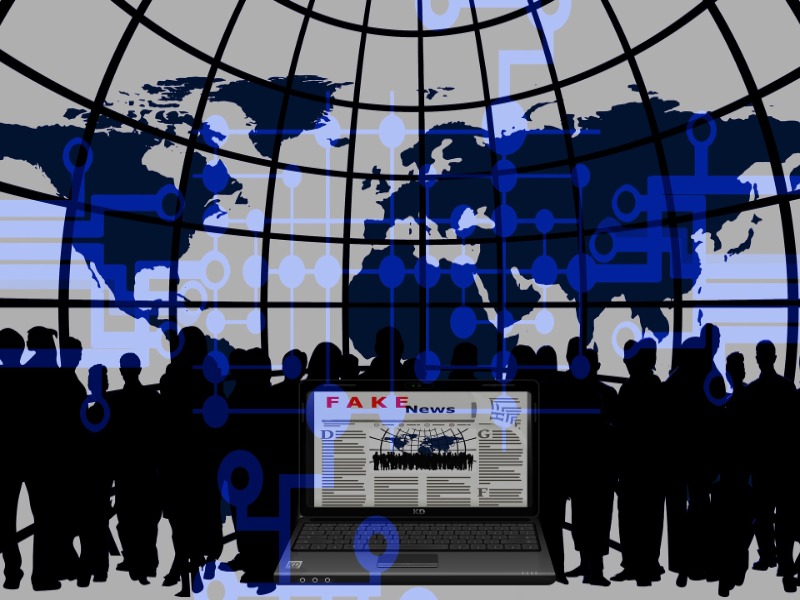
In recent years, there have been increased calls for the Canadian government to introduce legislation against disinformation. Tighter laws have been requested in an attempt to reduce the digital flow of deliberately false information in Canadian political discourse around controversies like vaccines, especially during elections. For one, in 2022, Canada’s chief electoral officer Stéphane Perrault Read More…
Tag: Disinformation
Disinformation and Public Health in the Post-Pandemic Era: What COVID-19 Taught Canada and NATO About Resilience
The COVID-19 global pandemic was both a public-health crisis and a catalyst for an infodemic: the flood of misinformation and disinformation that spread as rapidly, if not more rapidly, than the virus itself. A systematic review by the World Health Organization (WHO) found that this infodemic undermined compliance with health measures, fragmented social cohesion, and Read More…
The Culture of Distrust: : How AI Disinformation Exploits Polarization and Democracy
The voice on the line sounded like the President of the United States. It carried his cadence, his gravel, even his familiar pauses. But the words were strange. “Save your vote for the November ballot,” it told thousands of citizens in New Hampshire ahead of the 2024 primary. In reality, the call was orchestrated by Read More…
Canada at the Crossroads: Disinformation as a Domestic Security Challenge
Canada’s greatest security risk may not lie at its borders but in its news feeds. That might sound like a dramatic statement, yet the danger is not abstract. It lives in the information Canadians scroll past each day, in the stories they share, and in the narratives that seep in unnoticed. In a country that Read More…
Canadian Youth at the Intersection of Politics, NATO, and Disinformation
Many young Canadians today are encountering political narratives when scrolling through social media without ever opening a news site or turning on the television. These platforms, while sources of entertainment, are shaping how youth view politics, international institutions, and Canada’s role in the world. According to Statistics Canada, social media is the most common outlet Read More…
The Instrumentalization of Disinformation in the US-Canada Trade War
The trade relationship between Canada and the United States of America (U.S.A) is one of the largest and most integrated in the world, with the combined value of imports and exports between both countries exceeding the $1 trillion mark for the third consecutive year in 2024. Additionally, Canada is the U.S.A.’s most significant export recipient, Read More…
Misinformation and the Asian-Canadian Experience
Misinformation, disinformation, and malinformation (MDM) have long shaped public understanding and state policy, particularly when it comes to racialized and immigrant communities. For Asian Canadians, these false narratives are not a new phenomenon—they are deeply rooted in a colonial framework that defined Asia and its peoples through a lens of Orientalism. Coined by scholar Edward Read More…
Canada’s Surveillance Paradox: How Privacy Laws Fuel Racialized Monitoring
Canada’s Expanding Surveillance State As global security concerns intensify, Canada has significantly expanded its border surveillance infrastructure under the justification of national security. Privacy laws, which are intended to protect individuals from government overreach, have instead been leveraged to enable invasive data collection and monitoring. This paradox is most evident in the way Canadian authorities Read More…
Canada’s Struggle to Combat Information Disorder
In an age where digital information disorder spreads faster than ever, Canada faces mounting challenges in regulating the flow of misleading content. As a NATO member, its battle against MDM (misinformation, disinformation, and malinformation) is not just a domestic issue—it is an integral part of the alliance’s broader efforts to combat hybrid warfare. The struggle Read More…
Mis/Disinformation and Polarization Online: Protecting Canada’s Democracy in the Digital Age
This is an era where information warfare is evolving at an unprecedented pace. The digital landscape, marked by rapid shifts, such as the acquisition of Twitter (now X), the Cambridge Analytica scandal, and targeted disinformation campaigns, has exposed the increasing vulnerability of democracies, particularly in the Global North. NATO distinguishes between “misinformation”—false or inaccurate information Read More…