The Russo-Ukrainian War has underscored the increasingly interconnected nature of modern conflict and the necessity for NATO to adopt a similarly globalized outlook on defence. Russian influence on the African continent exemplifies changing variables in NATO’s strategic calculation, as billions of dollars worth of gold are illicitly extracted from Sudanese and Malian mines and used to fuel Russia’s war of aggression on Ukraine. This presence has also contributed to a climate of instability and violence across the Sahel, putting pressure on NATO’s Southern Flank – notably in terms of weaponized migration and humanitarian crises. Canada, a global leader in international mining, finds itself in a unique position to emerge as an infrastructure-offering alternative to Russia; implementing values-based realism to undercut Moscow’s revenue stream, boost the Canadian economy, and help stabilize the region.
Russia has faced multilateral economic sanctions since its 2014 invasion of Crimea, providing the Kremlin almost a decade to reorient its economy before the full-scale invasion of Ukraine in 2022. This reorientation was intended to reduce Russia’s economic dependency on Europe while expanding its own sphere of influence in politically unstable and strategically valuable regions. Countries in Africa’s Sahel Region became the focus of Moscow, offering its security services to weak authoritarian regimes in exchange for lucrative mining access. By overlooking the often-abysmal humanitarian conditions of these African partners, Moscow successfully established a sphere of influence in mineral-rich countries such as Sudan, Mali, and the Central African Republic. The Wagner Group, a Russian state-backed private military company, has been the key instrument of this strategy; providing a range of security services to ensure that Kremlin-friendly leaders are kept in power, and that Russian mining operations remain uninterrupted. Despite the Wagner Group’s formal dissolution in 2023 following the failed mutiny by its then leader, Yevgeni Prigozhin, its presence in Africa was much too valuable for Moscow to abandon, ultimately leading to the rebranding of Wagner as the Africa Corps. This new apparatus is directly subordinated to the Russian Ministry of Defence, marking an even clearer link between the Kremlin and the unsavoury actions of its mercenaries in Africa.
The provision of “regime survival packages” have had a profound de-stabilizing impact in the Sahel region and have generated significant revenue for the Kremlin. According to a NATO report, Russia is estimated to have profited over 130 billion dollars from Sudan alone, allowing the Kremlin to effectively circumvent sanctions and continue the destruction of Ukraine. In its effort to keep Omar al-Bashir in power, the Wagner Group provided arms and training to the Sudanese Rapid Support Force (RSF), a paramilitary group that came to power after the fall of the al-Bashir regime and is presently accused of war crimes in the Darfur region. Russia is largely indifferent to who holds power, so long as the regime operates in an unstable environment. That instability creates a need for Russian security services, which are compensated through mining concessions – ultimately giving Russia a financial incentive to sustain instability.
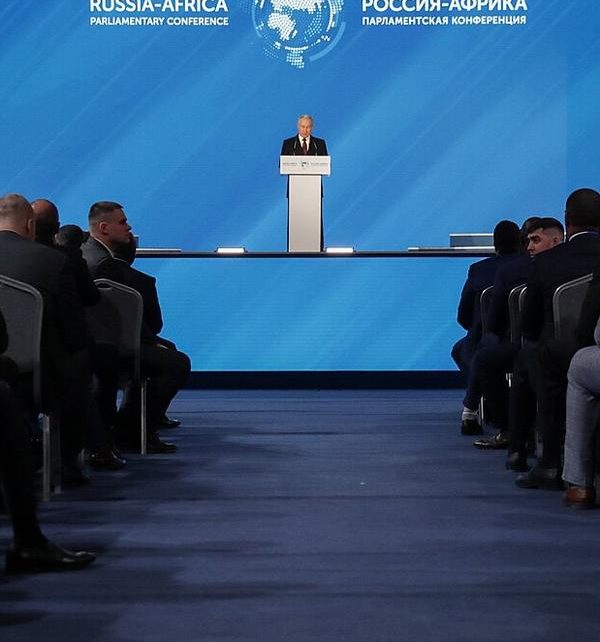
Russia has successfully built a sphere of influence in Africa, enabling it to both finance its war economy and promote anti-Western sentiment. While this serves Moscow’s interests on multiple fronts, it also poses several challenges for NATO. Sanctions imposed by alliance members are intended to weaken Russia economically and make sustained warfare unsustainable; however, Putin’s strategic shift to Africa has consolidated revenue streams largely immune from these measures. Moreover, the Sahel Region has served as a laboratory for Moscow to develop its hybrid approach, pairing direct kinetic action with indirect methods of subversion to advance Russian interests and undermine the West. This strategy has created what NATO describes as an “arc of instability”, for which Russian actors have “purposely exacerbated” in order to advance economic and political interests. This instability, coupled with Russia’s unwillingness to provide humanitarian aid, has created both political and security concerns amongst NATO’s southernmost members over mass-migration. This is precisely why NATO has expanded its strategic outlook to include the Southern Flank, as the security of its allies and deterrence of adversaries continues to transcend traditional boundaries.
Canada is uniquely positioned to help solve this problem. While the Russian approach relies on instability to generate demand for its security guarantees, Canadian international mining initiatives are based on environmental, social, and governance standards that prioritize the mutual development of partner economies. Canada’s 2025 African Strategy outlines Ottawa’s commitment to the economic development of Africa, and identifies the de-stabilizing effect of Russian influence, which has done little to improve the economic state of the region. Sudan for example, has not profited from Moscow’s security guarantees, and finds itself in a gruesome civil war that has led to one of the greatest humanitarian crises in the world. Russia’s other regional allies have been directly affected by the crisis in Sudan, further straining already weak economies. Canada not only recognizes the debt-crisis in Africa but identifies the key factors that have exacerbated the issue, such as climate change and the COVID-19 Pandemic. This regional awareness, paired with a pre-established presence in international mining, makes Canada an increasingly attractive alternative to Russia; specifically, as conditions in the Sahel continue to deteriorate.
By pursuing new partnerships that prioritize mutually beneficial economic development, Canada can emerge as a strategic competitor to Russia and help re-stabilize the region. Ottawa has already taken steps to expand its presence in Africa, notably through increased diplomatic relations with countries in the Sahel and the expressed desire to consolidate NATO’s access to critical minerals. This strategy of mineral diplomacy can be viewed as values-based realism in practice, strengthening the Canadian economy while pursuing NATO’s strategic objectives of a stabilized and de-Russified Southern Flank. Furthermore, Canada’s position as a middle power with a lack of colonial history in Africa uniquely positions it to help re-establish trust in a region that has become increasingly critical of the west. Russian information operations have manipulated and amplified these tensions, casting European powers as imperialist in nature and seeking to exploit natural resources at the expense of the people. The irony of this messaging, however, is that it accuses the West of pursuing Putin’s exact strategy – expanding Russian influence into security vacuums for the sake of profit. While ironic to a western audience, this information strategy has been extremely effective in cementing Russia as the alternative to the so-called “imperial west”, consolidating Putin’s own imperialist agenda. Through principled and sustainable economic partnerships, Canada can lead NATO’s efforts to limit Russian influence in Africa and expose the reality of the Kremlin’s manipulative strategy of exploitation.
As the world becomes increasingly connected, so too does conflict. From the mines of Sudan to the ruined towns of Donetsk, Russia relies upon a global network of sanction-proofed revenue streams to continue the destruction of Ukraine and the de-stabilization of the Sahel. NATO is aware of the issue, and Canada has the ability to respond. Through clear-eyed economic partnerships that prioritize national interests, Ottawa can emerge as an unlikely competitor to Moscow, proving to its allies a willingness to lead and an ability to succeed.
Disclaimer: Any views or opinions expressed in articles are solely those of the authors and do not necessarily represent the views of the NATO Association of Canada.