placeholder for programs

Dai Johnson Society, Culture, and Security

Should CANZUK be a Goal for Canada? 

Canada finds itself in an era of security challenges posed not only by traditional rivals, but also by its neighbour and greatest partner. The risks to its economic stability from both internal and external trials include failures to meet economic challenges caused by the 2015 oil crisis, COVID-19, and renewed European crises, all of which threaten to undermine Read More…

Security, Trade and the Economy

Do Indices Decide Defence Financing More Than Laws Do?  

In light of increased allied defence spending targets, multi-year order books have essentially been made. There are projections for increased spending on security and civil-resilience which include cybersecurity for hospitals and ports, sensor networks for power and transport infrastructure, secure communications for emergency services, demining used in reconstruction, physical protection of critical sites, and instruments that underpin modern defence. NATO has essentially set out a demand signal Read More…

Security, Trade and the Economy

The Economics of Maritime Risk and its Impact on Prices  

 The London market’s Joint War Committee (JWC), a highly influential advisory group of market practitioners, designates the Listed Areas or areas with “increased risk of war-related perils.” Voyages through Listed Areas must be notified to hull insurance underwriters by shipowners which ultimately triggers a negotiation for an additional premium (AP) for war risk coverage, usually quoted as a % of hull value for a 7-day period. Faced with Read More…

Amila Sadic Cyber Security and Emerging Threats

Canada’s Arctic Surveillance at Risk, Are Space Capabilities Enough to Defend Sovereignty?

The Arctic, a remote and expansive region, is heavily reliant on satellite surveillance to maintain domain awareness. As climate change accelerates, increased access to the region, along with its growing strategic and economic value, has drawn heightened interest from states such as Russia and China. The interests and activities of these actors raise security concerns Read More…

Security, Trade and the Economy

Treating Freshwater as Strategic Capital For Canada’s Agri-food Reliability 

Water is becoming one of the hard limits on how much food the world can reliably produce. For Canada and its trading partners, that turns water into a constraint that shapes resilience, trade strategy and security.   How Water is Moving Up The Security Agenda  Across countries, water is moving from background resource to strategic constraint on economic resilience and stability. Agriculture accounts for roughly 70% of Read More…

Security, Trade and the Economy

The Impossible Wall: Exposing Holes in European Strategy Against a Russian Drone Swarm.

Year 2025 has seen unprecedented cases of Russian incursions into NATO territory, with dozens of Unmanned Aerial Vehicle (UAV) sightings forcing airports to shut down, causing significant delays and financial damage. More so, these incidents reveal the new dimension of the hybrid warfare Moscow is waging against Europe that risks tipping the balance of power on the continent. Responding Read More…

Muskaan Waraich Women in Security

An Intersectional Lens on Meaningful Engagement, Participation, and Decision-Making Roles of Women in Combatting and Preventing Violent Extremism

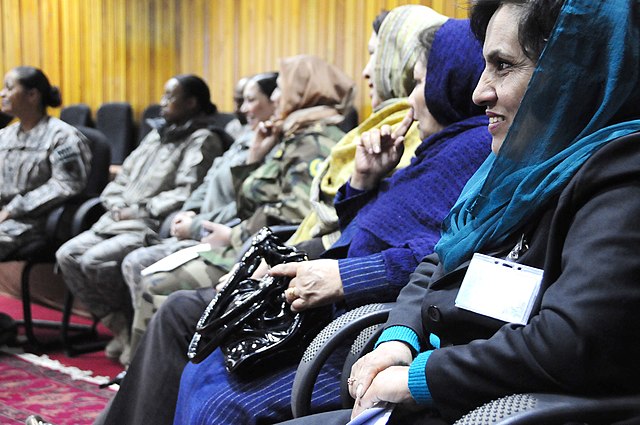
Muskaan Waraich explores how addressing violent extremism requires a multifaceted lens: physical, social, political, economic, and cultural factors that all can play a role. She examines the roles women play in extremist activities, both as victims, perpetrators, and enablers, as well as in prevention. She argues that a gender-responsive lens is essential for understanding these dynamics and for designing more effective approaches to preventing violent extremism (PVE).

Hermean Japra Women in Security

Women in Hybrid Warfare: NATO’s Next Challenge

In this piece, Hermean Japra examines how hybrid warfare, using tools such as disinformation, cyberattacks, and economic pressure, undermines democratic resilience. She analyzes how gendered disinformation and online abuse are used to silence women, limit their participation in public life, and weaken societal resilience. Her analysis outlines practical
strategies NATO can adopt, including improved gender-sensitive threat analysis, support mechanisms for targeted women, and strengthened information resilience systems to counter gender-based hybrid threats.

Centre For Disinformation Studies

When Narratives Undermine Security: How Disinformation Shapes the Environment Around Canada’s Defence Decisions

Modern adversaries no longer need to cross borders to weaken Canada’s security. They focus instead on the environment in which defence decisions are made. Public trust, ideas about cost, and perceptions of Canada’s place in the world become strategic targets. When the informational space around defence policy is filled with confusion or mistrust, even the Read More…

Environment, Climate Change, and Security

POWER PLAY IN THE ARCTIC: PART 5 – Blueprint for Canadian Arctic Leadership

*This is the fifth instalment of a six-part series. From a legal perspective, Canada’s ability to assert its sovereignty and security in the Arctic is hindered by the United Nations Convention on Law of the Sea (UNCLOS) and the Polar Code. Notably, while UNCLOS and the Polar Code respectively attempt to create a “standard framework Read More…