placeholder for programs

Environment, Climate Change, and Security

Addressing NATO’s Arctic Intelligence Gap: Indigenous-Led Environmental Monitoring

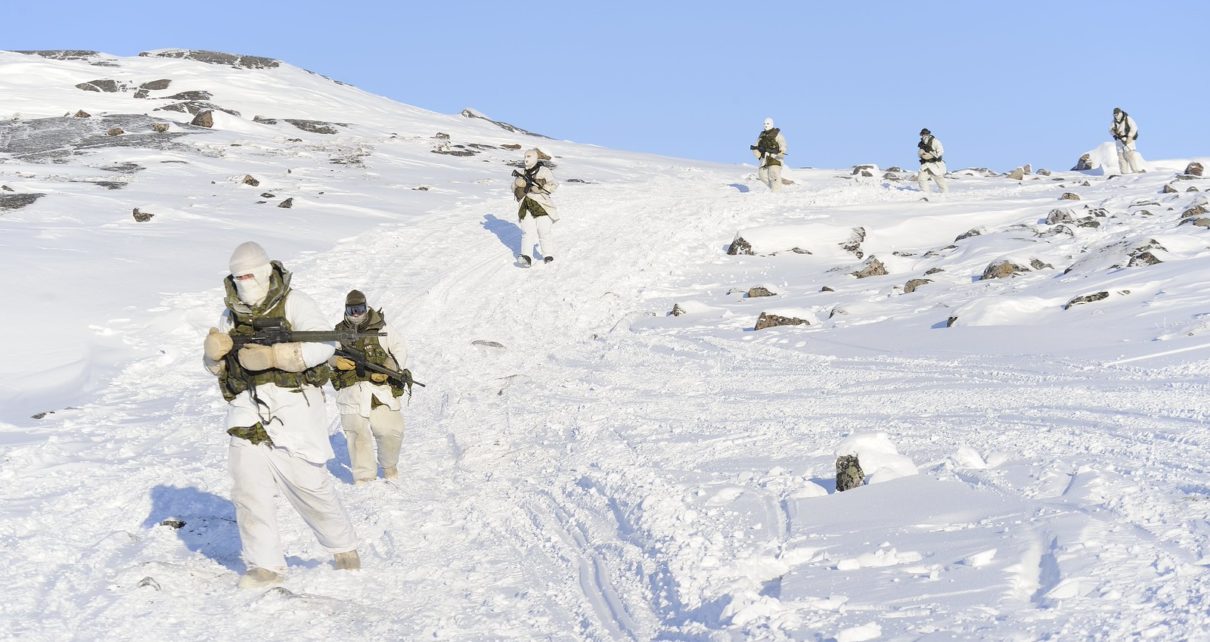
The warming Arctic is one of the greatest sources of vulnerability for Canadian security and defence, and yet the communities best positioned to generate the knowledge required to protect it are functionally absent from NATO’s plan, reflecting a profound intelligence gap. For generations, Inuit hunters, harvesters, and land stewards across the Canadian North have accumulated Read More…

NATO and Canada

Killing from a Distance: How remote warfare is reshaping accountability, civilian protection, and the future of conflict.

When warfare is designed to distance the soldier emotionally and physically from the battlefield, international humanitarian law pays the price. Giselle D’Anna examines how remote warfare and AI-enabled targeting are eroding civilian protection obligations, and what Canada owes to the future of war.

Security, Trade and the Economy

Actions Speak Louder than Sanctions: How Kyrgyzstan’s economic boom exposes the limits of Canada’s sanctions, and how to fix them

How does a sanctioned Russia keep getting its hands on Western goods? Tyler Stevenson traces the answer to Kyrgyzstan, which has become one of the world’s fastest-growing economies by re-exporting sanctioned goods, and argues that Canada must modernize its sanctions regime to address the reality of how Russia keeps its war economy supplied.

Environment, Climate Change, and Security

Newfoundland and Labrador: How a Geographic Frontline is overlooked in Canadian Defence Policy 

Introduction  In April 2026, the federal government announced long-term defence investments at 5 Wing Goose Bay that may total up to $8 billion, marking the largest Canadian defence investment in Newfoundland and Labrador’s history. On the surface, this news highlights military modernization, NORAD infrastructure, and Arctic sovereignty. Yet it also reveals that climate security is Read More…

Environment, Climate Change, and Security

Canada’s Bootprint: An Effort to Mitigate Its Carbon Footprint

Canada has increasingly recognized that climate change is not only an environmental issue but also a growing national and international security challenge. As a founding member of NATO, Canada has aligned its defence policies with the Alliance’s climate objectives by integrating climate considerations into military planning, resilience, and emissions reduction. NATO has committed to reducing Read More…

Centre For Disinformation Studies

Transnational Repression on Canadian Campuses: An Emerging Disinformation Threat

Transnational repression on Canadian campuses is an emerging threat distorting information environments and exposing NATO vulnerabilities. Using a two‑tier framework, Ji Young Kim shows how foreign coercion silences dissent and can lead institutions to reinforce false consensus.

Tessa McDermid Women in Security

LeadInSecurity: How NATO’s New Accelerator Can Deliver on Its WPS Commitments

NATO has just launched LeadInSecurity, its first Alliance-wide leadership accelerator for women in defence and security. In this article, Tessa McDermid explores how the program offers NATO an opportunity to close the sector’s gender gap and uphold its Women, Peace and Security (WPS) commitments. Since LeadInSecurity has no internal track record to draw on, she looks to comparable programs to argue that its long-term success depends on outcome tracking, integration into NATO’s existing accountability frameworks, setting numeric targets, and running as a recurring, multi-year initiative rather than a standalone initiative.

Environment, Climate Change, and Security

From Climate Law to Defence Policy: What the International Court of Justice Opinion Could Mean for NATO

Climate change is increasingly reshaping the way governments think about national security. Flooding, wildfires, and extreme weather can damage military installations, disrupt supply chains, and strain emergency response systems, creating vulnerabilities that governments increasingly view as national security concerns. At the same time, melting Arctic ice is opening new shipping routes and intensifying geopolitical competition Read More…

Indo-Pacific and NATO

A Strategic Turning Point? NATO’s Landmark Visit to India and the Future of the Relationship

NATO’s recent parliamentary visit to India signals growing interest in deeper ties with a rising Indo-Pacific power. Anastasia Crook examines the opportunities and challenges shaping the NATO-India relationship, and how to build a practical, interest-based partnership without pressing India to pick a side.