
Canada has increasingly recognized that climate change is not only an environmental issue but also a growing national and international security challenge. As a founding member of NATO, Canada has aligned its defence policies with the Alliance’s climate objectives by integrating climate considerations into military planning, resilience, and emissions reduction. NATO has committed to reducing greenhouse gas emissions from military activities by at least 45% by 2030 and achieving carbon neutrality by 2050. Canada supports these objectives through the Canadian Net-Zero Emissions Accountability Act and defence policies that promote sustainable military operations.
Canada’s Role in NATO’s Climate and Security Agenda
A key component of Canada’s contribution to NATO’s climate agenda is its role as the host and Framework Nation of the NATO Climate Change and Security Center of Excellence in Montreal. Jointly led by Global Affairs Canada and the Department of National Defence, the Center was designated the NATO Center of Excellence in 2024 and serves as a platform for military personnel, policymakers, researchers, and civilian experts to build knowledge and strengthen Allied responses to climate-related security risks. The Center supports NATO’s broader efforts to improve resilience while reducing the environmental footprint of military activities.
NATO Best Practices and Canada’s Military Clean-Energy Transition
NATO’s Climate Change and Security Action Plan: Compendium of Best Practices highlights how Allied states are incorporating climate adaptation and emissions reduction into their defence policies while maintaining military effectiveness. The report emphasizes that climate change has become a strategic security challenge requiring a comprehensive approach that combines adaptation, mitigation, innovation, and operational resilience. Rather than treating environmental sustainability as separate from defence, NATO encourages member states to integrate climate considerations into military planning, infrastructure development, capability modernization, and operational readiness. The Compendium illustrates national initiatives demonstrating how Allies are reducing the environmental footprint of their armed forces without compromising military capability. These initiatives include improving the energy efficiency of military installations, adopting renewable and alternative energy sources, electrifying vehicle fleets, and investing in innovative technologies that reduce fuel consumption while increasing operational endurance. The report further argues that sharing best practices among Allies strengthens collective resilience by allowing member states to adopt policies while maintaining joint operational effectiveness across NATO forces. This collaborative approach supports NATO’s broader objective of achieving a 45% reduction in greenhouse gas emissions by 2030 and reaching carbon neutrality by 2050. Canada’s military clean-energy transition can be evaluated within this broader Alliance framework by assessing how closely its policies align with NATO’s recommended best practices and long-term climate objectives.
The Arctic: Climate Change, Security, and Strategic Competition
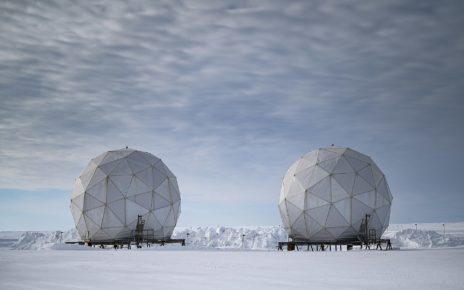
Additionally, the Arctic has become an increasingly significant region within NATO’s security and climate agenda due to the accelerating impacts of climate change and intensifying geopolitical competition. The Organization for Security and Co-operation in Europe (OSCE) Parliamentary Assembly’s Report of the Special Representative on the Arctic and High North emphasizes that the Arctic is warming nearly four times faster than the global average. This has resulted in melting sea ice, thawing permafrost, and increased accessibility to shipping routes and natural resources. While these developments present economic opportunities, they also introduce new security challenges, including heightened military activity, strategic competition among Arctic states, and increased risks to critical infrastructure and Indigenous communities. The report argues that climate change should be understood as a “threat multiplier” because it exacerbates existing political, economic, and security vulnerabilities throughout the Arctic region. It highlights the importance of balancing national security interests with environmental protection, scientific cooperation, and sustainable development to preserve long-term regional stability. The report further emphasizes that Arctic security cannot be addressed by military measures alone but requires international collaboration, policymaking, and continued investment in climate resilience. For Canada, these findings reinforce the strategic importance of strengthening Arctic defence capabilities while aligning with climate adaptation and sustainability initiatives. As the Arctic becomes increasingly accessible, Canada must ensure that investments in military modernization are accompanied by resilience, infrastructure, and cooperation with NATO Allies.
COP and the Governance Climate Governance Challenge
The Conference of the Parties (COP) is a primary decision-making body established under the UN Framework Convention on Climate Change, bringing together governments to negotiate and strengthen global responses to climate change. The effectiveness of COP negotiations depends not only on international cooperation but also on ensuring that climate policy is guided by accountability. For NATO members such as Canada, COP outcomes provide an important framework for aligning national climate policies with international commitments. As Canada advances its military clean-energy transition through the Canadian Net-Zero Emissions Accountability Act and NATO’s Climate Change and Security Action Plan, its defence policies are influenced by both Alliance priorities and international climate agreements negotiated through the COP process.
While the Conference of the Parties has strengthened international cooperation and established ambitious climate goals, significant gaps remain. The UNEP Emissions Gap Report 2024 concludes that current national commitments are insufficient to limit global warming to 1.5 degrees Celcius, with existing policies placing the world on a trajectory well above the Paris Agreement’s targets. The report emphasizes that reversing current trends requires urgent reductions in fossil fuel use, deforestation, and non-carbon dioxide greenhouse gas emissions, alongside stronger implementation of existing commitments. Similarly, the IPCC AR6 Synthesis Report emphasizes that while climate policies and international cooperation have advanced, current efforts remain insufficient to limit global warming and address escalating climate risks. These findings suggest that future COP negotiations must place greater emphasis on accountability, transparent reporting mechanisms, and ensuring that national climate commitments translate into measurable emissions reductions.
Integrating Climate Action and Security Policy
Canada’s military clean-energy transition demonstrates that climate change has become an integral component of national and collective security. Through its policies, Canada has taken meaningful steps toward integrating sustainability into defence policy. As a country with significant fossil fuel production and one of the highest per-capita emission rates among developed economies, Canada faces pressure to strengthen emissions reductions while maintaining economic and security priorities. Canada’s role in NATO’s Climate Change and Security agenda demonstrates how climate action can be integrated into national security planning, but achieving these goals will require stronger implementation and accountability.