Geopolitical competition in the Arctic is intensifying, making it an important region for Canada’s future and a key issue for both domestic and international security. Concerns in the region broadly center on how Canada is adapting its contribution to NATO’s Arctic Security strategy. This occurs at a time when strategic competition challenges the sovereignty of Canadian and NATO Arctic states, and will depend on the deployment of advanced surveillance capabilities. To this end, Canada is taking a major step to secure its Arctic through the potential acquisition of Saab’s GlobalEye platform, an advanced Airborne Early Warning & Control (AWE&C) aircraft developed in Sweden and built on Canada’s Bombardier 6500 executive jet. With the future of Canada’s Arctic sovereignty in question, integrating advanced surveillance systems must also be protected against cyber threats from rivals such as Russia and China, which have their own strategic interests in the region.
Why the Arctic Matters
Although often perceived as a remote region, the Arctic has long held strategic importance. NATO’s presence in the Arctic includes Canada, Denmark, Iceland, Norway, the United States, Finland and Sweden, who jointly oversee the region and collaborate on a reinforced, securitized military presence. At the same time, environmental changes are reshaping the region’s strategic landscape. Climate change is melting the ice, opening Arctic waters as a gateway for natural resource extraction and trade links between North America and Europe. Most critically, melting sea ice will open the North-West Passage, a maritime route linking Atlantic and Pacific Oceans at unprecedented speeds.
For its part, Canada holds the world’s longest Arctic coastline, which poses an evolving security environment that places greater emphasis on securing NATO’s northern flank. Rival states such as Russia have significantly increased their military activity in the region. Forming an Arctic Command division to revive Soviet-era military sites, Moscow has begun expanding deep-water ports and airfields, testing weapon systems, and planning to advance the integration of newer military technology in the region. China’s interest in the Arctic is also growing, as it seeks access to critical mineral deposits, transport routes, and energy while collaborating with Russia to secure a foothold. In response to these evolving security challenges, Canada’s proposed acquisition of the Saab GlobalEye platform represents a significant step toward strengthening Arctic surveillance, enhancing situational awareness, and reinforcing NATO’s northern defence.
Why Canada is choosing GlobalEye
While traditional military capabilities remain essential to Arctic deterrence and defence, the shifting strategic environment increasingly relies on advanced surveillance technologies. Canada’s proposed acquisition of the GlobalEye aircraft platform reflects this evolution. More than a strategic procurement, it represents a shift toward networked, intelligence-driven defence capable of detecting, tracking, and sharing information across vast inaccessible regions. Beyond strengthening Canada’s surveillance capabilities, the proposed acquisition would also generate significant benefits for the domestic aerospace and defence industry. GlobalEye is expected to support up to 3,000 jobs while enabling Canadian workers to build at least 40 aircraft for Canadian and allied operational use. Built on the Canadian-made Bombardier 6500 business jet, GlobalEye would leverage Canada’s world-class aerospace industry while creating opportunities to expand domestic defence production and strengthen the objectives of Canada’s Defence Industrial Strategy.
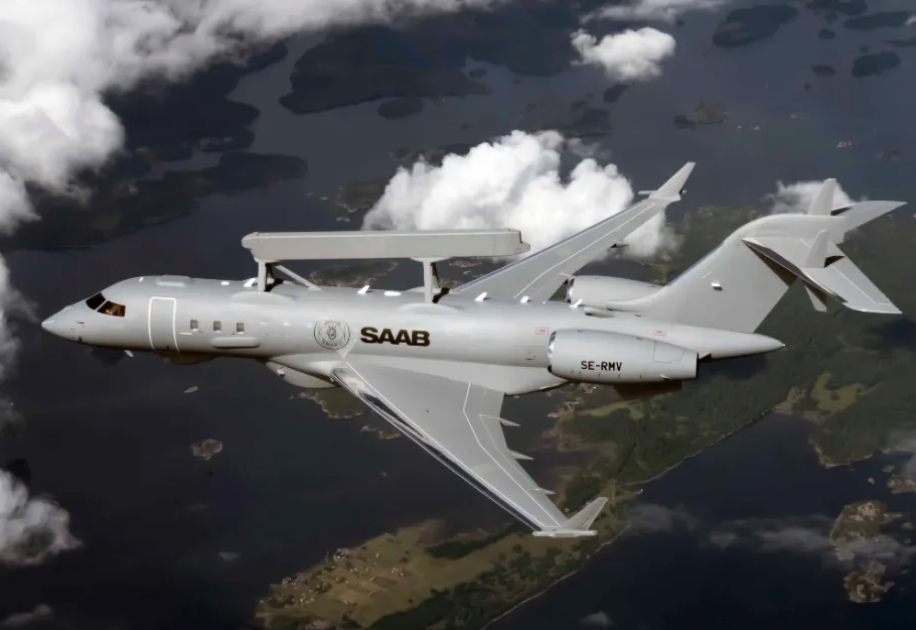
The Saab GlobalEye is an advanced airborne surveillance platform designed to detect, monitor, and share information about potential threats across land, sea, and air. Equipped with sophisticated radar, sensors, and communication systems, it provides real-time intelligence over vast distances. This could be a pivotal asset for the Canadian Armed Forces, enhancing Northern security by detecting and deterring threats across inaccessible land and naval positions in the shifting Arctic, tracking objects and signals up to 650 kilometres away. Operationalizing this platform could also strengthen Canada’s presence in the North American Aerospace Defence Command (NORAD), contributing to improving long-term operational reach and reinforcing technological and economic sovereignty. These expected benefits also extend beyond Canada, as the GlobalEye platform may greatly assist NATO operations and Arctic deterrence while deepening our partnership with Sweden.
Canada-Sweden & NATO cooperation
Canada’s interest in GlobalEye reflects a broader shift in defence cooperation among NATO allies. Sweden’s accession to NATO in 2024 strengthened collaboration among Arctic nations as the Alliance emphasizes deterrence and collective defence in the High North. Canada’s proposed procurement of the GlobalEye platform with Sweden demonstrates an evolving collaboration between two like-minded northern democracies seeking to advance Arctic cooperation. This reaffirms their shared commitment to NATO in joint operations, Arctic sovereignty, increased defence investments and advancing military readiness. Canada and Sweden’s close relationship has also deepened through the Strategic Partnership established in 2025.
This Strategic Partnership focuses on many areas that reinforce bilateral relations, including trade, innovation, environmental action, and economic development. The main element of this partnership central to Northern defence is a joint commitment to security, defence, and stability that directly influences interest in the GlobalEye platform’s capabilities. This shared commitment recognizes that collaboration is key to addressing the Arctic’s complex global challenges and securing peace, prosperity and deterrence alongside Indigenous Peoples for the benefit of the people residing in the Arctic. Canada’s integration of the GlobalEye platform is a deeper bilateral security and defence partnership between close transatlantic NATO Allies and Arctic nations, one that could be strengthened further through cybersecurity awareness and efforts to address other emerging threats.
Cyber and Other Emerging Threats
The very technologies that make GlobalEye a valuable asset also create new vulnerabilities. Modern surveillance aircraft are deeply integrated networked sensors, satellite communications, software-defined mission systems, and continuous intelligence sharing foundational to allied forces. This interconnected environment presents opportunities for adversaries to conduct cyberattacks, GPS spoofing, electronic warfare and compromise intelligence gathering to manipulate operational data. Adversaries could undermine GlobalEye data, disrupting Arctic security.
As Canada strengthens its role in NATO’s Arctic strategy, cybersecurity must therefore become as important as the surveillance itself. Acquiring the GlobalEye platform should be matched by investments in secure digital infrastructure that provides the foundation for resilient communications and intelligence gathering, creating deeper integration between cyber defence and surveillance operations. However, this is easier said than done, as the Arctic has proven difficult to construct secure defence infrastructure. Permafrost is a significant obstacle; it contains ground that is frozen and impermeable to moisture, and altering this terrain creates an uneven foundation for constructing critical cyber defence infrastructure in the Arctic.
Recommendation
It may prove beneficial for NATO and Canada to invest in strengthening the GlobalEye’s cyber resilience alongside its acquisition. Resilient networks, secure communications and adaptable cyber defences will be essential to ensure the platform can operate effectively in isolated and long-distance missions.
Conclusion
The Arctic may feel distant, but its importance to Canada’s security, sovereignty, and international partnerships has never been greater. Geopolitical competition in the Arctic is intensifying, creating new uncertainties in the North that push Canada to adapt its approach to defence. Ongoing discussions to acquire Saab’s GlobalEye platform represent an important step toward strengthening surveillance, NORAD and NATO cooperation, and enhancing Canada’s ability to lead Arctic security and monitor the region. However, the effectiveness of these capabilities will depend on resilient cyber defences and continued interoperability with allies such as Sweden. Canada and NATO’s challenge is not just recognizing the North’s importance, but ensuring it possesses the surveillance capabilities, cyber resilience, and allied partnerships needed to secure it.
Image Citiation: GlobalEye Performing Reconnaissance Testing (2026), by Canadian Defence Review via Source. Licensed Under CC Canadian Defence Review.
Disclaimer: Any views or opinions expressed in articles are solely those of the authors and do not necessarily represent the views of the NATO Association of Canada.