Antimicrobial resistance, or AMR, occurs when bacteria changes in ways that make the drugs designed to counter them unsuccessful. This is not a new phenomenon, as resistance has been tracked since shortly after antibiotics entered widespread use in the mid-20th century. What’s changed is the scale and the speed. In October 2025, the World Health Organization released its most comprehensive picture yet of where things stand: the Global Antibiotic Resistance Surveillance Report, built on more than 23 million laboratory-confirmed infections from 104 countries. The main finding being that roughly one in six bacterial infections worldwide in 2023 was resistant to the antibiotics used for treatment. For urinary tract infections (UTIs), which is among the most common infections people are susceptible to, that figure rises to about one in three.
Why exactly is this a problem?
AMR on its own is likely not of great concern in the presence of a next-line drug to fall back on. The trouble arises because drugs gaining resistance fastest tend to be the gram-negative bacteria, such as E. coli, Klebsiella pneumoniae, Pseudomonas aeruginosa and similar organisms responsible for a large share of UTIs, bloodstream infections, and hospital-acquired Pneumonia. Specifically, the antibiotics losing ground include carbapenems and fluoroquinolones, which sit near the top of the list of drugs clinicians prescribe when first-line treatments fail.
In some regions, resistance to third-generation cephalosporins and fluoroquinolones in E. coli and Klebsiella already exceeds 40 to 70 percent. Meanwhile, the supply side hasn’t caught up, meaning that genuinely new classes of antibiotics have been rare for decades. This is because the economics of antibiotic development are poor compared to drugs people take for chronic conditions over many years. The result is a widening gap between how fast bacteria are adapting and how fast medicine is producing new tools to respond, this is the real crisis.
Similarly, Gram-positive bacteria, notably Staphylococcus Aureus and Streptococcus pneumoniae are also major contributors to deaths associated with antibiotic resistance. In 2019, Methicillin-Resistant S. Aureus (MRSA) emerged as the leading pathogen-drug combination of AMR, causing 121 000 deaths worldwide. Critical to note is that S. Aureus (the bacteria responsible for Staph infections) is one of the leading sources of bacterial-associated morbidity and mortality worldwide, and one of the top two most common causes of hospital-associated infections.
In a comprehensive 8-year study done at a General Hospital in Vietnam, a total of 1130 patients were diagnosed with an S. Aureus infection, and of that, 1087 strains were tested for AMR features. Interestingly, 40% of the infected patients were aged 41-65 and were predominantly found in the surgery wards. And of the total strains tested, MRSA accounted for 73%, and multidrug-resistant (MDR) S. Aureus (defined as nonsusceptibility to at least one agent in three or more antimicrobial classes), accounted for 60.9%. This rate is alarmingly high, especially considering the strains isolated from the intensive care unit (ICU) had the highest percentage of multidrug resistance among the wards, at 77.8%.
The geography of AMR is uneven, but the consequences aren’t contained by geography. The WHO data shows resistance running close to one in three infections in South-East Asia and the Eastern Mediterranean, about one in five in Africa, roughly one in seven in the Americas, and closer to one in ten in Europe. Low- and middle-income countries face what researchers increasingly describe as a syndemic, meaning resistant infections layered on top of health systems that often lack the laboratory capacity to even diagnose the disease. This issue is exacerbated by countries having inconsistent access to the remaining effective antibiotics. This matters well beyond those countries’ borders, as resistant bacteria move with people and food, and a resistance gene that emerges in one country’s hospitals or farms doesn’t just stay there, it spreads. Gaps in surveillance or stewardship anywhere become a shared exposure everywhere, which is precisely why the WHO frames this as a global surveillance problem rather than a series of national ones.
What does this look like for Canada specifically?
The Public Health Agency of Canada’s most recent Canadian Antimicrobial Resistance Surveillance System findings give this a domestic shape. As of 2018, an estimated 26 percent of human bacterial infections in Canada were already resistant to at least one first-line antimicrobial; with approximately 15 people per day losing their lives to antimicrobial-resistant infections. The Council of Canadian Academies has modeled what happens if that share rises to 40 percent by 2050, a trajectory broadly consistent with the global trend the WHO just documented: roughly 13,700 AMR-attributable deaths in Canada per year, alongside an estimated $388 billion hit to GDP and $120 billion in additional healthcare costs by mid-century. On the agricultural side, AMR could cost the Canadian sector roughly $11 billion annually by 2050, a larger economic shock than COVID-19 delivered to the industry. More immediately, the Public Health Agency of Canada (PHAC) already estimates that roughly one in every 220 patients admitted to sentinel acute-care hospitals is found to have a priority resistant infection, and Canadian data show that a single MRSA infection costs the system more than $8,000 above what a treatable infection would; this is before accounting for any of the broader costs of a longer hospital stay or worse outcome.
So what can Canada and its allies do?
Canada isn’t starting from zero. In 2023, federal, provincial, and territorial health and agriculture ministers released the Pan-Canadian Action Plan on Antimicrobial Resistance, a five-year framework running through 2027 built around five pillars: research and innovation, surveillance, stewardship, infection prevention and control, and leadership.
NATO allies, including Canada, have committed to a defence investment framework that splits new spending between core military capability (3.5 percent of GDP) and a separate 1.5 percent stream for critical infrastructure, resilience, and civil preparedness. Biosecurity advocates in the UK have already argued explicitly that AMR surveillance and laboratory capacity belong inside that 1.5 percent category, on the basis that a country’s ability to detect and respond to resistant pathogens is as much a resilience asset as its ability to protect a power grid or a port.
NATO’s own innovation arm, DIANA, has been expanding its biotechnology funding, reportedly toward €500 million annually starting in 2026, and AMR has been raised explicitly within that broader biotech and pandemic-preparedness conversation. None of this requires Canada to invent a new program from scratch, all it requires is treating AMR surveillance, stewardship infrastructure, and the laboratory networks that support both as part of the resilience spending Canada has already committed to making.
What is realistically going to happen?
AMR isn’t a single dramatic event waiting to happen, meaning there’s no equivalent of a single outbreak headline that will mark the moment it becomes a crisis. However, it’s already a measurable, gradually worsening feature of how infections behave, and the WHO’s 2025 data shows the rate of change is faster than the rate at which new treatment options are arriving. The good news is that there are tools to slow this down such as better surveillance, more careful prescribing, stronger lab networks, and steady investment in new antibiotic development; these are already well understood and don’t require waiting for a crisis to justify investing in them. The Pan-Canadian Action Plan and the NATO resilience framework both already exist as places to put that investment. The open question is whether Canada treats the next several years as the moment to use them, or as more years where the resistance curve keeps climbing in the background while attention is falsely put elsewhere.
Disclaimer: Any views or opinions expressed in articles are solely those of the authors and do not necessarily represent the views of the NATO Association of Canada.
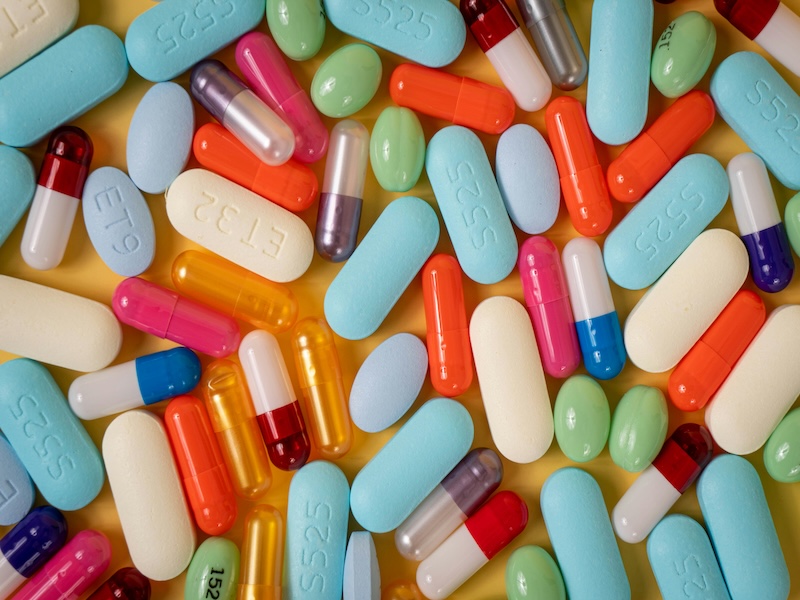
Image credit: A pile of colored pills (published 15 June 2022), depicting a close-up of mixed pills on an orange background, by Etactics Inc via Unsplash. Licensed under the Unsplash License.