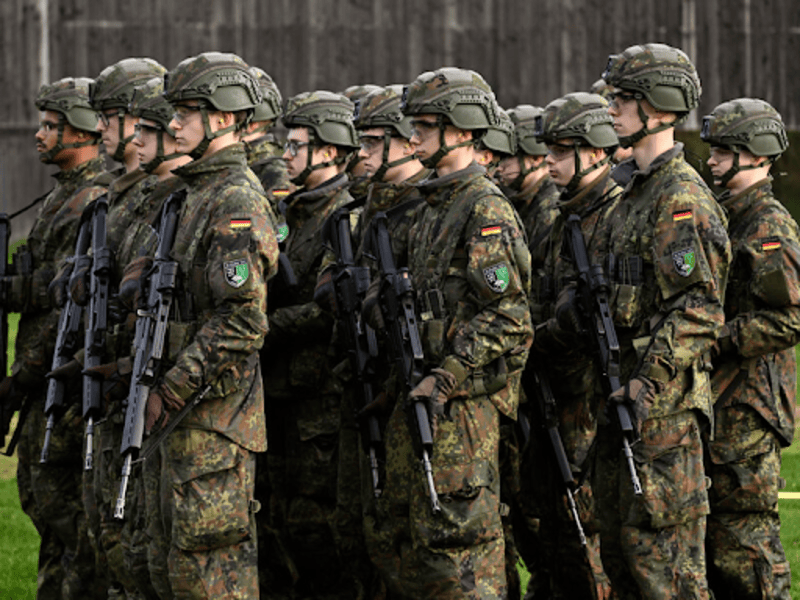
As Germany seeks to rebuild its military to confront modern threats, it faces a dire personnel shortage. Seeking to increase the size of its armed forces to 260,000 active service members and double its reserves, German policymakers have proposed reintroducing conscription, prompting significant pushback from German society. While the German government has moved to defer the issue of conscription, its reimplementation is dependent on whether Germany is able to meet sufficient recruitment numbers. Given the controversy over reintroducing conscription, Germany would be wise to learn from part-time service models from allies like Canada. The Canadian Armed Forces Primary Reserve offers a viable alternative to compulsory service, demonstrating how Germany could recruit and train part-time reservists without resorting to conscription. Germany’s personnel challenges create an opportunity for Canada to assist the German government through sharing technical and institutional knowledge on coordinating a large reserve system, increasing NATO’s overall readiness and marketing Canada as a key institutional knowledge broker in defence.
While the need for Germany to build its military is widely agreed upon, a strong political divide exists on how to do so. Multiple human rights organizations have criticized the German government’s intention to reintroduce conscription and youth groups have staged protests across Germany. Polling indicates that over 60% of Germans between 18-29 oppose a return of conscription, while thousands have filed for conscientious objector status, wherein legal exemptions are granted for conscription on the grounds of personal conscience. The unpopularity of conscription compounds a larger issue: whether it would even benefit the Bundeswehr. Equipment shortages and a lack of training personnel make integrating a new wave of conscripts more overwhelming for the German military. Given these concerns, the German government is pursuing a model of voluntary service, but will reintroduce conscription should voluntary recruitment fall short.
The CAF Reserve Model vs the Bundeswehr Reserve
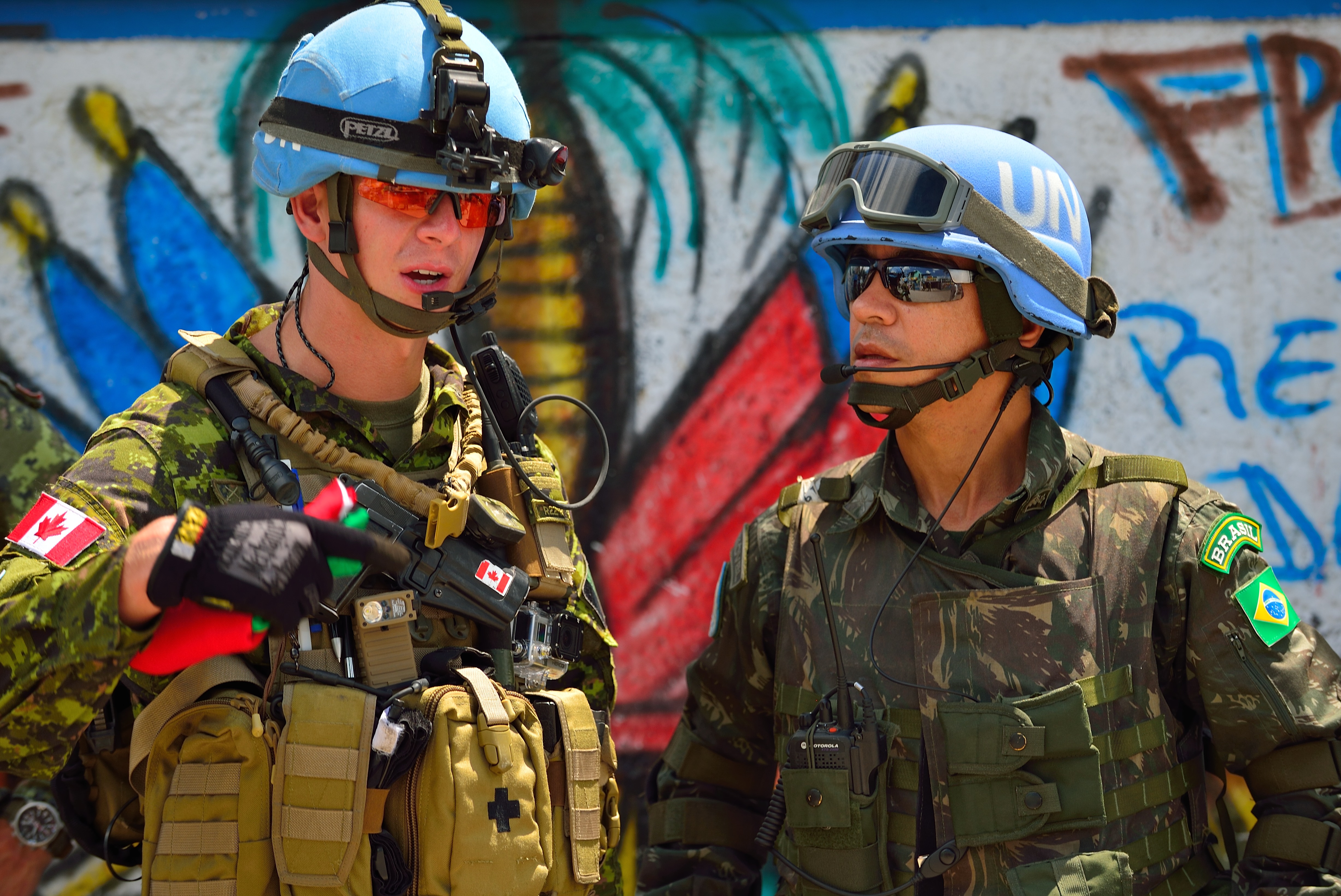
While Canada also experiences personnel shortages, the CAF Primary Reserve has enabled Canada’s military to maintain a supply of well-trained part-time soldiers to augment Canada’s Regular Force. The CAF Primary Reserve offers Canadians the opportunity to serve part-time in the CAF, aligning individual availability with national need. Reservists begin by signing up with a local regiment or formation, who coordinate their training and development. Once enlisted, Canadian reservists complete full-time or part-time basic and trades training, conducted either on weekends or full-time during the summer months. Following the completion of their training, reservists continue serving with their local formation, one weeknight a week and one weekend a month. CAF reservists have the opportunity to deploy abroad in support of CAF missions, allowing reservists both to support the personnel needs of CAF missions and bring important experience back to their home units to improve training.
Unlike the CAF model, the Bundeswehr reserve is largely geared towards retaining former soldiers in part-time roles rather than civilians who wish to join directly. While programs exist for civilians to join the reserves directly, limited spots are retained for interested persons, and training suffers neglect as the German military prepares to train conscripts instead. Additionally, German reservists train periodically throughout the year as opposed to regularly, participating in training for a few weeks or months, depending on when they are called up. This not only strains their ability to maintain consistent training but also stresses German reservists as they manage training schedules alongside their personal and professional lives.
Canada can assist the German government to reach its goals in expanding its reserve service, while ensuring German reservists obtain a high-level of training. This can be done by assisting the expansion of civilians’ ability to join the Bundeswehr reserves directly. The CAF recruits and trains many of its reservists directly from civilian backgrounds, sharing institutional knowledge and practices with the Bundeswehr on how to recruit, train and integrate reservists without prior military service would help in addressing Germany’s personnel shortages. This would allow for a better allocation of training resources, as the German government can allocate resources to voluntary part-time soldiers rather than a contentious conscription program.
Canada can further assist through consulting the German government on how to maximize the training potential for reservists and how to augment regular force members with reservists on operation. Key to this is replicating Canada’s modular training system. German reservists have cited inflexibility as a key barrier to service. Canada’s model of part-time training and flexible availability provides a solution to this problem. Utilizing a CAF-style model could replace periodic reserve deployments with consistent weekly and monthly training, addressing the need for a consistently ready German reserve force. Here, the CAF can offer its institutional knowledge in developing training schedules and programs for civilian reservists, sharing its experience and technical knowledge with German counterparts. This cooperation would allow Canada to help Germany develop a more robust reserve system and demonstrate Canada’s commitment to strength within NATO as a key knowledge broker. The CAF can also assist German officials in building civic-military partnerships, enabling a successful reservist culture. CAF reserve units involve themselves with community groups and interact with municipal leaders, leading to good rapport and recruitment opportunities from local communities. The lessons learned and practices developed from these interactions can help Bundeswehr reserve units build relationships with local communities and improve public relations.
Canadian-German collaboration on reforming the German reserve system would help to deepen the cooperation of Canada and European NATO allies at a time of military revival on the continent. Germany is seeking to create one of the continent’s most formidable militaries, and the CAF has a unique opportunity to position itself as a partner in institutional knowledge while that construction takes place. CAF advisors and officials can assist an important NATO ally in implementing a model of effective part-time service, providing them a solution to the challenge of personnel shortages while avoiding a politically divisive fight over conscription. This cooperation would allow Canada to demonstrate itself as a competent NATO ally with a wealth of experience and able to improve the security of its fellow members through institutional knowledge outside of formal troop commitments.
Conscription in Germany is proving to be both politically divisive and logistically untenable. However, through leaning on international allies such as Canada, Germany can embrace more effective methods of addressing their personnel shortages. A CAF-style reserve system for the Bundeswehr would allow Germany to offer part-time service options for citizens interested in military service, allowing Germany to recruit and train thousands of willing volunteers. Canada and the CAF have the opportunity to share their institutional knowledge to help a program like this come to life. Through liaising with German officials, the CAF can use its institutional knowledge to help the Bundeswehr construct training schedules and build civil-military partnerships. This would strengthen Canada’s profile as a defence partner and contributor to NATO capacity-building initiatives.
Photo Credits: https://www.nytimes.com/2026/03/27/world/europe/german-military-social-media.html
Disclaimer: Any views or opinions expressed in articles are solely those of the authors and do not necessarily represent the views of the NATO Association of Canada.