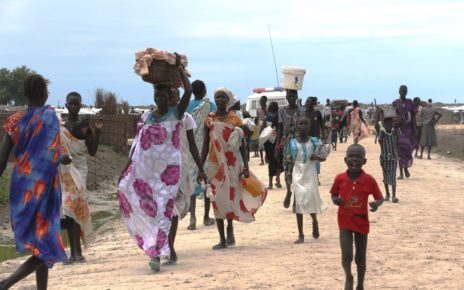
For many Canadians, peace and humanitarian operations evoke familiar images: soldiers protecting civilians in conflict zones, medics tending to refugees, and pilots delivering aid under fire. These stories, often marked by courage, restraint, and a quiet sense of duty, have become part of how Canadians understand themselves and their country’s place in the world. They speak to something deeper than strategy: a belief in compassion, responsibility, protecting human life, and standing up for what is right. This devotion to peace and humanitarian action evolved beyond a foreign policy instrument; it reflected how Canadians saw themselves and their role in the world.
Since 1954, when Canada undertook its first peacekeeping operation, more than 125,000 Canadians, military, police, diplomatic, and civilian, have served in peace operations across over 35 countries. To honour this legacy, the Canadian Peacekeeping Service Medal was instituted in 1999, awarded to those who have served thirty days or more in UN or other international operations.
Historically, Canada’s early leadership in peacekeeping emerged during the 1956 Suez Crisis, when Lester B. Pearson proposed the creation of the United Nations Emergency Force (UNEF). His innovative diplomacy helped prevent further escalation, earned him the Nobel Peace Prize, and laid the foundation for what would become Canada’s enduring identity as a trusted international mediator. This vision established a diplomatic and moral template for Canada’s role in global affairs, measured, cooperative, and grounded in multilateralism.
As part of peacekeeping efforts, Canadian personnel have been deployed abroad to take part in UN, NATO, and other multinational peace operations, adapting over time to complex political and security environments.
Canada’s UN Footprint
In the broader UN framework, peace is built through several interconnected approaches. Conflict prevention focuses on stopping disputes before they turn violent through diplomacy, early warning, and dialogue. Peacemaking starts once conflict begins, seeking to bring parties to the table through mediation and negotiation. Peacekeeping helps monitor and facilitate the implementation of a peace agreement, while peacebuilding works to address the deeper causes of conflict, strengthening institutions, and rebuilding trust. Together, they represent a continuum of efforts rooted in the UN Charter’s commitment to settling disputes by peaceful means, diplomacy, and cooperation.
Canada has engaged with the United Nations in a variety of peacekeeping and peace-support operations, spanning a wide geographic and historical scope. It played a significant role in the United Nations Peacekeeping Force in Cyprus (UNFICYP), maintaining battalion-sized contingents from 1964 until the early 1990s, helping to prevent renewed conflict between Greek and Turkish Cypriots.
In the 1990s, Canadian forces joined the United Nations Protection Force (UNPROFOR) during the Yugoslav Wars, providing troops and humanitarian assistance to protect civilians, monitor ceasefires, and facilitate aid corridors.
Canada participated in the United Nations Observer Group in Central America (ONUCA), established in 1989, which monitored cross-border infiltration and the demobilization of rebel groups across Nicaragua, El Salvador, and Honduras.
Beyond boots on the ground, Canada supports the UN via specialized roles: training peacekeepers, providing tactical airlift support, offering financial contributions, and supporting institutional initiatives. For example, under the Smart Pledge approach, Canada pledged tactical airlift support to UN missions in Africa and continues to promote conflict prevention, mediation, and the inclusion of women in uniformed roles.
Over time, however, Canada’s participation in UN peacekeeping declined, and as of 2025 remains near historic lows, a stark contrast to the golden years of the 1950s through the 1990s. In 2022, Canada deployed fifty-nine uniformed personnel, including eighteen women, to six UN peace operations, ranking as the 69th largest contributor. According to a recent report, as of 2025 there were thirty-two Canadian uniformed personnel serving in ongoing UN operations.
This decline reflects both global and domestic shifts; the nature of conflict has changed, traditional UN missions have become more complex and politically constrained.
Despite this, Canada reaffirmed its commitment to peacekeeping in May 2025 by pledging over CAD 40 million to support UN peace operations efforts. Projects include tactical airlift support, investments in training and capacity-building, and programs to counter misinformation and enhance women’s participation in missions. This contemporary pledge reflects Canada’s ongoing commitment to peace, dialogue, and shared security, even as the nature of global challenges continues to evolve.
Peacekeeping Through NATO
As global security structures evolved, Canada’s commitment to multilateralism came to encompass crisis management within NATO, reflecting its effort to balance collective defence with a peace-oriented identity.
In contemporary international relations, the use of force to protect civilians, commonly referred to as humanitarian intervention, has become a central, and sometimes controversial, tool for upholding peace and human rights. Closely linked to this is the principle of the Responsibility to Protect (R2P), introduced by the International Commission on Intervention and State Sovereignty (ICISS) in 2001.
Established with support from the Canadian government and other international actors, the commission sought to bridge the tension between respecting state sovereignty and the international community’s duty to act in the face of severe human rights violations, particularly when a government fails to do so. These frameworks have expanded the understanding of peace operations beyond traditional UN peacekeeping, challenging the long-standing assumption that military intervention must be strictly neutral or reactive.
Canada’s engagement in these contexts has evolved alongside these concepts, requiring readiness for proactive crisis management, the ability to engage in complex political environments, and the integration of humanitarian and civilian coordination alongside military objectives.
In practice, Canada’s participation in NATO-led crisis response operations, in Bosnia and Herzegovina (IFOR and SFOR), in Kosovo (KFOR), and most notably in Afghanistan (ISAF), reflected this transformation. These missions demanded military capability and adaptability to political complexity, civilian engagement, and humanitarian coordination.
They challenged the idea that peacekeeping is fundamentally impartial or detached from broader strategic interests. Instead, they underscored how modern peace operations operate at the intersection of security and statecraft, where the objectives of stability, reconstruction, and alliance solidarity coexist uneasily.
In the shadow of the ongoing war between Russia and Ukraine, several NATO allies have discussed the possibility of deploying peacekeeping forces should a cease-fire or peace agreement be reached. Recent data shows that three in five Canadians, 60% of the population, now support such a deployment. For Canada, this changing attitude raises difficult but necessary questions about its role in the world: what does it mean to preserve a humanitarian ethos within a security environment increasingly defined by deterrence and great-power rivalry?
The Humanitarian-Security Balance
Canada faces a delicate balancing act between humanitarian ideals and strategic security interests. Its long-standing reputation as a nation of peacekeepers and humanitarians is now closely intertwined with military alliances such as NATO, where aid, intervention, and defence often intersect with broader geopolitical objectives. It remains essential to keep people at the center of all efforts and to remain guided by the fundamental purpose of this work, to create meaningful impact and serve as a constructive, humane force in the world.
As the United Nations marked its 80th anniversary, ongoing discussions around humanitarian reform have reignited questions about the purpose and direction of peace operations and international aid. These conversations challenge countries to think critically about how they can do better. Humanitarian action must evolve, but it must never lose its human focus.
For Canada, these evolving expectations demand a careful recalibration of its humanitarian and defence policies. Ultimately, maintaining credibility as a trusted intermediary requires Canada to navigate both empathy and deterrence, ensuring that its actions remain centred on people while positioning the country as a principled, adaptable, and cooperative actor within an increasingly complex international landscape.
The question remains: how can Canada continue to uphold its humanitarian values while navigating the ever-shifting demands of global security?
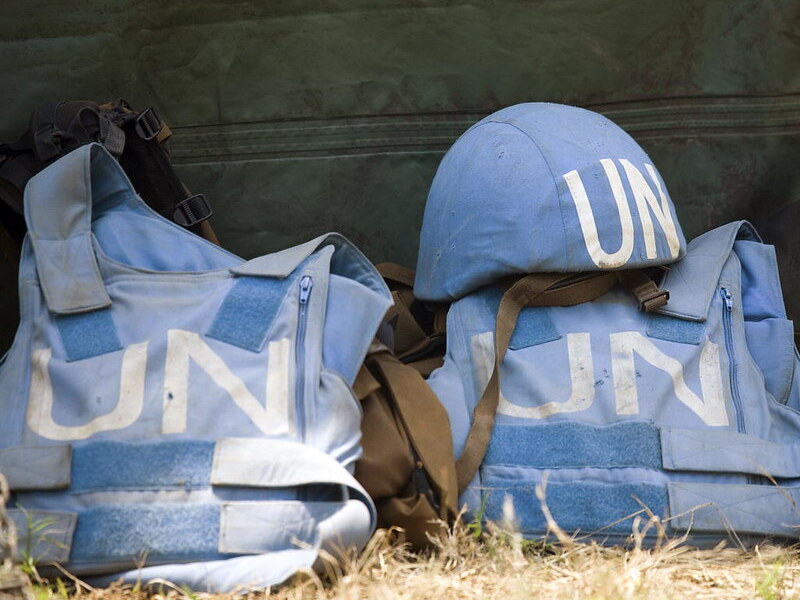
Photo: Helmet and Flak Jackets of MONUC Peacekeepers. UN Photo/Marie Frechon. Licenced under CC BY-NC-ND 2.0. Flickr
Disclaimer: Any views or opinions expressed in articles are solely those of the authors and do not necessarily represent the views of the NATO Association of Canada.