Climate change is increasingly being recognized as a security challenge across the globe. Rising temperatures, extreme weather events, and rising sea levels place pressure on critical infrastructure, military operations, and the ability of states to respond to crises. However, the relationship between climate change and international security extends far beyond its physical consequences. As governments across the globe work to mitigate the impacts of climate change and global warming, the information environment surrounding these challenges has become increasingly important. Actors spreading climate disinformation can exploit the complexities and uncertainties surrounding climate change, using online platforms and the media to manipulate public perceptions. The general objective of this type of disinformation is not necessarily to convince populations that climate change is entirely false or that the extreme narratives that they are spreading are true. Instead, its effectiveness often comes from creating uncertainty and disagreement, which can delay government action, divide allies, and undermine trust in institutions. Climate change must therefore be understood as more than an environmental challenge, as it also represents a hybrid security threat to NATO when its uncertainties are being deliberately weaponized.
Climate disinformation takes on many forms. It can involve conspiracy theories about extreme weather, such as claims that the severity of Canadian wildfires was primarily a result of government mismanagement of forest policies rather than climate change. It can involve the manipulation or rejection of scientific evidence through claims that scientists are deliberately lying, or narratives portraying environmental policies as economically destructive by arguing that renewable energy is unreliable. Traditional forms of climate-change denial also continue to exist. While these narratives may appear different, they all ultimately serve the same strategic purpose: to weaken collective confidence in climate science and policy and make collective action more difficult. Therefore, the effectiveness of this type of campaign does not depend on convincing an entire population that climate change is a “hoax” in order to be effective. Instead, it just needs to encourage enough people to question whether climate-related risks are urgent enough to justify immediate or costly action.
While governments undoubtedly face their own challenges in addressing climate change, the connection between climate disinformation and collective-security alliances such as NATO is clear. NATO assesses climate impacts across land, sea, air, and cyber domains, as well as within its missions, operations, infrastructures, and civil preparedness. Whether it be extreme temperatures, changing weather patterns, or environmental disasters, these pressures can place additional stress on military capabilities and infrastructure, requiring governments, militaries, and emergency services to coordinate rapidly. In these circumstances, public trust is necessary for an effective response.
If disinformation causes citizens to distrust those providing assistance, question evacuation orders, or doubt government support, its consequences can extend beyond the information environment and can potentially place lives at risk. Hurricane Helene in the United States demonstrates how disinformation can complicate responses to a disaster. In the aftermath of Helene, false claims circulated that a second storm was approaching areas already affected by the hurricane, causing panic amongst locals who did not have enough time to repack everything again or enough gas to get away from the storm. Partisan narratives falsely claimed that FEMA was withholding assistance from Republican hurricane victims while redirecting disaster funds to migrants. The spread of these narratives during an already dangerous and stressful situation shows how false information can exacerbate public fear, undermine confidence in emergency authorities, and hinder coordinated action.
Beyond complicating emergency responses, climate disinformation can deepen existing social divisions and turn them into broader strategic constraints. Governments may be forced to spend additional time and money defending established scientific findings, while political divisions can reduce public support for policies that require immediate costs for long-term benefits. At the international level, these domestic pressures can lead allies to disagree over the scale and speed of their response and how responsibility for addressing climate-related issues should be shared. Therefore, the result of climate disinformation is one of strategic delay.
This delay is increasingly significant as climate policy and its adaptation require long-term planning. Governments need sustained political support in order to invest in infrastructure, energy systems, and emergency preparedness. For NATO this also means ensuring political agreement among member states and maintaining investments specifically to address climate vulnerabilities before they develop into larger security emergencies. However, the discrediting of scientific facts and spread of false climate-related information can make such an agreement more difficult, delaying necessary investments and preparations.
Disinformation also creates risks during an active emergency. When a flood, hurricane, or heatwave occurs, people need reliable information immediately. They need to know where the danger is, whether they need to evacuate, where assistance is available, and which authorities they can contact. Effective disaster response depends on the cooperation between governments, emergency services, and the public, but competing narratives can make reliable information harder to identify. In these circumstances, the consequences of disinformation go beyond political disagreements, as they interfere with both the preparedness and coordination that are necessary to protect and save people.
Overall, climate change is a security challenge to NATO not only because of its physical consequences, but because the uncertainty surrounding it can itself be exploited. Climate disinformation is able to delay political action, deepen divisions among allies, undermine public trust, and complicate emergency responses when reliable information is most needed. The threat is therefore not simply that individuals may believe false information, but that this deliberate manipulation can weaken the collective ability of governments and societies to respond effectively to climate-related risks and emergencies. NATO’s existing efforts to counter the security implications of disinformation provide an important foundation for addressing climate-related disinformation. However, unlike traditional information threats, climate disinformation is able to have both immediate and long-term consequences for society. NATO’s approach therefore needs to incorporate climate-related vulnerabilities into its broader information-resilience efforts, including strengthening public trust and ensuring access to reliable information before and during climate-related emergencies to help prevent environmental crises from becoming wider security crises. Ultimately, protecting the information environment should be treated as an essential component of NATO’s climate strategy, as it will help ensure that climate-related uncertainty cannot be weaponized to undermine the Alliance’s ability to act and respond collectively.
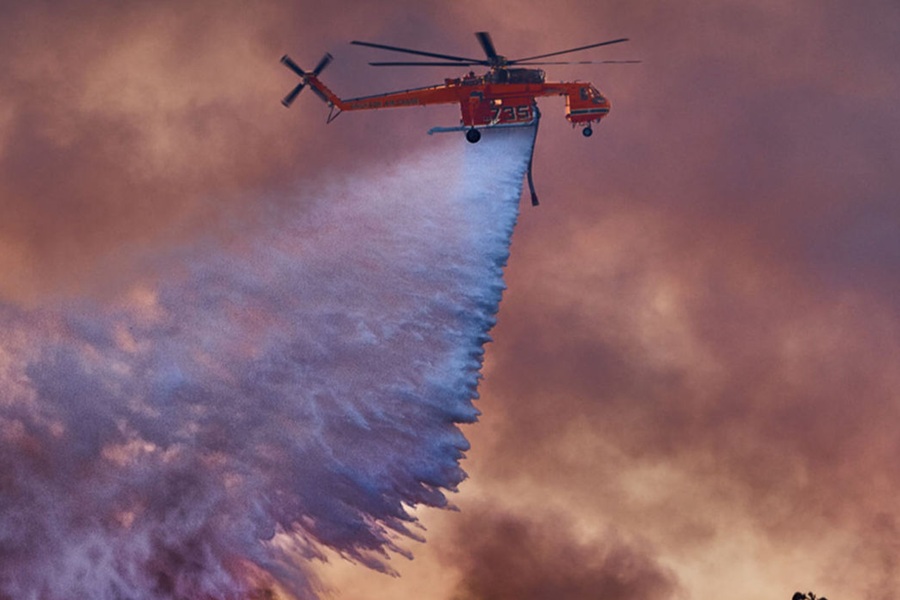
Image: “NATO supports Allies in fighting wildfires” (2022), via NATO.
Disclaimer: Any views or opinions expressed in articles are solely those of the authors and do not necessarily represent the views of the NATO Association of Canada.