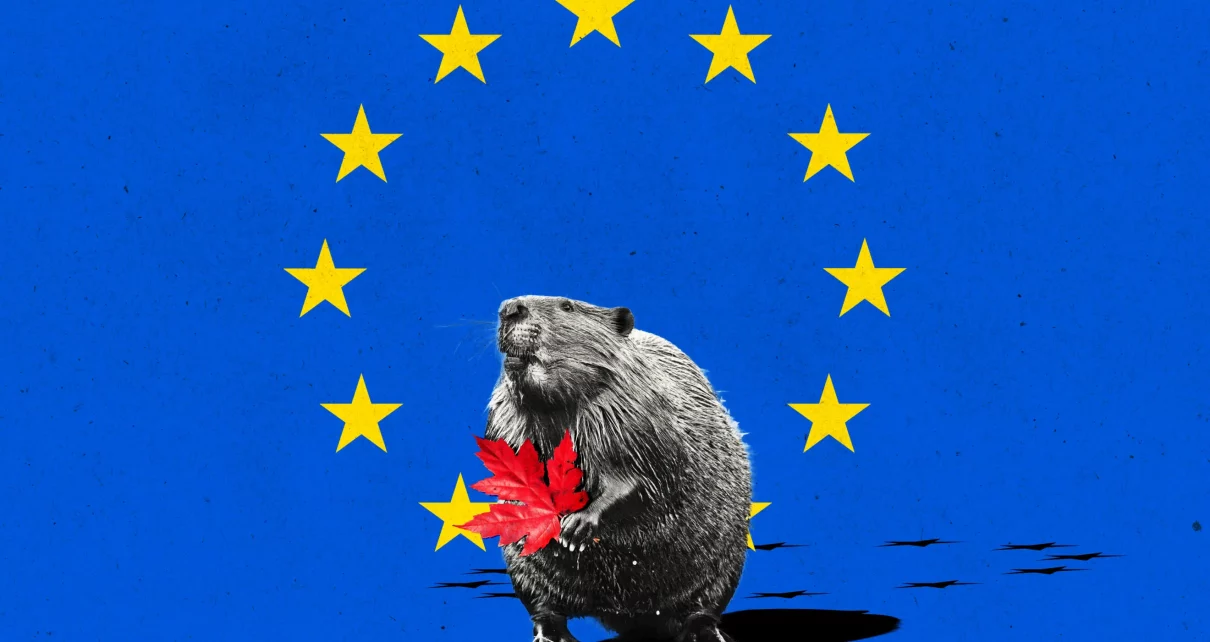
As confidence in American commitments declines, new extended nuclear deterrence arrangements are emerging in the EU. Canada, geographically distinct from this emerging network, thus ought to reassess its nuclear- latent stance. The article concludes continued nuclear latency is the most strategic positioning for Canada.
Tag: NATO
Resilient to the Manosphere: How NATO Can Counter Algorithm-Driven Threats to Women’s Security
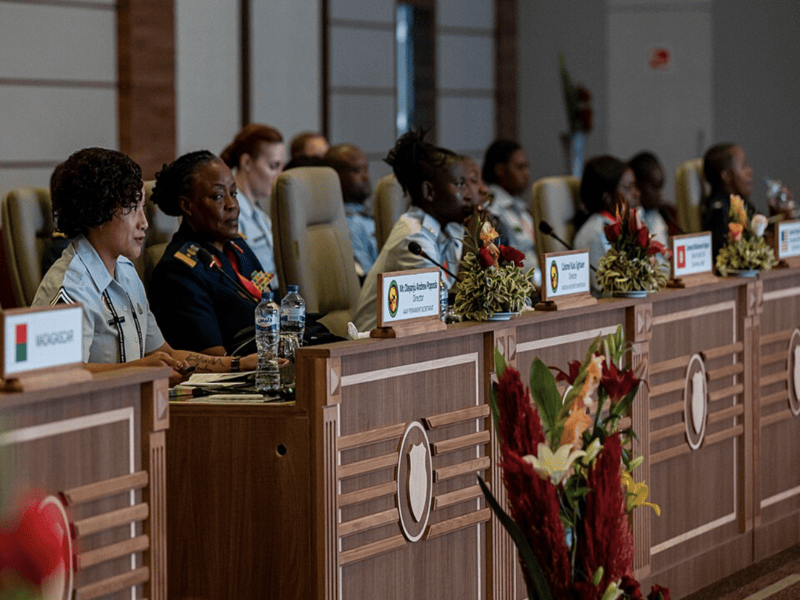
The manosphere is a network of communities united by opposition to feminism that has expanded from fringe corners of the internet into mainstream public discourse. In this article, Tessa McDermid presents how social media algorithms are mainstreaming manosphere ideology among Gen Z men, and how this poses threats to the safety and participation of women in NATO’s armed forces and to the Alliance’s Women, Peace and Security (WPS) commitments. Addressing these risks requires NATO to update its WPS policy to explicitly incorporate manosphere produced threats, expand counter-radicalization programmes to recognize online misogyny as an extremist pathway, and to invest in digital and gender literacy training for military personnel.
Democracy and Disinformation, Part 2: The European Case
The European Union has come to treat disinformation not as a problem of false information, but as a threat to democracy itself. In this article, Dominique Arseneau-Bruneau examines how legality, legitimacy, and speed shape the EU’s response to information confrontation and what its experience reveals about the limits of democratic defence.
Canada’s China Trade Reset, Explained
What did Canada and China actually agree to, and what did they leave unresolved? In this article, Michael Chen explores the economic logic of the trade reset and why connected-vehicle data and software screening remain the clearest security gap.
Ukraine’s Victory Paradox: Preventing Defeat Without Defining Victory
How will the war in Ukraine end? While NATO allies have been effective in preventing Ukraine’s defeat, defining a political end-state has proven much more complicated. In this piece, Jonah Moffatt examines the “victory paradox” between Moscow and Kyiv, and the implications of this stalemate on Canadian national interests. With peace talks on the back burner and shifting geopolitical priorities, the relationship between peace and victory becomes increasingly unclear.
Emerging Intelligence Market: Know-How and Training for Combat Drone Usage
From Kyiv to Tehran, states are building new partnerships around drone warfare knowledge, training, and battlefield innovation. This article uses a SWOT analysis approach to explore NATO’s position and potential in the emerging global know-how market.
Should CANZUK be a goal for Canada? Part 2: The Free Trade Angle
* The second in a three-part series Post-WWII planners accepted free trade as a hallmark of Western prosperity, in part as insurance against war due to the economic interdependence it fosters. However, this institution has not only been challenged, but in the eyes of some, proven to be the product of naive liberal utopianism, and is Read More…
Navigating a potential China-US G2: Can Middle-Powers learn from Singapore?
Can Canada learn from Singapore’s foreign policy? Baichao Chen explores the economic and geopolitical opportunities for middle powers in the context of a US-China détente
Parallel Progress, Divergent Systems: What the Science and Technology Organization’s 2025 Highlights Report Reveals About NATO’s Technological Modernization Gaps
The 2025 Science and Technology Organization (STO) Highlights Report is a stark reminder that in an environment characterized by compressed decision cycles and rapid response requirements, technological military advantage depends less on possessing advanced systems than on how seamlessly they operate across domains, nations, and architectures. Progress in integrated platforms and autonomous sensing and countermeasure Read More…
Dealing with Defence: Canada’s Use of Economic Agreements as Instruments for Security
A tariff regime isn’t an act of war, and a supply-chain cut-off isn’t an invasion — even if they are coercive. In this article, Tyler Stevenson examines how Canada is responding to these threats through a new wave of comprehensive partnerships that treat trade as an extension of defence policy.