Introduction
The 2022 Russian invasion of Ukraine has forced NATO to acknowledge the weaponization of energy. Electric grid coercion, gas cut-offs and cyber-intrusions into critical energy infrastructure and pipeline flow manipulation all represent core structural vulnerabilities of the European security architecture. NATO has responded by moving energy security from the periphery of its security planning into the core of its strategic doctrine. The Alliance now officially frames infrastructure protection, energy resilience and energy supply diversification as critical to collective defence and deterrence.
In Eastern Europe, this shift is more than theory. States across the area continue to grapple with Soviet-era infrastructure, dependence on Russian hydrocarbon exports, and inherited pipeline structures. With Moscow having regularly attacked Ukrainian energy infrastructure, notably via strikes on transmission stations and attempts to digitally disable the grid, energy systems have emerged as new battlefields. These shifts are sharpening the old lesson that, without a diversified and secure energy supply, political autonomy, civil resilience and military readiness can all collapse when the first shock occurs.
In this shifting geopolitical landscape, Canada faces a novel opportunity. As a stable producer of energy with significant nuclear expertise as well as a growing hydrogen-export ecosystem and significant diplomatic credibility within NATO and with the European Union (EU), Ottawa is emerging as a core strategic partner for strengthening Allied energy security. Canadian engagement, whether through the support of grid reconfiguration, the export of clean fuels, or the export of technological and regulatory expertise, provides NATO members and partners with clear alternatives to the dubious Russian alternative. As such, the actionable proposition that Canadian energy is contributing to Allied energy security, rather than representing a mere form of commerce, is emerging in real-time.
Why Energy Security Is Critical to NATO
Energy security has become critical to NATO precisely because of how Russia’s weaponization of energy has shifted and redefined NATO’s strategic landscape. Years before the invasion of Ukraine, Moscow already used supply interruptions, gas flows and pipeline pricing to coercively shape the economic and political environments of Eastern Europe. After 2022, however, these tactics have escalated into tools of war. Russia has engaged in cyber operations against grid infrastructures, timed reductions in supply based on hostile political considerations, and has recurrently engaged in the targeted shutdown of pipeline routes. With NATO since acknowledging the critical role energy security plays in deterrence, civil resilience and military resistance, energy is shifting from a technical niche to a core component of strategic awareness. Ensuring reliable energy supplies and protecting critical energy infrastructure are now clear national security imperatives throughout NATO.
The evolving threat environment exposes the fundamental reality that the Alliance can no longer ignore that European security is inextricably linked to Europe’s energy configuration. With allies and partners in the East still locked into former Soviet energy structures, they are left with infrastructure designed for centralized control from Moscow rather than strategic autonomy or market efficiency. This provides Russia with legacy leverage to coerce the Alliance’s Eastern flank through cyber sabotage or the manipulation of the grid. The Baltic states have gone as far as framing this dependency as a strategic liability that sits under every national security conversation.
Russian military strategy in Ukraine demonstrates that these vulnerabilities are exploitable. Repeated attacks on the Ukrainian grid have shown how energy strikes can be leveraged to weaken logistics, break morale, and harm civic resilience. Protecting these systems has thus emerged as a collective security imperative. Energy infrastructure, for example cross-border interconnectors and Liquefied Natural Gas (LNG) terminals, are now critical elements of NATO’s defence perimeter. At the same time, the geopolitical environment has facilitated a period of strategic diversification. As LNG import terminals are being rapidly built out across Europe simultaneous to increasing investments in nuclear and renewable energy, a broader shift away from dependence on Russia is emerging in the wake of the invasion of Ukraine. NATO’s leadership increasingly understands that energy sovereignty is critical in protecting against authoritarian leverage. Dr. Robert Cutler, Strategic Advisor in Eurasian affairs, thus cogently notes how energy security has come to represent a precondition for political economy for many NATO members.
The Structural Challenges of Eastern European Energy Integration
In the context of this emergent energy security architecture, and given that Europe’s energy infrastructure has historically reflected the political geography of the Cold War, the networks of Eastern Europe remain dependent on Moscow in terms of configuration and standards. Designed to maximize central control by Moscow, many states have been forced to continue to rely on these, notably for Russian natural gas exports, even subsequent to EU accession. Most of the East thus continues to be synced to the post-Soviet Uninterrupted Power Supply (UPS)/Integrated Project Delivery (IPD) grid that is dominated by Belarus and Russia. This perpetuates the structural vulnerability whereby any coercive, political or technical disruption emanating from Russia could cascade through Europe’s deeply connected supply chains to detract both from Europe’s stability and autonomy.
As Moscow has manipulated gas supplies and engaged in hybrid attacks on energy infrastructure in the wake of the invasion of Ukraine, this clearly illustrates that Moscow views energy as a source of leverage rather than a tool of commerce. The European Network of Transmission System Operators for Electricity (ENTSO-E) makes it clear that these synchronous grid links with Russia are leading the Eastern European and Baltic states to experience risk. These are not hypothetical vulnerabilities as Ukraine has experienced multiple cyber and physical assaults on its energy infrastructure, designed to produce cascading failures, since the Russian Invasion began in 2022.
Europe has responded pragmatically by speeding up efforts to strengthen physical interconnections within these regions while integrating its energy markets. The EU energy policy framework, supported by the Council of European Energy Regulations (CEER) and the EU Agency for the Cooperation of Energy Regulations (ACER), is heavily focusing on resilience standards aimed at reducing exposure to Russian influence via cross-border connectivity. The rapid construction of LNG import terminals in the Baltic and Poland, the new pipeline linking Central Europe to Western supply chains and the Baltic synchronization project have reflected a broader strategic decoupling from Russia that has spread throughout NATO, and which shows the operational realities of adapting to this new threat matrix.
The Eastern European transition, however, is uneven. With many states facing legacy infrastructure, financial constraints and limited capacity for interconnection, one of the biggest challenges facing the Eastern European NATO allies is the lack of external partners with investment capital, technical expertise, and reliable export capacity. This is precisely where NATO’s strategic outlook and the European energy transition intersect. NATO must work to ensure a diversified, resilient and secure energy supply to allow for optimized operational readiness, civil preparedness, and defence. It is in this context that partners like Canada have the power and opportunity to contribute to resolving the challenges faced by Eastern European and Baltic NATO members through the construction of a new European energy architecture that can never again be weaponized.
Case Study 1: Baltic Electric Reconfiguration (Synchronization with the European Network of Transmission System Operators for Electricity (ENTSO-E))
With these elements of the transition mind, the Baltics have faced some of the most significant Russian threats while showing some of the highest levels of resilience. For more than thirty years after independence, the Baltic states of Estonia, Latvia and Lithuania remained tied to the IPS/UPS synchronous system controlled by Moscow. With the Baltic NATO states adopting the bold strategy of fully decoupling from the IPS/UPS network to synchronize with the European grid controlled by ENTSO-E, the three Baltic states had fully synchronized with the European system as of February 9, 2025. This was a costly shift that required extensive upgrades in terms of emergency reserve systems, cybersecurity, frequency-control and interconnectors. Ultimately, however, the benefit of cutting a pernicious critical energy dependency with Russia was a salient geopolitical payoff.
This synchronization also illustrates how NATO has increasingly focused on the doctrine that energy systems are core security assets. Critical electrical infrastructure, from substations to transmission lines to balancing mechanisms, are fully intertwined with civil resilience, military mobility, and national defence. The NATO Energy Security Centre of Excellence has consequently recognized that the integrity of the grid is foundational for sustaining military operations and ensuring the possibility of rapid reinforcement along the entire Eastern flank. Critically, the Baltic synchronization effort illustrated the importance of external partners in that engineering expertise, financing and political backing came from both EU institutions and allied states which recognized the critical security implications.
The Baltic Electric Reconfiguration Case Study thus provides the important lesson that, where infrastructure vulnerability intersects with strategic geography, the support of outside partners is necessary for accelerating decoupling from malign Russian dependencies within NATO. With the Baltic reconfiguration offering a clear template regarding how diversified supply, technical resilience and grid integration can build deterrence by design, Canada can provide many of the key sources of technical capacity, political alignment and regulatory expertise needed.
Case Study 2: The Estonian-Canadian SMR Partnership
Moving forward to energy security via nuclear power, Estonia is in the midst of pursuing small modular reactor (SMR) technology to enhance its energy independence, 2025 saw the Estonian government formally launch the planning and environmental assessment structures needed to design and authorize Estonia’s first nuclear power production facility. Although this was domestically framed as a decarbonization initiative, the strategic subtext of the decision was a clear choice to develop a nuclear power alternative in order to ensure that Estonia is capable of sovereign energy production. Fundamentally, Estonia is Russia-proofing its energy infrastructure, and Estonian officials have confirmed that the country’s nuclear development is deeply intertwined with the importance of energy autonomy for regional security.
Canada rapidly emerged as Estonia’s trusted partner because, through Fermi Energia, Estonia’s leading SMR development firm, Canadian companies like Aecon were able to engage in rapidly expanding bilateral cooperation because of the strength of Canadian technology, and the support of the Canadian Nuclear Safety Commission. By September 2025, Aecon and Fermi Energia had signed a formal agreement to advance SMR deployment in Estonia by pairing Estonia’s emerging nuclear program with Canada’s expertise in nuclear regulation and engineering. Importantly, this is more than a commercial partnership. Because Canada has long been able to maintain high non-proliferation standards and has world-class regulatory frameworks alongside strong integration into Western nuclear supply chain, it is near universally viewed as a trusted ally in nuclear development.
The Canadian-Estonian deal also shows alignment with NATO’s broader recognition of the importance of energy resilience for operational resilience. Because nuclear power is independent from volatile global markets and is highly reliable, this allows for energy planning to take place with the type of rigour that cannot be undertaken based on fluctuating gas supplies. Given the modularity and small size of SMRs, they are promising for countries seeking to both maximize security and achieve net-zero carbon requirements. For Canada, the Estonian partnership illustrates how our unique combination of resources and technological expertise can strengthen the Alliance all the while contributing to Canadian economic growth.
Case Study 3: Newfoundland and Labrador’s Hydrogen Memorandum of Understanding (MOU) with the Port of Amsterdam
Third, in terms of the case studies examined here, Newfoundland and Labrador’s recent entry into the global hydrogen market demonstrates how Canada’s growing clean energy sector can also contribute to NATO security objective. In May 2025, Newfoundland Premier Hogan signed a MOU with the Port of Amsterdam formalizing ongoing cooperation regarding renewable hydrogen production, infrastructure development and export logistics at the World Hydrogen Summit. As opposed to traditional energy agreements, this MOU was explicitly designed to facilitate long-term energy transition goals tied to supply diversification, secure transatlantic energy corridors, and decarbonization. For European allies, especially those working to reduce dependence on Russian hydrocarbons, Canada’s growing East Coast hydrogen capacity is a strategically aligned, geographically viable and politically safe supply source.
The Port of Amsterdam is endeavouring to become a major European hydrogen hub and is seeking partnerships relating to both geopolitical resilience, and industrial demand. Newfoundland’s wind-powered hydrogen production thus aligns significantly with this strategy as it is a collaboration aiming to build a green energy alliance that can supply heavy industry clusters in Europe while reducing stress on the Continent’s energy grids. Such industrial clusters, tied to heavy transport, chemicals and steel, have historically been the sectors most exposed to Russia’s energy manipulation. As such, hydrogen imports from reliable partners like Newfoundland not only serve climate goals but also national security objectives.
From the perspective of Newfoundland, the MOU is more than a provincial economic development resulting from bilateral negotiations; it is an example of how Canadian jurisdictions can directly integrate into Europe’s energy security infrastructure. With the province increasing its portfolio of hydrogen projects based on proximity to North Atlantic shipping routes and strong wind resources, it can offer Europe a new Atlantic-facing supply route that is insulated from the geopolitical volatility of the traditional pipeline system. As noted by Newfound News, the province is intentionally positioning itself as a stable and democratic supplier for European markets that are hungry for alternatives to Russia. Within NATO, the MOU reflects the broader policy shift embodied by NATO members, which increasingly see that clean energy can serve strategic ends historically associated with fossil fuels. Given Canada’s leadership in this domain, Newfoundland’s MOU is a promising sign of things to come for NATO-Canada energy security cooperation.
Canada’s Strategic Opportunity
In the context of NATO’s emerging energy-security architecture, Canada has the potential to become the energy superpower that Stephen Harper suggested it could be as far back as 2006. Canada holds several structural advantages that none of its allies can match. The first is the depth of its resources. Canada has one of the world’s most diversified energy portfolios, from oil to hydro to hydrogen to nuclear and beyond, and this allows Canada to supply technologies and fuels which directly support European states seeking to restructure their energy systems and grids away from dependency on Russia. Unlike its competitors, Canada has geopolitically stable exports that are insulated from authoritarian leverage, and aligned with the core democratic values of NATO.
Second, Canada holds a high level of technological credibility. It is amongst the world’s leaders in nuclear development, particularly in terms of SMRs, and the Canadian-Estonian cooperation agreement illustrates how Canadian regulators, engineering firms, and nuclear fuel suppliers can provide its allies with turnkey energy solutions. Canada’s strengths thus align directly with NATO’s growing focus on grid reliability, energy-infrastructure protection, nuclear regulation, and cybersecurity.
Third, Canada is a trusted political partner for all European states seeking alternatives to Russia. Canada’s reputation for high environmental standards and regulatory stability reduces the high transaction costs that might otherwise be associated with such significant energy transitions. The NATO Association of Canada makes it clear that Canadian energy partnerships carry high levels of strategic credibility because they reinforce the political autonomy of European states instead of compromising it.
Finally, Canada has a strong and growing clean energy sectors, exemplified by Newfoundland and Labrador’s progress on hydrogen, which positions the country to support a long-term European transition instead of representing only a short-term substitution. With Europe rebuilding its energy infrastructure after this permanent break from Russia, Canada is well-placed to not only offer megawatts and molecules, but also reassurance.
Risks, Challenges, and the Path Forward
Even though Canada is eminently positioned to contribute to the ever-evolving energy security framework being developed by NATO, structural challenges must be addressed. First, scale is significant in that transforming decades-old European energy systems, whether through grid modernization, hydrogen infrastructure, or nuclear deployment, will require the investment of immense capital. Many Eastern European states face significant fiscal constraints that will limit their ability to co-finance large-scale projects, and slow project timelines. Canada must work to coordinate funding mechanisms or multilateral financing to avoid projects stalling.
Second, political and regulatory barriers remain problematic. Nuclear deployment is politically sensitive throughout much of Europe, and this complicates SMR adoption in spite of the clear security benefits of Canadian technology.
Third, Canada faces its own internal coordination challenges because of the dual provincial-federal mandate on energy and must build export strategies that are aligned with provincial goals. The example of Newfoundland and Labrador’s MOU demonstrates the benefits of what can be achieved by proactive provinces but the lack of a meaningful provincial-federal coordination structure could impede the development of a true national strategy
Fourth, infrastructure vulnerability will be a persistent risk. Whether energy is renewable, fossil fuel-based or nuclear, critical infrastructure is increasingly targeted by espionage, cyber-operations, and hybrid attacks. Building resilience requires going beyond infrastructure hardening to embed redundancy, security and rapid recovery capabilities into each project Canada cooperates on.
Finally, geopolitical risk will never disappear. It is imperative that Europe not replace one dependency with another. Even though Canada is a far safer partner than Russia, Europe has an incentive to diversify, and this should be a principle for all NATO states. Canada must thus work to help its allies build autonomy rather than foster a new pattern of dependency.
Policy Recommendations
Five core policy recommendations flow from these case studies to optimize the translation of Canada’s energy capabilities into meaningful contributions to the emerging energy security architecture NATO is building in Europe. Ottawa should thus pursue the following focused set of policy actions:
First, Canada must formalize an energy-security initiative that is oriented towards NATO. By working through Global Affairs Canada, Natural Resources Canada, the Department of National Defence and Canadian Mission to NATO, Ottawa should propose a structured program in which Canadian expertise in hydrogen development, nuclear regulation and grid resilience planning come together for alliance-wide capacity building. Given that NATO has already made it clear that energy resilience is necessary for civil-military preparedness, Canada can play a central role in reinforcing this shift.
Second, it is critical that Canada prioritize direct partnerships with front-line states that are actively seeking to decouple from Russian grids. In this respect, Estonia, Latvia, Lithuania, Poland and Slovakia are all focal points for Canadian cybersecurity cooperation, SMR support, and grid modernization advising. The success of the Estonian-Canadian SMR partnership illustrates how these engagements align strategic need and technological expertise.
Third, Canada should work to expand its clean-energy supply chains with the EU. With Newfoundland and Labrador’s MOU on hydrogen offering a strong blueprint for transatlantic cooperation relative to clean energy, as it enhances resilience and diversification alike, Canada should offer federal support to scale this and other similar export corridors. Canada could thus help further reinforce Europe’s longer-term independence from Russian energy manipulation.
Fourth, Canada should work to integrate energy infrastructure protection into national defence planning. Given that the NATO Energy Security Centre of Excellence has made it clear that critical infrastructure is a prime target for hybrid attacks, Canada should invest in cyber-defence programs, resilience planning and joint exercises that treat its energy assets as being core to its defence.
Finally, Canada should work to embed energy security into its foreign policy identity to position the country as a strategic energy security partner shaping the future of NATO’s energy infrastructure instead of being nothing more than a supplier.
Conclusion
The 2022 Russian Invasion of Ukraine created an irreversible shift in NATO’s strategic environment. With the weaponization of energy representing a key Russian strategy, the vulnerabilities of Eastern European energy infrastructure, combined with growing demands for decarbonization, have combined to push energy security to the centre of NATO planning. NATO has internalized the critical lesson that diversified, resilient and politically secure energy systems are imperative for operational readiness, deterrence, and civil resilience alike. As by former Prime Minister Harper, Canada has the potential to become an energy superpower because it can play such an important role in this transformation via its emerging hydrogen export capacity, its nuclear expertise, regulatory credibility, and deep transatlantic partnerships. Given how Canada can provide allies with the tools needed to reduce dependence on adversarial supply chains to build lasting energy autonomy, the case studies examined above show the multiple ways by which Canadian capacity aligns directly with evolving NATO security needs. To succeed in making the most of these opportunities, and contribute to the Alliance, Ottawa must consistently treat energy as a strategic asset, rather than an economic one alone, to reinforce European sovereignty, strengthen NATO’s energy architecture, and enhance Allied resilience in a period when energy has truly become a domain of conventional warfare.
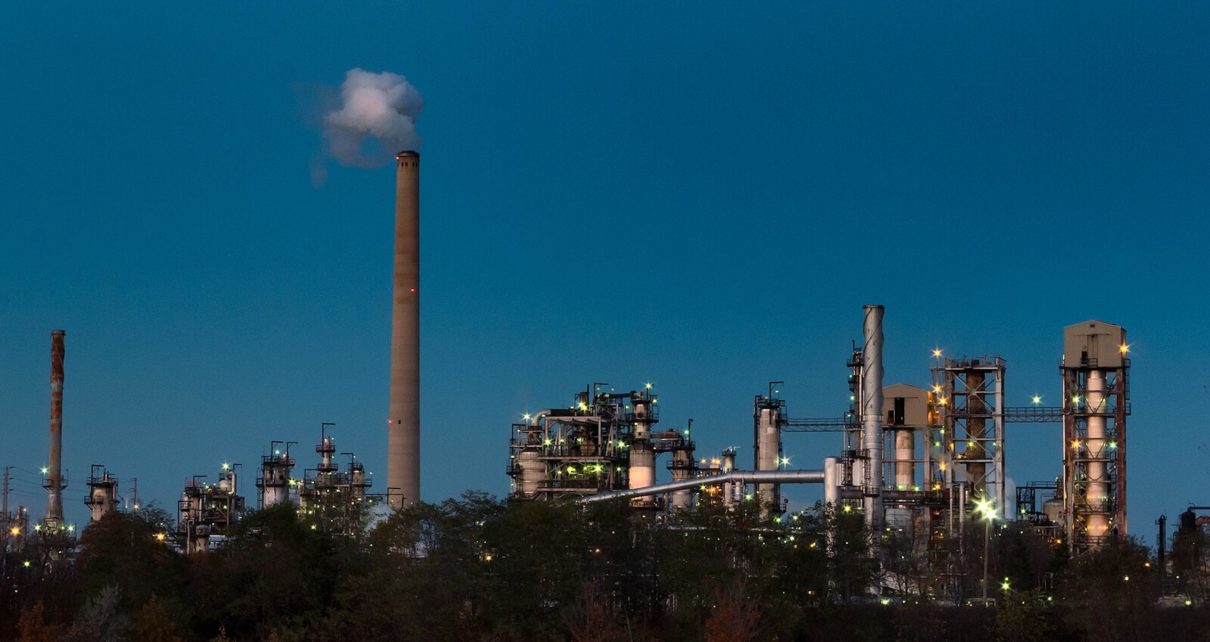
Photo: The Suncor Energy Lubricants Centre on Lake Ontario (2013), by Joe DeSousa via Wikipedia Commons.
Disclaimer: Any views or opinions expressed in articles are solely those of the authors and do not necessarily represent the views of the NATO Association of Canada.