This article discusses how the adoption of quantum sensing technologies will likely advance cybersecurity by enabling greater protection of infrastructure, detection of attacks, and attribution to attackers, particularly in the Arctic.
Articles
The Missing Shield: Why NATO’s Innovation Strategy Needs Modern Intellectual Property Protection
This article argues that without integrating IP protection into its cyber, emerging and disruptive technologies, and innovation strategies, NATO risks undermining the very technological edge it seeks to secure.
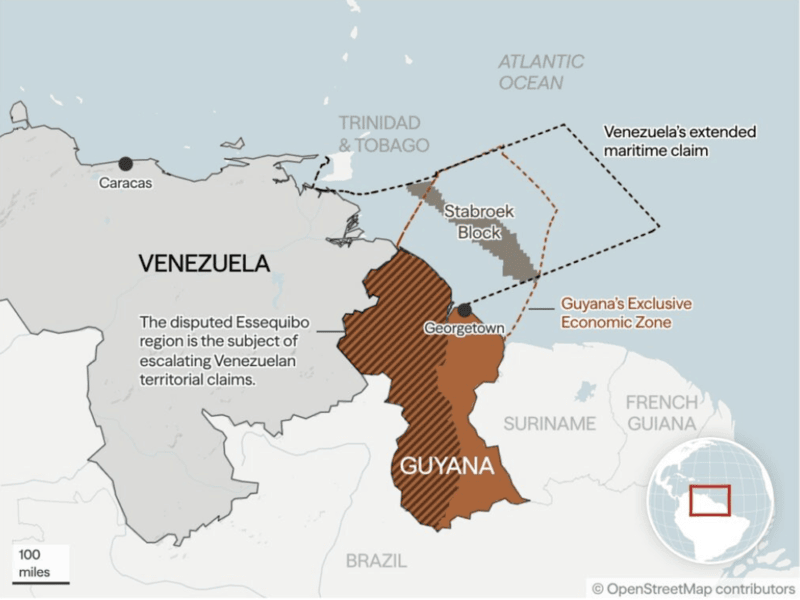
Disinformation and the Collapse of Shared Reality: Lessons from the Venezuela–Maduro Crisis
On January 3, 2026, the United States announced that its forces had captured Venezuelan President Nicolás Maduro and flown him to New York to face charges. Within minutes of President Donald Trump’s message breaking across social media platforms, an array of AI-generated images, recycled footage, and outright false claims began circulating widely. Some purported to Read More…
Understanding Canada’s Trade Diversification Policy and Lessons for other NATO States
Could Canada’s new trade policy serve as a template for the rest of NATO? This article analyses Canada’s trade diversification strategy as a case study to assess its viability as a model for achieving economic security among NATO member states.
What does the Venezuelan Oil Situation mean for Canadian Energy Security in the NATO Alliance?
In this article, Kaya Dupuis examines how the U.S. seizure of Venezuelan oil reserves in January 2026 creates an unprecedented opportunity for Canada to reshape North American energy dynamics. Can Canada move fast enough to capitalize on Venezuela’s decade-long recovery timeline and secure its position as the continent’s energy supplier before the window closes?
Financing Resilience in Critical Minerals: How Allies Are De-Risking with Policy
Supply chain dominance is an easy path to economic coercion. As critical minerals become more vital than ever in a world of increasing tensions, securing network resilience is necessary to security. When the question of “friend or foe” can be a blurred one, allies band together to mitigate risk through policy and cooperation.
A War on Survival: Famine, Displacement, and Coercion in Sudan
Sudan has descended into one of the world’s most severe humanitarian crises of the moment, with more than 11 million people internally displaced, over 21 million facing acute food insecurity, and several areas assessed at emergency orfamine-level conditions. The war that precipitated this crisis began in April 2023 as a power struggle between the Sudanese Armed Forces (SAF) Read More…
The Governance Gap: Why Canada Must Strengthen Its Critical Infrastructure Standards
In May 2021, a ransomware attack crippled Colonial Pipeline, one of North America’s largest fuel distribution systems across its 5,500-mile network. The incident disrupted supply across the U.S. East Coast for days, triggering widespread shortages, panic buying at gas stations. The attack exposed a troubling reality: critical infrastructure in North America is more vulnerable than previously suspected. While Canada avoided Read More…
Space Diplomacy and NATO
For most of human history, space was a realm of imagination; a canvas for myth, curiosity, and scientific dreaming. Yet today, that same silent expanse has become one of the most critical, fragile, and politically charged domains of human existence. Space has shifted from a frontier of scientific ambition into a contested arena where geopolitical Read More…
Built to Watch: The Smart City and the Reinvention of the Surveillance State in Daily Life
In the opening credits of The Jetsons, George Jetson glides through Orbit City, where technology has freed humanity from the drudgery of everyday life. The show offered a comforting fantasy in 1962; a city built on technological infrastructure that could dissolve urban problems altogether. Six decades later, as real cities rush to install sensors in Read More…