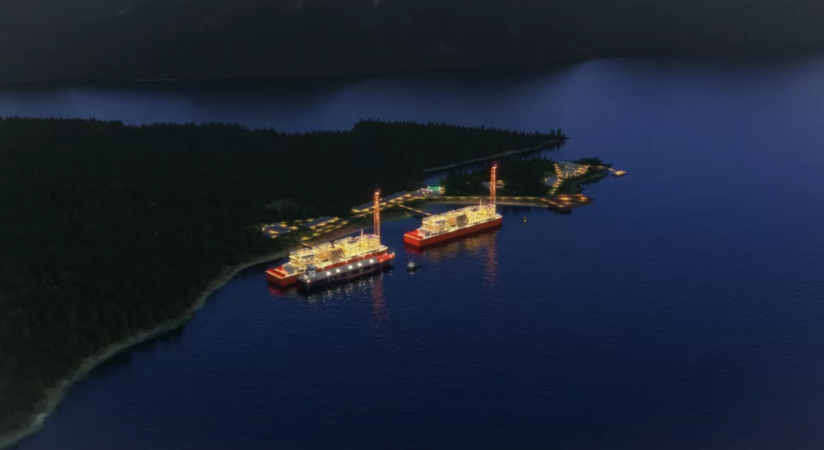
Canada’s Ksi Lisims LNG project has secured a significant agreement with German energy utility Uniper, marking a major step toward entering the European gas market. Signed in July 2026, the sale-and-purchase agreement covers two million tonnes of LNG annually for up to twenty years, with deliveries expected to begin in 2032. A preliminary Heads of Agreement with SEFE (Securing Energy for Europe), a German state-owned energy company, covered another one million tonnes annually, pending a final contract.
These agreements represent more than a commercial milestone for Ksi Lisims. They raise a broader question about the role Canadian LNG could play in strengthening the energy security of NATO’s European members. NATO’s 2026 Resilience Baseline Requirements identify reliable energy supplies and critical supply chains as essential to sustaining Allied capabilities during crises.
The share of Russian pipeline gas in EU gas imports fell from approximately 41 percent in 2021 to about 6 percent in 2025. Over the same period, LNG’s share of EU gas imports rose from 20 percent to 45 percent, with the United States supplying almost 58 percent of EU LNG in 2025.
Turning these agreements into exports will require major investment in British Columbia. Ksi Lisims would be developed on Nisga’a Nation treaty land, off British Columbia’s northwest coast, with the Nation serving as one of the project’s three proponents. The project represents nearly $30 billion in prospective investment. Its development would also depend on expanded electricity infrastructure.
Securing European buyers is therefore only part of the strategic case for Ksi Lisims. Its contribution to Allied energy resilience will depend on its ability to deliver reliable supplies, support an economically justified infrastructure investment, and remain competitive in a changing EU market access.
Destination flexibility and Allied energy resilience
The Uniper agreement covers fully destination-flexible volumes sold on a free-on-board basis. Under an FOB agreement, the buyer nominates the vessel and assumes the costs and risks once the cargo is loaded. Uniper would therefore decide where to ship the LNG, whether to European customers or buyers elsewhere.
Ksi Lisims’ location on British Columbia’s Pacific coast makes Asian markets easier to reach. Shipping LNG to Europe through the Panama Canal would take longer and cost more. Uniper could therefore find it more profitable to sell Canadian cargoes in Asia while supplying European customers from Atlantic sources. A major supply disruption could further intensify competition for LNG with European and Asian buyers bidding for available supplies. Even in a European supply emergency, Uniper’s agreement would give NATO Allies no guaranteed claim to those Canadian cargoes.
Crises are not the only test. The Uniper agreement could extend into the early 2050s, by which time Europe’s demand for natural gas may have fallen substantially. According to EU energy projections, EU gas consumption could fall from approximately 340 billion cubic metres in 2025 to between 190 and 280 billion cubic metres by 2030, depending on the policy scenario. These changes could begin reshaping the European gas market before Ksi Lisims’ first deliveries in 2032.
Ksi Lisims, meanwhile, has been securing buyers in other markets, including a 20-year preliminary agreement with Australia’s Santos for one million tonnes annually. A broader customer base could help Ksi Lisims sustain sales if EU gas demand declines. Uniper’s destination flexibility allows it to respond to changing market conditions. Neither necessarily strengthens European Allies’ access to Canadian LNG during a crisis.
Power, infrastructure and public investment
Canada’s prospects as an LNG supplier to NATO’s European members will be tested first at home, where British Columbia must secure the electricity needed to power Ksi Lisims. The project would require up to 600 megawatts of electricity, with a January 2026 agreement with BC Hydro outlining the steps needed to connect to the grid. Ottawa and British Columbia have committed $3.9 billion toward the first two phases of the North Coast Transmission Line, which could more than double regional electricity capacity.
The line will also serve northern communities, mining operations and other industries, so its full cost cannot be attributed to Ksi Lisims alone. BC Hydro has nevertheless identified the project as a significant prospective customer whose electricity demand helps justify the transmission expansion. If major industrial projects generate less electricity demand than projected, parts of the expanded grid could remain underused, leaving BC Hydro with infrastructure costs to recover despite lower-than-anticipated revenues.
The investment debate also needs to account for the benefits Ksi Lisims could bring to the Nisga’a Nation. As a co-developer of the project, which would be built on its treaty land, the Nation has a direct role in its development and stands to benefit financially from its operations.
Allied energy security, then, is one argument for the expansion, not the whole case. The investment must also make economic sense for British Columbia, with costs justified by the demand and benefits it is expected to deliver.
Upstream methane and European market access
For NATO’s European members, efforts to diversify gas supplies must take account of the EU’s tightening methane standards, which will increasingly shape which suppliers can compete in the EU markets. Under the EU Methane Regulation, importers with new or renewed contracts dating from August 2024 must demonstrate equivalent producer-level monitoring, reporting and verification from 2027, followed by methane-intensity reporting from 2028. Contracts signed or renewed after August 5, 2030 will also face maximum methane-intensity limits. The European Commission has proposed delaying the initial requirements by one year, subject to legislative approval.
Canada’s enhanced regulations are expected to reduce oil-and-gas methane emissions by 72 percent below 2012 levels by 2030. That national progress, however, does not by itself satisfy EU requirements for the producers supplying Ksi Lisims. Their monitoring and verification practices will need to meet those standards for Ksi Lisims to remain competitive in the EU market.
What should Canada do?
British Columbia should require BC Hydro to clarify how the North Coast Transmission Line’s costs will be shared between major industrial customers and the wider electricity system. As the project advances, the province should ensure that electricity-supply agreements include firm customer commitments and safeguards against costs arising from delayed or cancelled industrial projects. Ottawa should consider similar financial protections when providing additional federal support.
On European market access, Ottawa should work with EU regulators to seek recognition of Canada’s methane monitoring and verification systems under the regulation’s third-country equivalency provisions. Canadian producers, pipeline operators and Ksi Lisims should establish the emissions reporting and verification arrangements needed to support EU importers before exports begin.
Finally, Canada and Germany should use their existing energy partnership to examine how destination-flexible Canadian LNG could contribute to European crisis preparedness. Joint scenario planning should examine where Uniper’s Canadian cargoes might be shipped during a major supply disruption, taking account of commercial incentives, shipping constraints and European import capacity. Canada could then share the findings with NATO Allies to inform broader energy-resilience planning.
Disclaimer: Any views or opinions expressed in articles are solely those of the authors and do not necessarily represent the views of the NATO Association of Canada.
Photo: “Proposed Ksi Lisims LNG facility on British Columbia’s northwest coast” (n.d.), by Ksi Lisims LNG, via The Globe and Mail. © Ksi Lisims LNG.