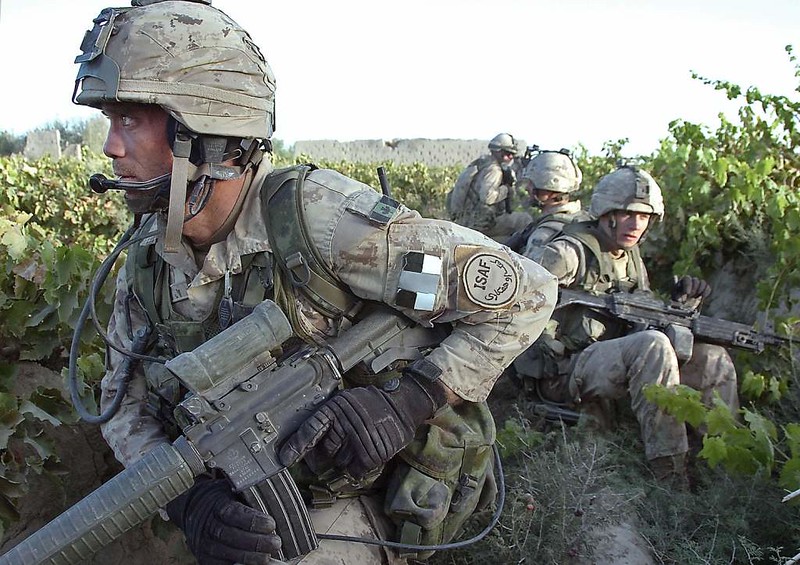
Twenty years ago, the Canadian Armed Forces alongside NATO and Afghan allies, conducted Operation Medusa, the largest Canadian operation since the Second World War. Carried out in September of 2006, Op Medusa saw Canadian-led NATO forces successfully destroy a Taliban stronghold in the Panjwayi district. While the operation was Canadian-led, it represented the combined strength of several allies working together, demonstrating the intricacies and challenges of coalition warfare. These nuances are especially relevant for NATO in the modern era, as the Alliance seeks to rearm and deepen their integration in order to protect its members. Op Medusa offers a valuable example of NATO’s ability to operate as a coalition in the field, revealing the advantages and challenges involved in these types of operations. The lessons offered from Canada’s experience during Op Medusa can be wielded to improve NATO coalitions going forward.
The Coalition in Action
In 2006, Panjwayi district in the Kandahar region had become the heart of the Taliban insurgency. Hundreds of fighters were deeply embedded in the area, directly threatening NATO’s control over nearby Kandahar, Afghanistan’s second largest city. NATO sought an operation to secure government control over the district and expel Taliban fighters. Canadian Major-General (Ret’d) David Fraser, then commander of Regional Command South, was tasked with planning and conducting the operation. MGen (Ret’d) Fraser embarked on coalition-building efforts to assemble a force capable of conducting an operation to dislodge the Taliban from their stronghold. However, NATO’s constraints in Afghanistan began to dictate conditions on the ground. The International Security and Assistance Force informed MGen (Ret’d) Fraser that Op Medusa would be their main effort in Afghanistan. However, key assets, including aircraft and additional troops, would only be available during the early part of September, after which they might be redeployed elsewhere in Afghanistan. Aware of these restrictions, Fraser set out to work through August 2006, assembling a coalition across his brigade in order to confront the Taliban forces in Panjwayi. The main fighting force consisted of around 1400 NATO coalition troops, with thousands more in support roles. Contributions to the coalition came from Canada, the US, the UK, Denmark and the Netherlands, as well as Afghan National Army forces.
When Op Medusa was initiated on September 2, 2006, NATO forces quickly worked to dismantle Taliban forces in the district. Throughout the operation, the cooperation of NATO allies continually delivered success for coalition forces while driving back Taliban forces. Canadian ground troops provided the bulk of the fighting force, securing objectives and engaging in fierce combat against a sizable Taliban force in order to secure the district. While the Canadian assault advanced from the south, US special and regular forces guarded their eastern flank, while Danish forces guarded the west. To the north, Dutch forces completed the encirclement. Elsewhere, the support of coalition airpower decimated Taliban positions. British and Dutch attack helicopters struck targets identified by ground forces, while fighter jets dropped munitions on targets. American B1 bombers also conducted high-altitude bombing missions. British reconnaissance aircraft also flew sorties to support the operation. Elsewhere, Dutch and Danish artillery units provided fire support for the advance of Canadian units, with Dutch units debuting the PzH2000 for its first time-combat.
The combined effort of the coalition provided NATO the necessary capabilities to dislodge Taliban forces in the area, providing the ISAF with the ability to stabilize the territory and grant NATO forces much-needed credibility at the beginning of their Afghan mission. The mission remains a testament to the effectiveness of NATO allies when working together.
Medusa and the Challenges of Coalition Warfare
While Op Medusa demonstrated the power NATO could field when operating as a coalition, it also demonstrated a number of challenges for coalition operations. These challenges offer relevant lessons for NATO as the Alliance plans for its future. One key lesson that emerges from Op Medusa is the necessity of harmonizing objectives and intent for coalition forces. NATO allies disagreed at times on the fundamental objectives of the operation: for example, Canada and its coalition partners at times held diverging views on their objectives in Afghanistan, with differing emphasis placed on counterinsurgency and stabilization. This is evident in the outcome of the battle, where disagreements over long-term objectives led to a lack of planning for infrastructure and development following the battle, allowing Taliban forces to gradually regain their foothold in the region and continue the war through guerilla tactics. If NATO wishes to present a united front going forward, more effort will need to be afforded towards harmonizing what NATO intends to do amongst its members. Meetings such as the recent Ankara summit should aim to discuss objectives for each of the allied nations, with the end goal being mutually agreed-upon goals which can be sought collectively. In doing so, NATO can avoid the obstacles raised when allies approach operations with differing objectives.
In a similar vein, member states imposing restrictions on the deployment of their troops raises another lesson from Medusa. While the coalition demonstrated NATO’s strength, many allies remained hesitant to commit forces, with Maj Gen Fraser recounting a desperate plea for support from other NATO allies to support the operation. One actionable lesson from this is to tailor coalition commitments around member state restrictions. While Dutch forces declined to participate directly in clearing operations during Op Medusa, they nevertheless played an integral role in supporting the success of the mission through security operations and artillery fire missions throughout. Learning from this, NATO leadership must anticipate national caveats to affect future coalitions and develop an equitable force structure agreeable to all members. This can be done through assessing the capability and willingness of each coalition partner before an operation, in order to ensure commitments remain reliable throughout operations.
Additionally, Op Medusa revealed the need to harmonize coalition operations given the chaotic circumstances that combat creates. Throughout the operation, NATO command endeavored to mitigate confusion amongst the coalition forces, keeping the force cohesive and able to engage the enemy. The complexity of this task became especially evident during a friendly-fire incident, when two US aircraft mistakenly strafed a Canadian column before the Canadian air-ground controller was able to call off a second attack. The confusion which preceded the incident and quick response from the ground controller demonstrate the need for NATO militaries to train in a joint manner as frequently as possible, and to simulate real conditions when doing so. Any joint operation will become infinitely more complex in the event of contact, as was the case during Op Medusa. While little can be done to prepare for this in peacetime, NATO must endeavor to simulate this as regularly and routinely as possible in order to prepare its member states to not only operate but cooperate in the field.
Conclusion
Twenty years since the conclusion of Op Medusa, NATO is yet again preparing to undertake operations intended to secure the Alliance against foreign aggression. Cooperation is NATO’s foundational strength, and Op Medusa demonstrates why NATO is a uniquely effective military alliance. That being said, the legacy of the operation also contains many important challenges from which NATO strategists must learn. Developing a shared vision and promoting reliable training for all members will ensure NATO is capable of fielding a competent, unified and lethal fighting force.
Disclaimer: Any views or opinions expressed in articles are solely those of the authors and do not necessarily represent the views of the NATO Association of Canada.
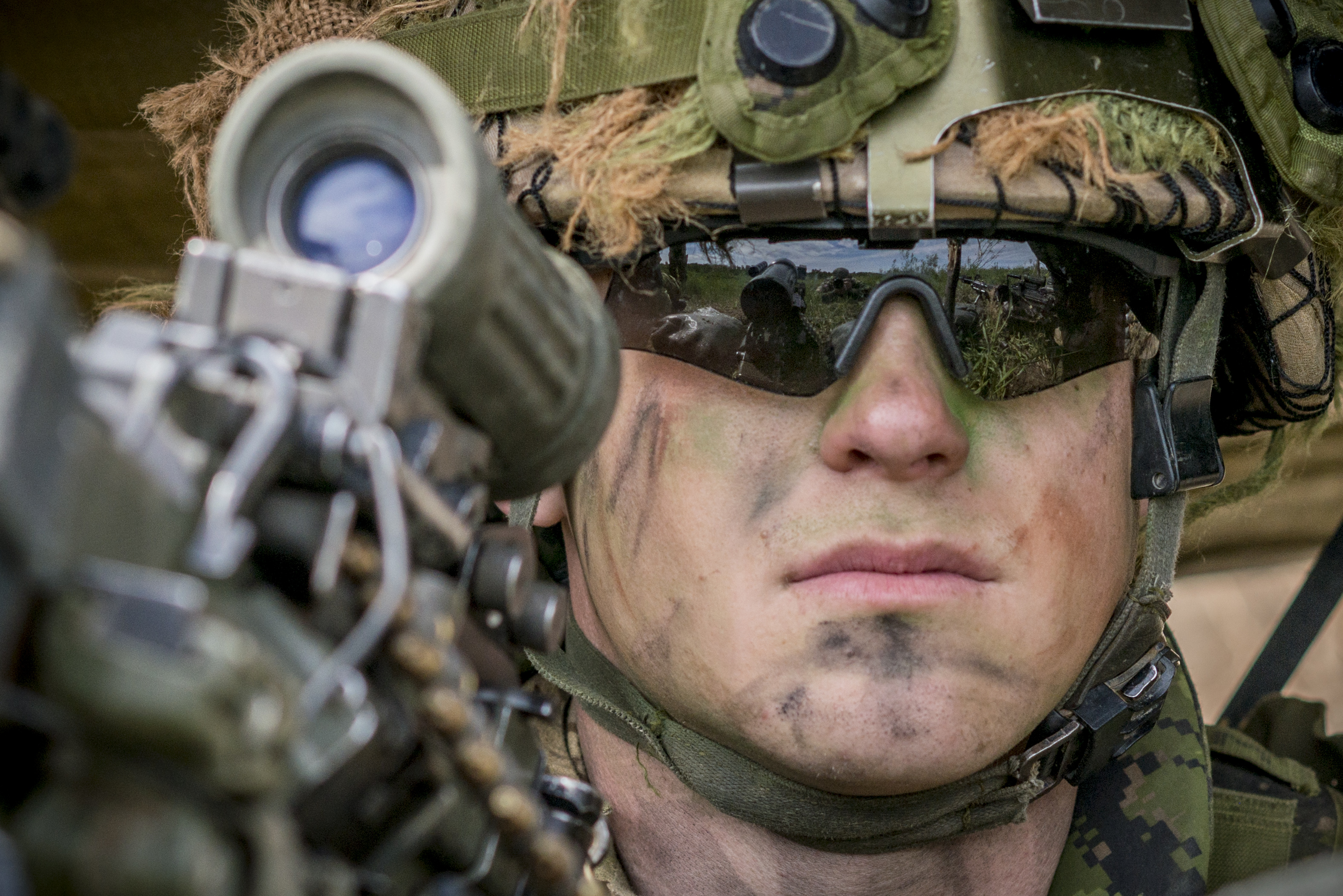
Photo: “Soldiers of Alpha Company (A Coy) conduct operations in the Panjwaii District of Kandahar Province as part of Operation MEDUSA”, via Veterans Affairs Canada. Public Domain.