The Arctic has gained renewed strategic importance amid geopolitical tensions. Russia continues to expand its military footprint across the High North. At the same time, China has taken to describing itself as a “near-Arctic state”, investing in northern infrastructure, future shipping routes, and scientific research. Climate change further contributes to making the region more accessible by reducing sea ice, which increases state interest in both the Northwest Passage and the Arctic’s vast reserves of critical minerals and natural resources. Amid this uncertainty, NATO continues to transform the Alliance’s northern flank through its Arctic Security Strategy, placing renewed emphasis on Arctic adversarial deterrence, regional stability, and cooperation with Allies.
Canada has responded to NATO’s collective security in the High North and sought to defend its northern state sovereignty through the recent Arctic Infrastructure Fund. This plan pledges over 40 billion dollars towards Arctic resilience by investing in dual-use infrastructure bases, transportation routes, surveillance capabilities, and energy infrastructure. These capabilities are essential to defending Canadian sovereignty and NATO’s Arctic Security Strategy in an increasingly contested region. However, discussions in Arctic security often overlook one of Canada’s greatest advantages: the 70,535 Inuit peoples across 53 Inuit communities whose permanent Indigenous presence, experience, knowledge, and stewardship have protected the Arctic for generations.
Lasting sovereignty depends equally on resilient Inuit northern communities, Indigenous leadership, and meaningful partnerships that enhance Canada’s ability to monitor, manage, and govern its northern territories. Military capabilities remain indispensable, but they cannot secure Canada’s Arctic alone. Integrating Inuit leadership into Arctic security policy reinforces reconciliation while strengthening Canada’s contribution to NATO’s Arctic Strategy.
Security Begins with Presence
Canada’s Arctic is unique among its regions. It consists of a vast landmass, limited infrastructure, harsh environmental conditions, and a much smaller population compared to the southern Provinces and other Arctic NATO members. These conditions could complicate efforts to secure Canada’s sovereignty, relying on satellites, surveillance aircraft, and military patrols to provide periodic strategic situational awareness. For their part, Indigenous and Inuit communities provide something far more enduring: a continuous presence.
For 5000 years, Inuit peoples have developed an intimate understanding of Arctic geography, seasonal ice conditions, wildlife migration, weather patterns, and safe travel routes. This knowledge is not simply crucial; it has practical security applications that translate to Canadian and NATO Arctic security. Inuit observations contribute to environmental awareness, search and rescue operations, emergency response, and safe movement in one of the world’s most challenging operating environments.
With Canada’s plans to strengthen its regional posture through the Arctic Infrastructure Fund and NATO’s growing desire to secure the area as reflected in its Arctic Security Strategy, generations of Inuit knowledge provide a valuable asset. Beyond military capabilities and deployments, Arctic security also necessitates resilient communities that maintain awareness and persistent presence across an immense and dynamic landscape.
Community Resilience as National Security
Any meaningful effort to build Arctic sovereignty must first consider what security means for Inuit communities. For them, the Arctic is a shared lived experience to maintain strong and resilient communities in a changing environment. Unfortunately, these communities currently face inadequate housing, food insecurity, and limited access to essential services that are also less equipped to support emergency response.
While Canada’s Arctic Infrastructure Fund invests in various areas to promote northern economic interests, transportation, and energy infrastructure, additional investment could benefit the region. These investments would extend into housing, healthcare, education, telecommunications, and reliable resupply shipments. This could prove beneficial to Canada’s Arctic sovereignty and NATO’s Arctic Security Strategy, as building resilient northern communities is not separate from national security; it is a prerequisite. Resilient communities are better equipped to sustain a permanent presence, improving resilience while reinforcing sovereignty and security across Canada’s vast Arctic region. This perspective reflects a broader understanding of security, recognizing that sovereignty and security depend not only on defending territory, but also on supporting the Inuit peoples who permanently inhabit it.
Indigenous Inspired Leadership as a Strategic Capability
Canada already has successful examples of Indigenous-led leadership contributing directly to Arctic security. The Indigenous Guardians Program empowers Indigenous communities to monitor and manage their traditional lands, ice, and waters through environmental stewardship and conservation initiatives. While primarily designed for environmental protection, the program also strengthens domain awareness by maintaining a continuous presence in remote Arctic regions, monitoring environmental change, preserving critical ecosystems, and supporting search-and-rescue efforts.
Indigenous-led leadership also extends beyond local communities through organizations such as the Inuit Circumpolar Council (ICC). Representing a united Inuit voice across Canada, Alaska, Greenland, and Chukotka since 1977, the ICC demonstrates how Indigenous institutions contribute to Arctic governance and international cooperation. The ICC advocates for Indigenous perspectives on long-term environmental policies, sustainable development, and regional stability through active political, social, and economic partnerships. These initiatives demonstrate that Indigenous-led leadership is not simply a military objective; it represents Arctic security inspired through continuous presence, environmental stewardship, and effective governance. This also represents a strategic capability that can strengthen both Canada’s sovereignty and NATO’s Arctic Security Strategy.
What This Means for NATO
NATO’s renewed focus in the Arctic has emphasized deterrence, interoperability, and improving Arctic domain awareness. As Allied nations increase military exercises, surveillance operations, and defence infrastructure investments across the region, Indigenous partnerships offer a grounded perspective that complements these strategic efforts.
Indigenous-led leadership cannot replace military capabilities, nor should it. Rather, it enhances them by providing local expertise, improving community resilience, and strengthening one of its leading Arctic Allies. Organizations such as the ICC and programs like the Indigenous Guardians Program illustrate how Indigenous institutions can contribute to a comprehensive approach to Arctic security that integrates defence, governance, and sustainable stewardship.
This presents Canada with an opportunity to demonstrate leadership within NATO by advancing an Arctic strategy that recognizes Inuit communities as strategic partners rather than simply stakeholders. Other Allies, including the United States through Alaska, the Kingdom of Denmark through Greenland, and the Nordic states through engagement with Sámi communities, also recognize the value of Indigenous partnerships. This creates opportunities to strengthen resilience across the Alliance through knowledge-sharing, emergency preparedness, and environmental monitoring. These approaches could prove beneficial, aligning military readiness with resilient communities that reflect both security interests and the realities of life in the North while respecting the unique knowledge of northern Indigenous peoples.
Conclusion
Canada’s Arctic security strategy can be improved through dual-use infrastructure, transportation routes, surveillance capabilities, energy infrastructure, and military modernization. These capabilities remain essential, but they are only one part of a much broader approach to securing the North. Lasting sovereignty depends upon resilient Inuit communities, their expertise, and permanent presence whose knowledge and stewardship continue to protect the Arctic daily.
As strategic competition intensifies across the Arctic, Canada and NATO have an opportunity to redefine Arctic security by integrating Indigenous-led leadership into national and Allied policy. The Guardians Program and the ICC demonstrate that security is strengthened not only through military deterrence but also through partnerships grounded in local knowledge, governance, and community resilience. By recognizing Indigenous-led leadership as a strategic capability, Canada can reinforce its Indigenous cooperative governance that strengthens sovereignty and contributes to a more enduring and grounded reality of Arctic security for NATO.
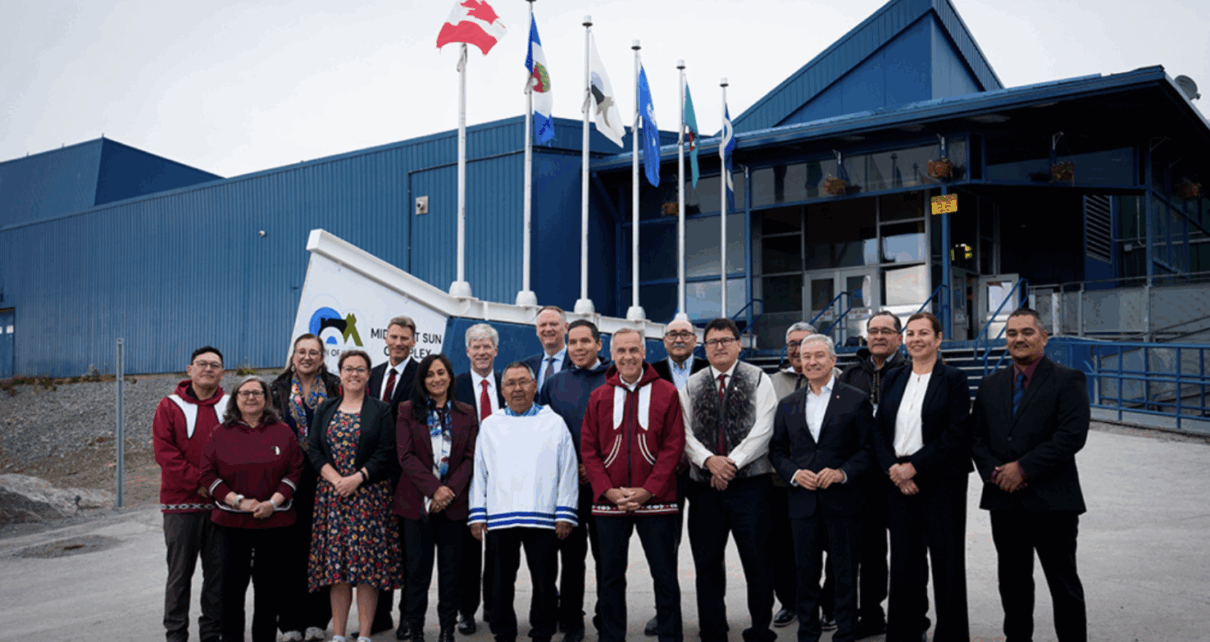
Photo: Inuit-Crown Partnership Committee meeting in Inuvik, Northwest Territories on July 24, 2025 – Prime Minister Mark Carney meets with Inuit Leaders and Federal Cabinet Ministers via Source. Licensed Under CC Crown-Indigenous Relations and Northern Affairs Canada
Disclaimer: Any views or opinions expressed in articles are solely those of the authors and do not necessarily represent the views of the NATO Association of Canada.