While UAVs have been used in conflict for decades, Russia’s full-scale invasion of Ukraine in 2022 fundamentally reshaped modern military strategy by demonstrating the growing importance of unmanned aerial vehicles (UAVs) in conventional warfare. According to the Council on Foreign Relations, UAVs have enhanced force employment by enabling precise strikes against Russian command and control (C2) networks and logistics, disrupting battlefield connectivity and striking critical military sites and infrastructure.
UAVs and the Future of Force Employment
The evolution of Ukrainian drone capabilities continues to transform the battlefield. On 21 June 2026, CNN‘s open-source intelligence (OSINT) team reported that the number of Ukrainian medium-range drone strikes had increased 28-fold over the previous year, driven largely by the introduction of new UAVs such as the FP-2 and Behemoth. These two weapons are deployed to strike bridges, railways, and fuel convoys along the southern front, further disrupting Russian logistics. These operations are possible as the UAVs are equipped with technology that permits a flying range of approximately 300 km, cruising speeds of up to 180 km/h, and warheads weighing up to 70 kg. This illustrates the rapid advancement of UAV technology and its growing role in Ukraine’s military strategy.
Beyond their operational effectiveness, UAVs have significant cost and resource advantages over conventional military equipment. Small first-person-view (FPV) drones can be procured for only a few hundred dollars while successfully destroying military assets worth millions. According to Foreign Policy, a NATO official stated that by April 2024, more than two-thirds of Russian tanks had been destroyed by FPV drones. UAVs also require fewer personnel for operation and maintenance than conventional equipment, reducing both operating costs and the risk to military personnel while enabling militaries to force-employ more efficiently.
These operational successes have prompted NATO countries such as the United States of America (USA) and Canada to reconsider how they structure future forces. For Canada, the implications extend beyond acquiring drones, as they require the rethinking of force employment, procurement, and homeland defence. In 2025, the U.S. Department of Defense announced plans to build a leaner, more lethal force by reducing investment in selected manned platforms in favour of unmanned systems. The initiative includes integrating drones into every U.S. Army division and strengthening counter-unmanned aerial system (C-UAS) capabilities by the end of 2026, reflecting a broader recognition that UAVs have become essential to modern military operations.
Moreover, unlike many conventional weapons systems, which require highly-specialized parts that can only be procured from a limited number of supply chains, small UAVs can be manufactured quickly using commercially available components and produced by a broad range of manufacturers. As a result, sustained strikes against drone production facilities have had limited effects on Ukraine’s ability to replenish losses, as civilian manufacturing can often be rapidly converted to wartime production. This resilience has allowed Ukraine to sustain high operational tempos despite continued Russian attacks on its defence industrial base. According to the International Institute for Strategic Studies, UAVs have significantly augmented the Armed Forces of Ukraine (AFU)’s capabilities in its war against Russia as the concurrent deployment of thousands of drones permits increased intelligence, surveillance and reconnaissance (ISR). Specifically, UAVs can capture high-resolution imagery on weaponry and the area of operation (AOR) through navigating previously inaccessible terrain. Additionally, through a Ukrainian system known as Avengers, UAVs can carry out autonomous missions through target identification and then designation, permitting operators to carry out numerous drone strikes simultaneously.
Implications of UAVs for Canada’s Defence
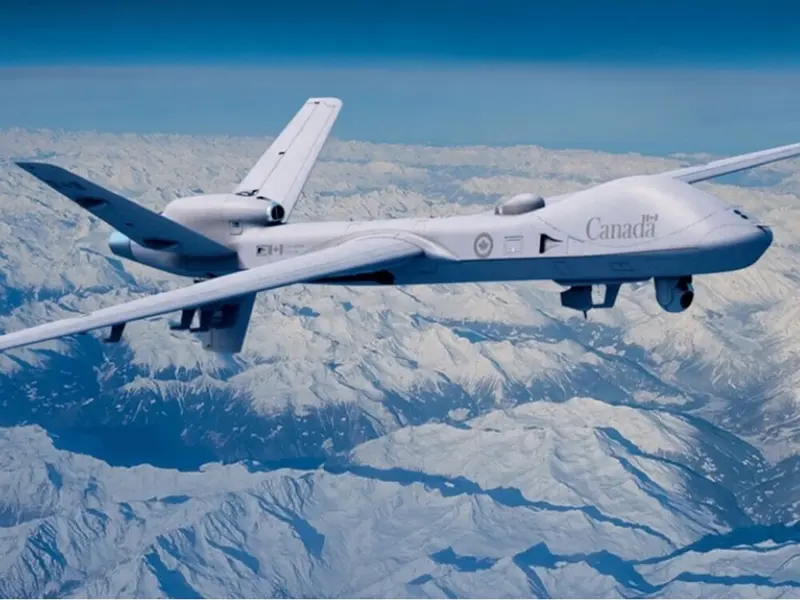
The 2022 Russo-Ukraine war challenged traditional military strategy and tactics, leading the U.S. and other NATO countries to begin the deployment of UAV and C-UAS capabilities to modernize their forces to keep pace with emerging technologies. Canada is not far behind. Through the MINERVA Initiative, the Canadian Armed Forces’ (CAF) 3rd Canadian Division announced its intentions to significantly increase the number of drones in its possession to approximately 500 by March 2027.
The CAF anticipates that the integration of drones will enhance ISR capabilities, while enabling logistical resupply and strike operations at a fraction of the cost and resource requirements associated with deploying a single manned aircraft. The Canadian Coast Guard (CCG), now a subsidiary of the Department of National Defence (DND), will deploy UAVs to support the CAF’s surveillance of the Arctic, permitting continued assertion of Canada’s sovereignty in the region as the Northwest Passage continues to melt and become more navigable amid rising geopolitical tensions.
While the integration of drones into modern warfare for offensive purposes offers significant advantages for the CAF, it also introduces significant vulnerabilities. The CAF must rethink how it approaches defence against drone-based threats, as conventional air defence strategies are inadequate for current needs. Although Russia and China continue to invest heavily in conventional missile capabilities, the effectiveness of UAVs demonstrated in Ukraine suggests they are also likely to stockpile UAVs; posing an evolving threat. To combat this, the North American Aerospace Defense (NORAD) command will need to modernize its approach beyond traditional air threats by including UAVs and strengthening its detection and interception capabilities.
Overall, UAVs are reshaping how modern militaries employ force by providing low-cost, effective capabilities across intelligence, surveillance, and reconnaissance (ISR) and precision strike operations. The war in Ukraine has demonstrated that drones are now a core component of modern military operations, and Canada must adapt to this shift. The CAF must continue integrating UAVs into its military strategy while strengthening counter-unmanned aerial system (C-UAS) capabilities to defend against evolving threats. As UAV technology continues to advance, Canada’s future military effectiveness will depend not only on its ability to integrate drones into military operations, but also on its ability to effectively detect and counter them.
Photo Credits: David Pugliese, Ottawa Citizen canadian-military-drones-challenges-arctic-rcaf-report
Disclaimer: Any views or opinions expressed in articles are solely those of the authors and do not necessarily represent the views of the NATO Association of Canada.