For most of human history, space was a realm of imagination; a canvas for myth, curiosity, and scientific dreaming. Yet today, that same silent expanse has become one of the most critical, fragile, and politically charged domains of human existence. Space has shifted from a frontier of scientific ambition into a contested arena where geopolitical tensions, commercial competition, and military strategy increasingly collide.
Over the past decade, satellites have woven themselves so deeply into daily life that most people forget they exist. They are the invisible architecture of the modern world: guiding aircraft and ambulances, enabling global finance, predicting storms, supporting humanitarian relief, monitoring climate change, and securing the communication networks that tie entire societies together. But as dependence on these systems grows, so do the threats.
At the same time, the risks in orbit are multiplying, driven by congestion, vulnerability, and growing strategic competition. Yet, the rules of space have not kept pace with its rapidly changing reality. The result is a profound mismatch between the strategic importance of space and the weakness of the norms meant to protect it. It is, in many ways, comparable to allowing millions of high-speed vehicles onto a global highway with no traffic laws, no enforcement mechanisms, and no agreed-upon code of conduct. That is the orbital environment we live in today.
In this landscape, space diplomacy is rapidly becoming the foundation of 21st century security. For NATO, the challenge is both strategic and urgent; the Alliance has the operational capacity, institutional structures, and partnerships with commercial and allied actors to shape norms, ensure resilience, and protect critical space assets. Yet, despite these capabilities, the regulatory framework remains outdated, leaving a clear imperative for NATO and its allies to step into a leadership role in governance and responsible behavior in orbit.
Threats in Orbit: Debris, Cyber Vulnerabilities, and Counter-Space Weapons
Scientific literature and security analyses increasingly warn of a dangerous convergence in Earth’s orbit. Anti-satellite (ASAT) weapons are proliferating, cyber intrusions into orbital infrastructure are growing more sophisticated, and intelligence-gathering spacecraft are now capable of shadowing satellites at close proximity. At the same time, the orbital environment itself is becoming dangerously congested. More than 36,000 pieces of trackable debris currently circle Earth, and according to the European Space Agency, over one million smaller fragments, too small to be reliably tracked, are also in orbit, each capable of disabling a satellite in an instant. This trend is accelerating at an alarming rate.
The risks in space today are real, multifaceted, and often underestimated. The first and most visible challenge is the accelerating crisis of debris and congestion. As the number of satellites skyrockets. driven by commercial expansion and the rise of mega-constellations, so does the volume of space junk surrounding Earth. Technical assessments estimate tens of thousands of trackable objects in orbit, alongside hundreds of thousands of smaller fragments that cannot be monitored reliably but can still cause catastrophic damage. Recent sustainability research argues that space mission design must begin incorporating debris generation and orbital impact into life-cycle environmental analyses, recognizing that a single collision at orbital speed can shatter a satellite into thousands of new projectiles, threatening entire orbital pathways for decades. In a domain where objects travel at several kilometers per second, even a metal fragment the size of a screw can become a lethal weapon.
Equally alarming is the growing vulnerability of space systems to cyber intrusion. Satellites, ground stations, command-and-control networks, and data links all depend on complex global supply chains and software architectures. Studies examining mission-critical infrastructure, including capabilities directly supporting NATO, have identified significant cybersecurity gaps. Analyses show that space-based infrastructure, even within NATO mission-critical supply chains, remains exposed to attacks and supply-chain compromises, threatening both military and civilian operations. A successful cyberattack or supply-chain compromise could disrupt satellite operations, degrade communication networks, or disable key functions altogether, with immediate consequences not only for defence and intelligence but also for civilian sectors such as aviation, energy grids, and emergency services. In space, a digital breach can have physical consequences.
The third major threat involves the rapid proliferation of counter-space capabilities. State and non-state actors are increasingly developing tools to jam or spoof GPS signals, conduct electronic warfare, blind satellite sensors with high-energy lasers, or perform proximity maneuvers that enable intelligence gathering (or interference) at extremely close range. Direct-ascent anti-satellite (ASAT) weapons remain among the most destabilizing as demonstrated by recent tests that created massive debris clouds and directly threatened the safety of operational satellites. Analysts across global security institutions warn that such capabilities fundamentally alter the character of conflict; actions taken in orbit can now directly influence outcomes on Earth, and miscalculations in this domain, especially involving dual-use satellites, carry a high risk of rapid escalation.
Put simply, space is no longer a benign environment. It is becoming a crowded, contested, and strategically fragile domain where debris, cyber vulnerabilities, and counter-space technologies intersect in ways that can destabilize global security. Without clear norms, robust diplomacy, and shared situational awareness, even a single accident or hostile act could trigger cascading, systemic consequences far beyond orbit.
NATO’s Strategic Dependence on Space and Leadership in Diplomacy
Recognizing the growing importance of space, NATO formally declared it the Alliance’s fifth operational domain in 2019, alongside land, sea, air, and cyber. This acknowledgment reflects not just a strategic imperative but a recognition that the modern security environment is inseparable from orbital stability. NATO has established dedicated structures and initiatives to integrate space into its collective defence posture. The NATO Space Centre, for example, coordinates situational awareness of orbital objects,monitors potential threats, and supports operational planning. Units within Allied Command Transformation and Allied Command Operations work to ensure that satellite-enabled capabilities, ranging from missile warning and reconnaissance to secure communications and navigation, remain resilient and interoperable across member states. These efforts are complemented by partnerships with the European Union Agency for the Space Programme, which coordinates European satellite programs and security standards, as well as with commercial operators that provide critical dual-use capabilities.
In 2025, NATO further cemented this strategic integration by releasing its Commercial Space Strategy, signaling a shift to actively incorporate commercial satellite operators into Alliance planning, improving resilience, flexibility, and overall capacity. Workshops organized by the NATO Communications and Information Agency (NCIA) in December 2025 have brought industry and NATO experts together to enhance SATCOM capabilities, reinforcing the Alliance’s recognition that commercial actors are strategic partners in a shared orbital environment.
In recent years, NATO has developed specific doctrines and policies to address the unique challenges of space. The NATO Space Policy and the NATO Space Centre Operations Concept formalize how satellites are used for early warning, missile defence, intelligence sharing, and joint operational planning. These frameworks emphasize redundancy, resilience, and rapid response to disruptions, acknowledging the reality that adversaries may employ cyberattacks, jamming, or even kinetic anti-satellite weapons to interfere with operations. Through its Space Situational Awareness (SSA) initiatives, NATO allies can track orbital objects, assess potential collision risks, and coordinate defensive measures, ensuring that critical space assets remain operational even in contested environments.
This operational focus is increasingly paired with normative and diplomatic leadership. NATO is actively exploring ways to shape responsible behavior in space, promote transparency, and coordinate with other international actors. The Alliance engages with the UN Committee on the Peaceful Uses of Outer Space (COPUOS), supports agreements such as the Artemis Accords, and works alongside the EU’s space strategy and regulatory frameworks to encourage sustainable, safe, and cooperative practices in orbit. By integrating operational readiness with proactive diplomacy, NATO seeks to influence the development of international norms that govern space security.
Yet, despite these efforts, the current pace of governance and norm-setting is insufficient. Several structural gaps persist; there are no enforcement mechanisms to hold actors accountable for irresponsible behavior, no binding rules preventing the development or testing of ASAT weapons, and no established norms governing proximity operations or dual-use spacecraft. The challenges posed by space debris remain inadequately addressed, while mega-constellations and resource extraction activities operate in largely unregulated territory.
Without clear, enforceable rules and shared standards, minor accidents or miscalculations in orbit could cascade into global crises, affecting both civilian infrastructure and military operations on Earth. NATO is uniquely positioned to step into this void. By expanding its diplomatic leadership, coordinating with international partners, and actively shaping norms for responsible behavior, the Alliance can help prevent escalation, reduce risks to critical space assets, and ensure that space remains a secure and sustainable domain. NATO must also lead in governance. The evidence is clear, the stakes are high, and the opportunity for NATO to shape the future of space security is both urgent and attainable.
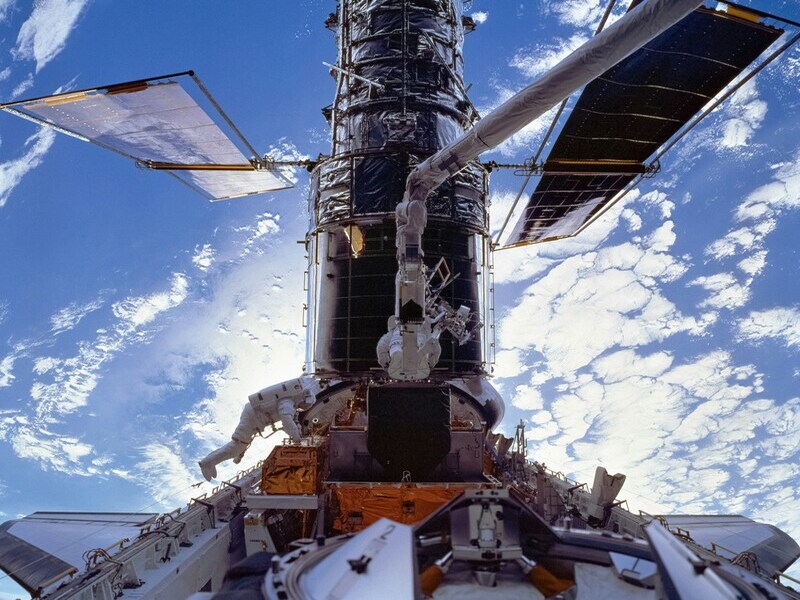
Image credit: Prepping a Fine Guidance Sensor for Return to Earth (1999) by NASA via Unsplash. Licensed under the Unsplash Licence.
Disclaimer: Any views or opinions expressed in articles are solely those of the authors and do not necessarily represent the views of the NATO Association of Canada.