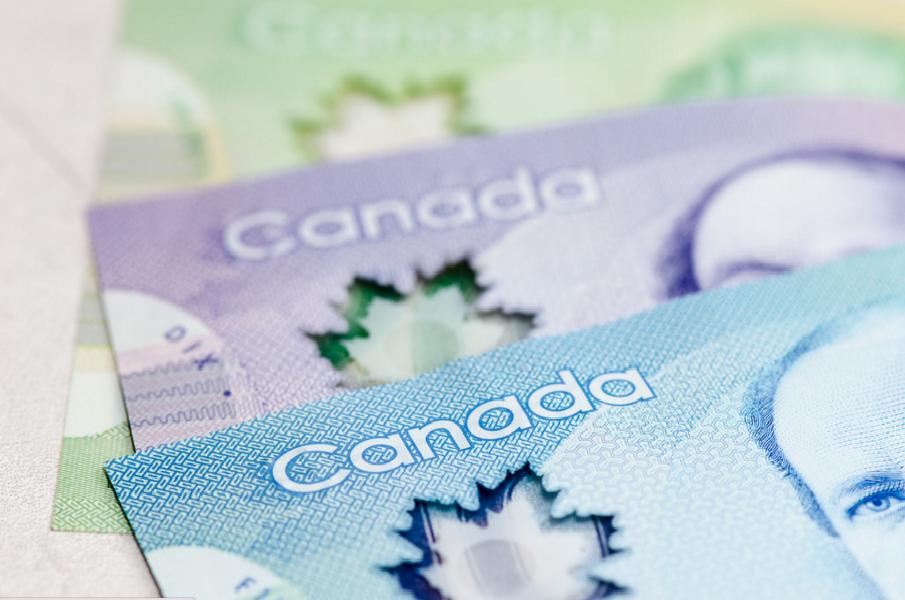
As Canada explores ways to diversify its trade partners and deepen ties with Europe, more of daily life runs across the big blue Atlantic. Being a trading nation bordered by three oceans and entwined in long supply chains, the reliability of sea lines is essential to Canadian trade vitality. Roughly 80% of world trade by volume moves by sea, which means reliability of marine trade routes matters directly to what Canada pays and when goods arrive. In May 2025, Canadian goods exports to non-U.S. markets hit a record high, up 5.7%, with increases to the U.K., Singapore, and Italy, offsetting lower sales to China. The mix of goods remains what one would expect of a resource-rich, manufacturing-capable country: bulk commodities like grain, potash, metals, and oil alongside higher-value manufactured goods.
These goods leaving and reaching Canada do so through a handful of gateways. On the Pacific side, the Vancouver and Prince Rupert ports, and on the Atlantic, the Montréal and Halifax ports. They sit within a national system of 17 port authorities and 550+ commercial facilities that add options and a degree of flexibility. Though, large-scale rebalancing is slow and costly due to entrenched distribution networks that also run through inland rails and links. For example, if a chokepoint forces ships to detour, ocean liner companies can make tactical adjustments by swapping some port stops and shifting where containers are handed off between ships, if possible. Those tweaks can partly protect time-sensitive goods (auto parts, electronics) already on Atlantic routes, while lower-priority bulk cargoes absorb longer routes, the overall net effect being typically modest. From those gateways, Canada connects to the rest of the world and enables global supply chains with exposure to risks in foreign waters.
NATO Implications
Maritime stability is where NATO comes in; its marine activities and security focus on trade routes reduces baseline operational risk for commercial traffic, which insurers and carriers translate into lower premiums and more predictable schedules. On October 29th of this year, NATO updated its Alliance Maritime Strategy for the first time since 2011, reaffirming the protection of sea lines of communication (SLOCs) and critical undersea infrastructure as a core task of collective security. SLOCs are crucial for securing the transport of personnel, heavy equipment, energy supplies, and commercial trade across the Atlantic. It should be noted that while in peacetime they are arteries for global commerce, in times of crisis or war they become strategically crucial for a nation’s ability to access resources and project power. Sea lines include primary routes of global sea trade and other vital undersea infrastructure like communication cables and pipelines that transmit data and energy across oceans.

Taiwan and the Indo-Pacific: Defending a global public good – Scientific Figure on ResearchGate
The central way that NATO monitors these lines and broader marine affairs for allied international commercial trade is through the NATO Shipping Centre (NSC) in Northwood, UK. It is the primary link between NATO’s military authorities and the merchant shipping community, allowing for shared information-flow that helps identify and track potential threats. In parallel, NATO developed the Naval Cooperation and Guidance for Shipping (NCAGS) concept to provide and standardize that interface between military and merchant operations. Canada has implemented this common NATO doctrine into its naval and reserve operations, the playbook involves providing cooperation, guidance, advice, and assistance to merchant shipping to improve safety and security. Through this, Canada is enabled to enhance its own Maritime Domain Awareness crucially safeguarding its own critical maritime assets from threats. In present, maritime activities all contribute to maintaining a stable economic environment essential for Canada’s trade-dependent economy.
Consider now the two choke-systems that have recurring presence in headlines for very different reasons. The Suez/Red Sea corridor is tied up with threats to its security. Bordering various different nations, both in Africa and the Middle East, the Red Sea has been a hotspot for naval attacks, namely by terrorist and rebel groups in the region such as the Houthis. Among other measures, this causes ships to alter course around the Cape of Good Hope losing ~10-14 days of travel, that causes insurers to reprice, and the whole network absorbs new friction. Even if a Canadian firm isn’t shipping through Suez directly, global capacity gets tied up on longer routes, and the costs echo. The Panama Canal binds two oceans together, but, by contrast, its recent bottlenecks were mainly due to water levels and transit slots. With already limited daily passages, if the lake drops then queues of carriers form, making the main constraints come down to hydrology and scheduling rather than hostile threats at sea.
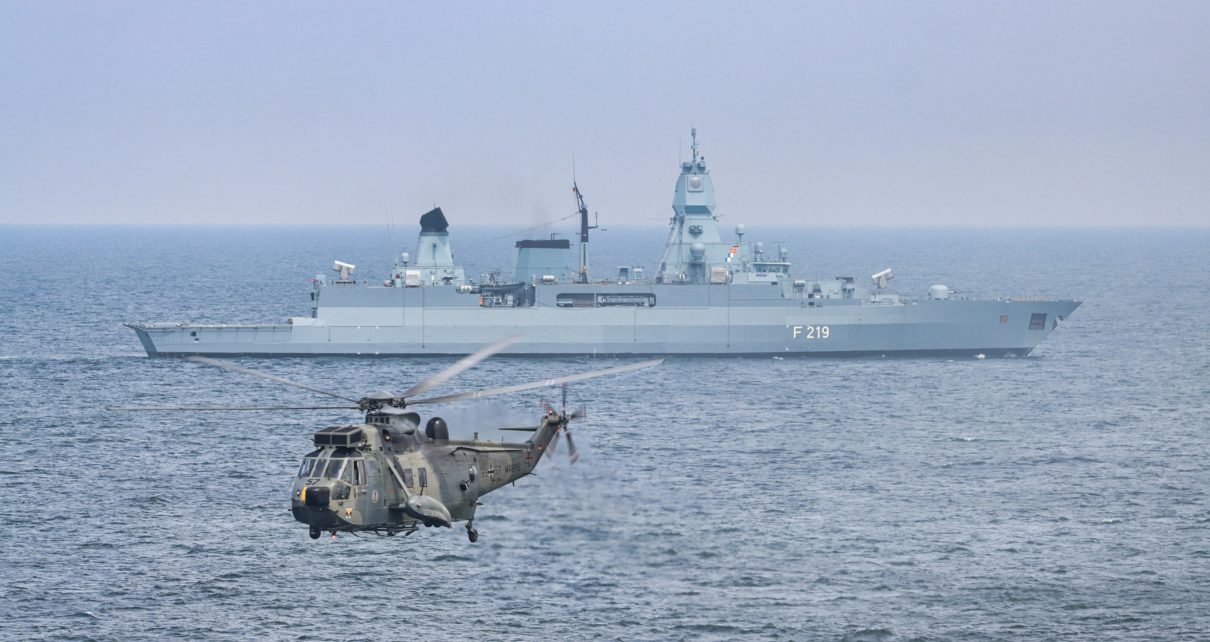
To the security end, NATO keeps Standing NATO Maritime Groups (SNMGs) as a part of their Standing Naval Forces (SNF) in the Atlantic which inherently help deter potential state and non-state aggressors from threatening critical maritime infrastructure and shipping lanes. Though NATO has historically been involved in counter-piracy operations in the Gulf of Aden and off the Horn of Africa (Operation Ocean Shield 2009), in higher-risk waters such as the Red Sea, the security work at the moment is carried out by missions led by NATO allies. The EU’s
EUNAVFOR Aspides is joined by a U.S.-led coalition often referred to as Operation Prosperity
Guardian in this region. Many of the ships and crews hail from NATO countries, Canada included, but those missions are not NATO operations. The distinction matters for accuracy but the practical effect for markets is that there is a coordinated, credible presence where it counts.
In the Mediterranean, however, NATO leads Operation Sea Guardian, a non-Article 5 maritime security mission. It focuses and aids in deterrence of terrorism and the protection of freedom of navigation in a crucial global shipping artery. Arjun Singh, a fellow writer for the NAOC, wrote on its evolutions in 2021 noting its support of UN Security Council resolutions, such as the arms embargo on Libya, by monitoring vessels to and from Libyan ports, which effectively reduces instability that disrupts trade. Its mission for situational awareness also aids in deterring threats that spill into shipping.
Ultimately, the presence and patrol of these maritime groups and operations translate to economic gains for allied states and Canadians alike through insurance and routing decisions. Data sharing among NATO allies and between military and shippers is needed to respond to current and emerging threats. Critically, protecting these routes in peacetime is a safeguard to avoiding the costs compounding during wartime. In a constantly changing threat environment, reliability continues to be key.
Disclaimer: Any views or opinions expressed in articles are solely those of the authors and do not necessarily represent the views of the NATO Association of Canada.