The post-INF ground game has been moving fast in the past few months with long-term consequences for European security.
Having successfully eliminated ground-launched intermediate-range missiles as a whole class of weapons from American and Russian Cold War inventories, the Intermediate-Range Nuclear Forces (INF) Treaty was a cornerstone of European security for so long that it was easy to imagine the security landscape without INF-range missiles and difficult to reimagine it with them – and without the United States. European states are now coming to terms with a new missile dynamic on the continent.
Russia Has Lifted its Moratorium
In August, Russia announced that it was lifting its self-imposed moratorium on the deployment of ground-launched INF-range missiles. The freeze was conditional on the non-deployment of comparable U.S. missiles in Europe and Asia. Moscow pointed to the recent placement of American missiles in both regions and to European countries’ plans to develop INF-range missiles as justification for ending its unilateral moratorium.
Russia already had an INF-range missile advantage over Europe despite its moratorium. As Moscow readily admits, the moratorium was a freeze on the deployment of missiles, not on their development. On August 11, Deputy Foreign Minister Sergei Ryabkov stated publicly that Russia continued to develop intermediate- and shorter-range missile systems during the deployment moratorium. “So this time was used…to build a fairly substantial arsenal in this area,” Ryabkov stated.
Substantial indeed. According to U.S. intelligence estimates from 2018, Russia developed and deployed multiple battalions armed with the Novator 9M729 (NATO designation: SSC-8 Screwdriver), the ground-launched cruise missile (GLCM) that prompted the U.S. to withdraw from the INF Treaty. Ukraine recently reported to the OSCE’s Forum for Security Cooperation that Russia has employed the 9M729 twenty-three times against targets in Ukraine. Reuters analysis of missile fragments appears to confirm Ukraine’s assertions.
Putin made the missile imbalance vis-a-vis Europe even more one-sided by declaring that Russia had commenced serial production of the Oreshnik, the INF-range missile used in a strike on the Ukrainian city of Dnipro last year. He also declared that the Oreshnik is now operational and that it will be deployed in Belarus. Putin made this announcement a few days prior to the formal lifting of the moratorium on August 4. Belarus’ Defence Minister, Viktor Khrenin, stated that the joint Russian-Belarusian Zapad 2025 military exercises planned for September would include the Oreshnik. In December, Minsk confirmed the Oreshnik would be deployed in Belarus.
There are parallels here to the Cold War Euromissile Crisis. Moscow’s missile moratorium proposals in the 1980s came after the Soviets made significant strides in modernizing their theatre nuclear forces during the previous decade, notably with the build-up of the SS-20 Sabre, a mobile, solid-fueled Intermediate Range Ballistic Missile (IRBM) armed with three multiple, independently targetable nuclear warheads. During Putin’s June 2024 Navy Day speech, he invoked the U.S. deployment of Pershing II IRBMs in West Germany during the Euromissile Crisis to warn against new forward deployed INF-range missiles in Europe, but left out that the Pershing IIs deployed in NATO countries in 1983 were retaliatory capabilities in response to SS-20s already fielded in the Soviet Union. As then French President François Mitterrand famously quipped, “les pacifistes sont à l’Ouest et les euromissiles à l’Est.”
The U.S. Deterrent Posture is Uncertain
The U.S. began developing, testing and fielding conventional land-based INF-range missiles to redress the imbalance vis-a-vis Russia (and China) not long after withdrawing from the INF Treaty in 2019. These systems include an extended range variant of the Precision Strike Missile (PrSM), the Typhon Mid-Range Capability and the Dark Eagle Long-Range Hypersonic Weapon. On the sidelines of the NATO Summit in Washington in July, 2024 the Biden administration pledged to deploy the Typhon and Dark Eagle in Germany starting in 2026, first episodically, and then on a permanent basis.
Today’s unprecedented introduction of ambiguity into the transatlantic collective defence relationship raises questions about whether the previous U.S. administration’s pledge will be honoured or whether bilateral U.S.-Russian relations will take precedence over the collective defence of NATO members.
As a visible link between NATO-Europe and the U.S. strategic deterrent, American intermediate-range missiles based in Europe have long served to strengthen the credibility of extended deterrence. This was true of the PGM-17 Thor and PGM-18 Jupiter IRBMs stationed in the United Kingdom, Italy and Turkey in the late 1950s. It was also true of NATO’s 1979 double-track decision to deploy Pershing IIs and BGM-109G GLCMs to redress the imbalance caused by the build-up of Soviet SS-20s.
European leaders cannot assume the political costs of a decoupled transatlantic relationship are appreciated by the current administration, as they were for successive Cold War and post-Cold War administrations. This may explain why during a trip to Washington in July, ostensibly to seek clarity on the current administration’s commitment to the Biden pledge to deploy INF-range missiles in Germany, German Defence Minister Boris Pistorius proposed that Berlin purchase the Typhon.
Pistorius’ request bridges the gap between Europe’s present capability gap and missiles to be eventually procured through the European Long-Range Strike Approach (ELSA), but also serves to lock in a vital deep-strike capability amid ongoing uncertainty over the Trump administration’s commitment to the Biden-era missile pledge and to collective defence.
The commitment of American INF-range missiles is on firmer ground in the Indo-Pacific than it is in Europe, which is consistent with Washington’s ongoing attempts to pivot resources to Asia. The first deployment of the Typhon overseas took place in the Philippines in April, 2024, and unlike the Typhon deployed on drills in Denmark around the same time, the system remains in place in the Philippines and may even be augmented with more Typhons, according to the Philippines’ ambassador in Washington. In July, the first-ever live-fire test of the Typhon using a Standard Missile-6 to strike a maritime target took place during Australia’s Exercise Talisman Sabre 2025, and Japan hosted the Typhon for Resolute Dragon exercises with the U.S. military in September.
Europe’s Gap in its Capabilities
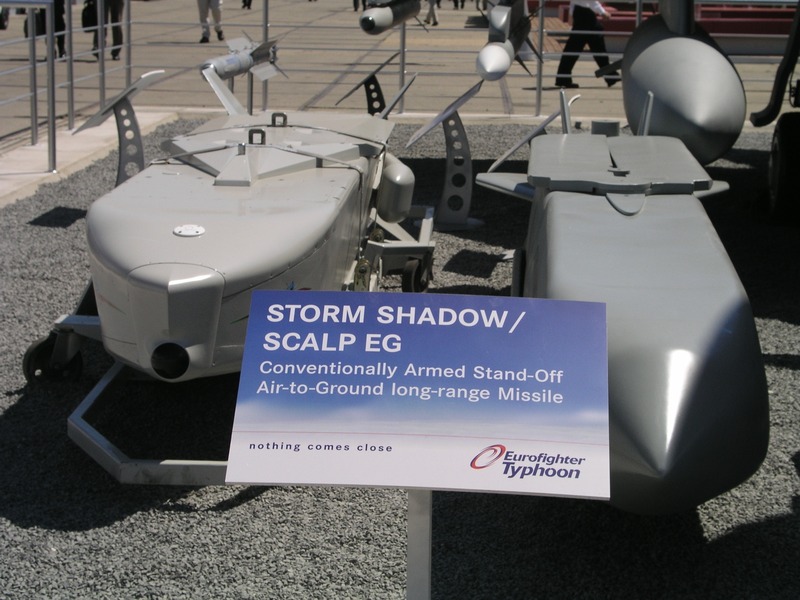
No European NATO member-country operates a land-based intermediate-range missile system comparable to Russia’s 9M729 and Oreshnik intermediate-range missiles or even the shorter-range Iskander-M, which fell just short of INF Treaty range restrictions. What INF-range capabilities Europe does possess, like the Franco-British SCALP-EG/Storm Shadow and the German-Swedish KEPD 350 Taurus, are stand-off weapons dependent on combat aircraft for their delivery.
While Russia built missiles banned under the INF Treaty, and the U.S. has sought to catch up since abrogating the treaty, Europe faces an uphill battle to develop indigenous ground-launched intermediate-range capabilities both in terms of institutional knowledge and industrial wherewithal. France’s last ground-launched IRBM, the nuclear S3, was decommissioned in the 1990s. The United Kingdom’s Blue Streak IRBM was cancelled in 1960 and replaced with American Polaris submarine-launched ballistic missiles.
European states have initiated ground-launched intermediate-range missile programs in the wake of the INF Treaty’s demise and the stark lessons of the importance of deep-strike capabilities in the Russia-Ukraine War. The capability gap is a big reason France, Germany, Italy and Poland, on the sidelines of the 2024 NATO Summit in Washington, pledged to develop through ELSA a conventional ground-launched missile with a range exceeding 500 kilometres. Britain formally joined ELSA at the NATO Defence Ministers’ Meeting in October, 2024. Sweden announced its intention to join the next day, and the Netherlands joined that November.
Reports suggested a decision on a successful ELSA bid will be announced this past summer. At the Paris Air Show in June, France’s ArianeGroup showcased its intermediate-range “missile balistique terrestre.” And the summer prior, MBDA – the manufacturer of Storm Shadow/SCALP-EG and the Taurus – unveiled a GLCM variant of the French Navy’s Missile de Croisière Naval, dubbed the “Land Cruise Missile.” At the time of writing, however, no decision on a successful ELSA bid had been made public.
Through an initiative launched in August, dubbed Project Nightfall, Britain’s Ministry of Defence is exploring opportunities to procure a shorter-range ground-launched ballistic missile with a range of 600 km or more. For systems in this range category, the U.K. previously expressed interest in procuring Lockheed Martin’s PrSM but now appears to be seeking another option with Nightfall. Together with Germany, Britain plans to produce a 2,000 km “long-range strike capability,” as one of the projects associated with the Trinity House Agreement initiative. It is unclear if the missile will be cruise or ballistic, or if it will be land-based or air-launched like the Taurus or Storm Shadow.
Europe is wise to devote itself to the goal of acquiring a broader array of strike systems with the procurement of intermediate-range counterstrike capabilities as part of Europe’s rearmament efforts, its quest for strategic autonomy, and as a complement to air defence projects like the European Sky Shield Initiative. The high rates of attrition in large-scale contemporary warfare add to the need for cheaper, easy-to-disperse “shoot and scoot” land platforms to complement air-launched systems. Lengthy procurement and development timelines being what they are, acquiring American-made stopgaps like the Typhon is prudent. Lockheed Martin signalled after the Pistorius-Hegseth meeting that it could quickly deliver Typhon batteries to Germany if an agreement is reached between Washington and Berlin.
Despite the provision of American stopgaps, the uncertainty around America’s commitment to forward deploy ground-based in-theatre strike capabilities adds to the sense of urgency. If extended deterrence becomes less credible and little effort is made to develop and deploy indigenous European counterstrike capabilities, Moscow may be tempted to make political or military use of its missile advantage. As unlikely as arms control agreements are at the moment, possessing its own land-based regional-range strike systems would also give Europe leverage in any future initiative to negotiate reductions in Russia’s advantage in ground-launched INF-range missiles.
Photo: Storm Shadow – Scalp EG (n.d.), by Flying Camera via Shutterstock.
Disclaimer: Any views or opinions expressed in articles are solely those of the authors and do not necessarily represent the views of the NATO Association of Canada.