In recent years, there have been increased calls for the Canadian government to introduce legislation against disinformation. Tighter laws have been requested in an attempt to reduce the digital flow of deliberately false information in Canadian political discourse around controversies like vaccines, especially during elections.
For one, in 2022, Canada’s chief electoral officer Stéphane Perrault advocated for more legislation to cover loopholes surrounding the spreading of disinformation about Canadian elections. This came after a 2022 joint report by the University of Toronto and McGill university found several messages online claiming that unvaccinated Canadians would be unable to vote in the 2021 election.
Even though there is an increase in the digital circulation of disinformation among Canadian society, the introduction of legislation addressing disinformation channels runs the risk of having significant impacts on Canadian free speech, in addition to creating avenues for oppressive governments to unfairly target their opponents.
This article will examine the delicate balance between reducing disinformation online and preserving the freedoms of Canadians. To do this, worldwide government policies that have introduced anti-disinformation laws will be examined, and their pitfalls will be highlighted to contextualize the risk of such policies to Canadian lawmakers. In addition, alternatives to legislating against the spread of disinformation will be outlined in order to better support Canada’s fight against political deception.
Blessed Are The Lawmakers?
While some advocates insist the new anti-disinformation legislation didn’t go far enough in protecting Canada against the spread of disinformation, others raise concerns about the possible use of these laws to potentially silence critics and opponents of the government. For example, recent amendments to the Elections Act are only relevant to the use of fake news during or around elections and do not address the spread of disinformation outside of electoral practices and actions.
The fear of the latter group is vindicated by the fact that in some countries where lawmakers have passed specific laws against disinformation, there have been documented abuses of these laws to silence opposing political opinions or incarcerate political opponents. For example, in Nigeria, laws initially implemented against “fake news” have reportedly been utilised to curb dissent in various fashions – ranging from arrests for sharing investigative reports on embezzlement to the banning of Twitter and legal persecution of its users in the country. A similar issue occurred in Tunisia where in May 2024, Sonia Dahmani was arrested for allegedly violating the statutes of Decree No. 54. This law criminalizes the spread of ‘false’ or even ‘rumored’ information with the intent to disrupt public order, sow terror, or infringe on the rights of others. In actuality, Dahmani was arrested and sentenced to prison for criticizing the country’s treatment of immigrants.
These situations are a small example of the ways that laws against disinformation have already been utilised to persecute political opponents around the world. They are parts of a cautionary tale for those who would want to legislate against disinformation about how prone to abuse these laws can be.
What is in the Canadian Toolbox?
At the conclusion of the public inquiry into public interference in Canada’s elections in early 2025, Justice Marie-Josée Hogue noted that Canada does not currently have the required tools to address the threat of disinformation, and the country’s current means of countering disinformation are limited in their effectiveness. What, then, exists in the Canadian toolbox that is not sufficient?
A key part of Canada’s current anti-disinformation toolbox is the Rapid Response Mechanism (RRM), which Canada uses to defend against the threat disinformation poses by sharing information and analysis on disinformation with fellow G7 countries. A main shortcoming of this tool is that it reportedly does not monitor online disinformation outside of election periods, much like the legislation surrounding the Canada Elections Act. Nonetheless, there are other relevant ways Canada fights disinformation.
As mentioned earlier, different sections of the Canadian Criminal Code criminalise the act of spreading false news to promote hatred against certain groups of people. Additionally, the Canada Elections Act has subsections that prohibit the spreading of false news related to Canadian elections. Finally, with regards to the Russian invasion of Ukraine, Canada keeps a registry of sanctions that have been instituted against known perpetrators of disinformation about the invasion.
All of this is done in addition to the various guidances on guarding against disinformation that are continuously shared by Canada’s Department of Public Safety, the Canadian Security Intelligence Service, and the Communications Security Establishment.
Do As I Say, And As I Do
Canada has already taken inspiration from the European Union (EU) with regards to the fight against disinformation, namely by embracing the economic union’s model of cross-border cooperation. Through initiatives like the RRM, Canada monitors foreign disinformation campaigns and coordinates with G7 allies to counter threats. The alternatives further listed here will augment Canada’s current toolbox and allow lawmakers to put forward a better defence against the proliferation of false information than laws targeting individuals for spreading disinformation would.
Of the 33 countries mentioned earlier with explicit laws against disinformation, 28 of them are located in the EU. However, the majority of these laws are focused on the roles that media platforms play in the spread of disinformation. Rather than create laws that potentially penalize the individual and create space for abuse, Canada should take inspiration from this.
For example, the EU’s Digital Services Act requires organizations like Meta to take responsibility for the regulation of disinformation on their platforms. In this regard, unfortunately, Canada’s voluntary moderation structure falls flat. While the EU’s model allows for significant fines when rules surrounding transparency and countering disinformation aren’t met, Canada reportedly lags behind as a result of noted underdeveloped national frameworks and limited resources.
While specific legislation against disinformation can be welcome, it has to be done right. Civil society is more likely to disapprove of legislation that potentially targets individuals, particularly as it might be more likely to lead to an erosion of civil liberties. Additionally, enforcement of current legislation against the spread of false news, even if it is not specifically directed against the online spread of disinformation, can go a long way in ensuring better protection against what has already been termed the single biggest risk to Canadian democracy.
Any views or opinions expressed in articles are solely those of the authors and do not necessarily represent the views of the NATO Association of Canada.
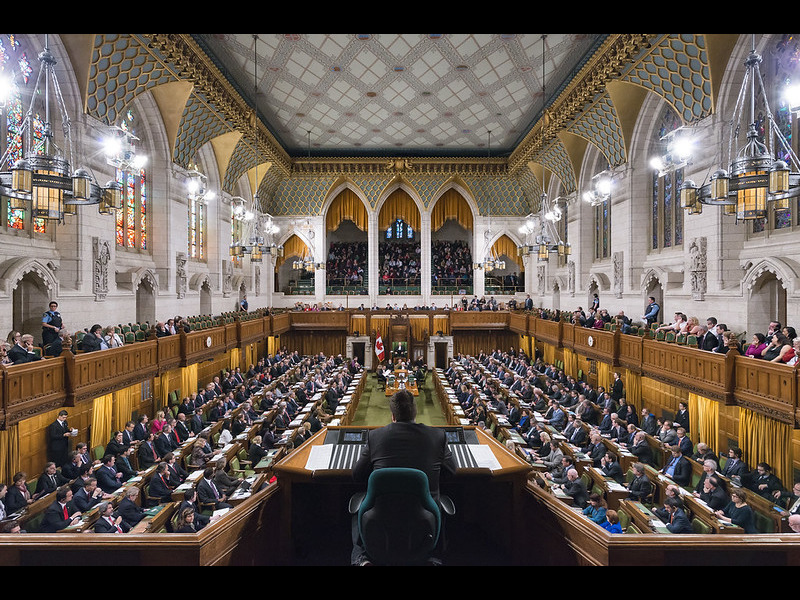
Photo retrieved from Flickr.