Centre For Disinformation Studies

The Culture of Distrust: : How AI Disinformation Exploits Polarization and Democracy

The voice on the line sounded like the President of the United States. It carried his cadence, his gravel, even his familiar pauses. But the words were strange. “Save your vote for the November ballot,” it told thousands of citizens in New Hampshire ahead of the 2024 primary. In reality, the call was orchestrated by Read More…

Esha Grewal Women in Security

When democracies censor: Alberta’s book ban and its contradiction with NATO’s mission to defend democratic principles

Alberta’s latest directive on books has turned heads nationally. But what does it mean for Canadian security? In this article, author Esha Grewal discusses how Alberta’s book ban is a part of the larger, growing trend of divisive policies among NATO countries that threaten social cohesion.

Environment, Climate Change, and Security

POWER PLAY IN THE ARCTIC: Part 2 – Dissecting the Arctic’s Power Struggles by State

*This is the second instalment of a six-part series. As each Arctic state strengthens its security and defence capabilities in the High North, there is likewise an overall intensification of geopolitical rivalries, an expansion of coastal states’ territorial and energy ambitions, increasing clashes of interest, and a corresponding potential for instability. Problematically, NATO lacks an Arctic policy, Read More…

Indo-Pacific and NATO

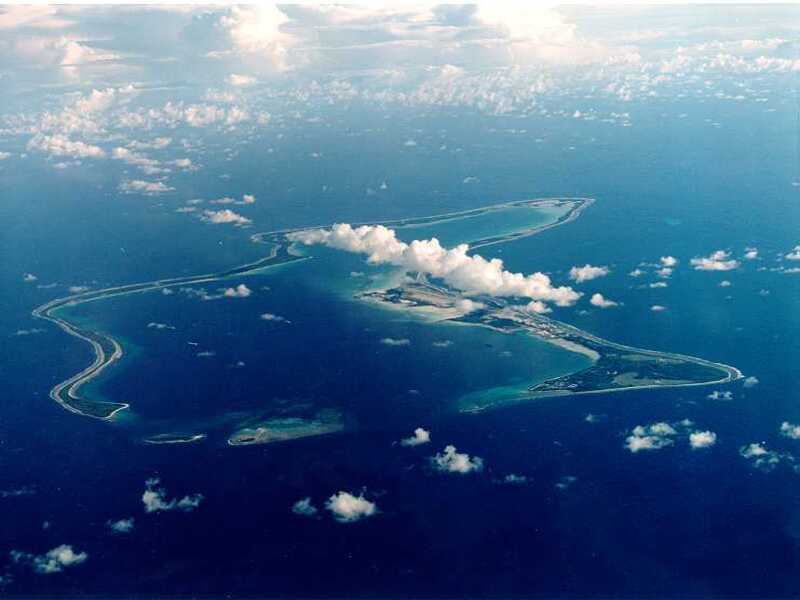
Sovereignty and Security in the Indian Ocean: What does the Chagos Deal mean for NATO’s Indo-Pacific Security?

What could Britain’s decision to relinquish sovereignty over a crucial US-UK naval outpost mean for NATO security in the Indo-Pacific? In this article, Angus MacKellar outlines the strategic importance of the British Indian Ocean Territory and considers the risks associated with the controversial handover of the Chagos Archipelago to Mauritius.

Alexander Martin Cyber Security and Emerging Threats

Science, Technology, and Strategic Foresight: Strengthening NATO for a Complex Future

This year was a big moment for science and technology (S&T) within NATO. On July 1, 2025, the Alliance designated Steen Søndergaard as its new Chief Scientist, taking over from Dr. Bryan Wells in order to bring a fresh approach to NATO’s S&T efforts. At the 2025 NATO Summit at The Hague, the Allies agreed Read More…

Karla Garcia Society, Culture, and Security

The Authoritarian Drift of Trump’s Second Term

With 142 executive orders signed in just 100 days, President Trump’s second term opened with a rapid consolidation of executive power. The orders targeted such key areas as border enforcement, foreign aid, and commitments to international institutions.  Immigration policy quickly emerged as a key instrument of executive overreach. Building on the hardline stance of Donald Read More…

Society, Culture, and Security

The North Atlantic Treaty Must Be Accepted in Whole, Not Just in Part

In early April, U.S. Secretary of State Marco Rubio spoke softly and carried a big stick at a NATO Ministers of Foreign Affairs meeting in Brussels. A more mainstream, small-l liberal Republican in an overwhelmingly “MAGA” administration, Rubio was probably the most suitable Trump cabinet pick to dispatch to Europe to smooth over relations with the representatives of Read More…

James Lautens

All Eyes on Us: The Future of the Five Eyes Intelligence Group

With the robustness of the rules-based international order in question, multilateral agreements are more crucial than ever. Intelligence-sharing in particular, such as among the Five Eyes intelligence group, has played a critical role to Canadian and international security cooperation since the end of the Second World War. However, recent criticisms from the White House have called to remove Canada from the intelligence group altogether. What would this mean for the security of Canada and our allies’ ability to counter growing threats around the world?

Society, Culture, and Security

Future-Proofing NATO: The Greenland Test

International society, once marked by predictable institutions and norms, is now increasingly marred by violations of international law and uncertainty. Near-daily disruptions, including territorial aggression and economic coercion, are undermining the global equilibrium upon which decades of peace and prosperity depended. The present utility of NATO lies in its ability to salvage the transatlantic bond, ensure cohesion among its members, and Read More…

NATO and Canada Simon Waring

History’s Insights for the West’s Russian Dilemma

Through his rhetoric and actions, United States (US) President Donald Trump has created political space for a reversion of Western-Russian relations to their pre-2014 state, underpinned by the implicit assumption that strained relations since that year have resulted from flawed Western foreign policy. In this article, Simon Waring argues that Russian aggression against Ukraine since 2014 and hostility towards the West is consistent with centuries of Russian foreign policy, and that a thaw in US-Russia relations today cannot change the fundamental antagonism between Russian and the Western world.