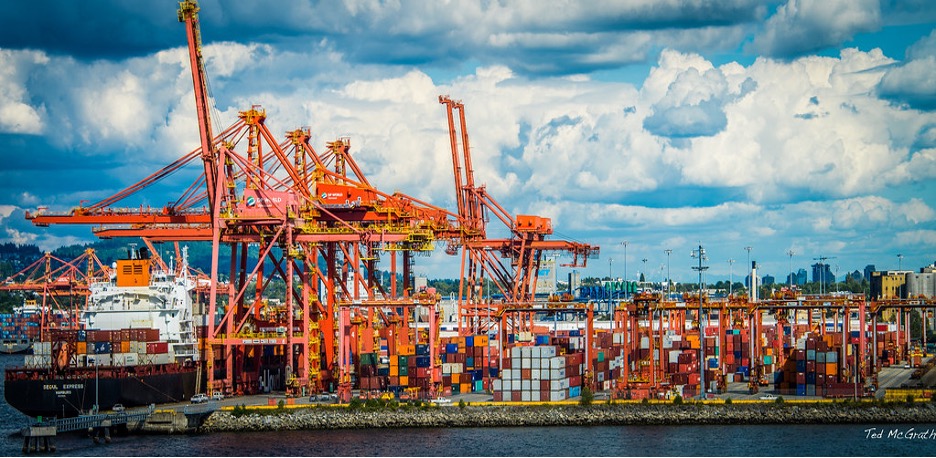
Imagine a coordinated cyberattack takes down the Port of Vancouver’s logistics systems. Ships can’t unload. Trains can’t be loaded. Grain shipments to Asia stop dead, and critical imports can’t get through. This scenario illustrates the kind of real-world threat that NATO now considers a core security challenge, compelling Canada and its allies to rethink the very meaning of national security.
NATO’s Evolving Definition of Security
NATO’s core mission of protecting the security and freedom of member states has not changed, but the Alliance’s understanding of how to achieve this mission has evolved considerably in recent years. Where military planning once dominated Alliance priorities, the concept of resilience, meaning a country’s ability to maintain essential functions under stress, now sits at the center of strategic policy. This transition accelerated with the rise of new threats: hybrid attacks on power grids, climate-driven events, and pressures on critical logistics and supply networks. Defence ministers and heads of government from Allied countries have, since 2024, finalized a series of policy updates making clear that “civilian preparedness” is no longer a supplementary goal, but a baseline requirement for all members.
At the institutional level, NATO’s resilience agenda is formalized through seven main requirements: government continuity; reliable energy systems; protection of food and water supplies; resilient transport; effective communication networks; capacity for managing mass movements; and robust health responses. These frameworks now support the Alliance’s defence planning and are put into practice through major joint exercises. For example, the 2025 Locked Shields exercise, hosted by the West Virginia National Guard, brought together civilian energy and supply chain experts to coordinate responses to simulated cyber incidents. These scenario-based exercises draw on operational lessons from actual disruptions, such as ransomware attacks at Dutch and Italian ports, and integrate them into multinational readiness planning. The 2024 Resilience Symposium similarly highlighted how Italy and Spain adapted their food logistics after major floods, providing a practical case studies for all members. Concrete investment targets and policy mechanisms reflect this shift. Central among these is the Defence Production Action Plan, which enables allies to coordinate procurement and cross-certify critical infrastructure. This is complemented by a proposed requirement for member states to dedicate up to 1.5% of their GDP annually to resilience and civilian preparedness, covering spending on protecting critical infrastructure, defending networks, ensuring operational continuity, and strengthening supply chains across sectors like agriculture, transportation, and energy. For the Canadian public, it is important to understand what this means. This is not simply funding for a military that may never fight a conventional war, but a direct investment in the security and reliability of our own domestic infrastructure.
Implications for Canada
Canada’s alignment with NATO’s resilience frameworks is now shaping both national strategy and how its agri-food sector is perceived abroad. The federal government, through departments llike Agriculture and Agri-Food Canada and Public Safety Canada, coordinates with provinces and industry to integrate risk management and emergency planning into the oversight of the food supply chain, which is formally designated as critical infrastructure. This domestic framework aligns with Canada’s commitments under Article 3 of the North Atlantic Treaty, which are put into practice through collaboration within the Alliance’s Resilience Committee and its specialized Food and Agriculture Planning Group (FAPG). The guiding principle of interoperability requires Canadian logistics managers and grid operators to participate in multinational joint simulations, such as NATO’s annual Crisis Management Exercise and sector-specific resilience scenarios, designed to test and refine cross-border crisis coordination with allies. coordinated with allies. Meeting these new standards, however, presents more than just a security challenge; it is creating a powerful new form of economic opportunity.
Resilience as a Market Advantage
Viewing resilience standards as bureaucratic hurdles misses the strategic opportunities they offer. Countries and sectors that demonstrate reliable, tested operations increasingly position themselves as preferred suppliers for buyers in risk-conscious markets. There is growing evidence that robust risk management and resilient supply chains are now factored into trade negotiations and insurance policies, with benefits for those able to meet these higher expectations.
A tangible result of this is the increasing expectation from trading partners for Canadian exports to meet documented resilience standards. This is moving beyond voluntary guidelines and into commercial practice. European countries like Germany, the Netherlands, and the UK, for example, now seek evidence of risk mitigation and crisis recovery capabilities when finalizing major commodity contracts. This trend is reinforced by deeper EU-NATO cooperation, where frameworks such as the Union Civil Protection Mechanism act as a template for the mutual aid that builds confidence among allies.
This strategic shift aligns with the priorities of the current Carney government, for which investing in resilient critical infrastructure is a core economic pillar. This focus is already visible in how Canadian agri food exporters are being supported to rethink their global value chains. The emphasis is moving from a singular focus on efficiency to an approach grounded in resilience and adaptability.
Investments in logistics, digital monitoring, and supply chain reconfiguration, supported by federal initiatives like the National Trade Corridors Fund, are helping firms diversify market access and reduce overreliance on single export routes. Export Development Canada notes that agri-food companies able to demonstrate robust risk management are finding greater flexibility in pursuing high-value overseas markets, even as global investors become more selective. In this environment, resilience is no longer a compliance issue; it is a key competitive differentiator.
While the opportunity is significant, seizing it requires a clear-eyed assessment of Canada’s current standing. When compared to other NATO allies, Canada trails key peers in the urgency and integration of its resilience strategy. For many European allies, geographic proximity to geopolitical threats has made infrastructure security a core national security priority for decades, leading to more mature frameworks.
For example:
- Germany has signaled major political support for grid and food system investments.
- Poland has created partnerships to apply dual-use technology in energy and logistics.
- The Netherlands has used sectoral peer reviews in critical hubs like Rotterdam to identify vulnerabilities.
- The United Kingdom’s whole-of-society security review deeply embeds the private sector into its national response network.
These examples show a level of focused investment that Canada is still working to achieve.
Navigating the new landscape
What emerges from this analysis is that resilience has moved to the center of how Canadian agri-food reliability is judged. The proposed requirement for member states to dedicate up to 1.5% of their GDP to resilience spending serves as a mechanism to push Canada to fund the necessary upgrades across its critical infrastructure network, of which the agri-food sector is a primary component. The questions are becoming more practical and immediate. Which investments will address the real vulnerabilities in supply chains? How can agri-food operators show, not just claim, their capacity to recover when it counts? As resilience benchmarks move from aspiration to practice, the sector may find that credibility and market standing are shaped as much by demonstrated readiness as by traditional performance measures.
The landscape is changing, but what comes next will be determined by the willingness to adapt and to test assumptions about risk, about required investments, and about what actually delivers reliability in a more volatile world. Resilience is one of the ways in which Canadian agri-food sector is being measured, and where its future potential is already being defined.
Disclaimer: Any views or opinions expressed in articles are solely those of the authors and do not necessarily represent the views of the NATO Association of Canada.