Cyber Security and Emerging Threats Infographic Layla Wahbi Marissa Young Marissa Young and Layla Wahbi

Infographic: Sectarian Conflict in Myanmar

After the 2015 elections, the international community praised Myanmar for its steps towards democratic reform. However, the rights and freedoms enshrined in democracy were not very inclusive, most notably disregarding the Rohingya people. One of the most persecuted ethnic minorities worldwide, the Rohingya people are prevented from attaining citizenship, economic security, and social services. Through this systematic discrimination, the Rohingya people have been effectively rendered stateless as refugees in their own country. Such sectarian conflict in Myanmar has been pushed behind the façade of effective democratic transition in the international realm.

Despite the persistence of international organizations such as Human Rights Watch and United Nations, the current ruling party (National League of Democracy) have continued to ignore requests to recognize the Rohingya people. This has stirred a migrant issue, as the Rohingya seek asylum in neighbouring countries. Furthermore, it has deteriorated relations between Myanmar and other states such as Bangladesh, which has sealed its borders to prevent the influx of incoming Rohingya refugees. The regional prejudice against this Muslim minority has gone undetected since 2012, and the current government has not acknowledged the issue. It will take external pressure from the international community to open the dialogue to end the persecution of Rohingya people.

SECTARIAN CONFLICT


For More Information:

http://www.cbc.ca/news/world/why-burma-s-rohingya-muslims-are-among-the-world-s-most-persecuted-people-1.3086261

http://www.cfr.org/global/global-conflict-tracker/p32137#!/conflict/sectarian-violence-in-myanmar

https://theglobalobservatory.org/2016/06/myanmar-rohingya-rakhine-sittwe-displaced/

http://thediplomat.com/2016/05/the-rohingya-and-suu-kyis-myanmar/

http://thediplomat.com/2014/03/myanmar-the-worsening-plight-of-the-rohingya/

http://www.nytimes.com/2014/09/29/business/sectarian-violence-in-myanmar-threatens-the-livelihoods-of-muslims.html?_r=0

http://www.huffingtonpost.com/azeem-ibrahim/who-is-instigating-the-vi_b_7810972.html

http://www.telegraph.co.uk/news/2016/04/20/new-burma-boat-people-tragedy-as-rohingyas-drown-on-trip-to-buy/

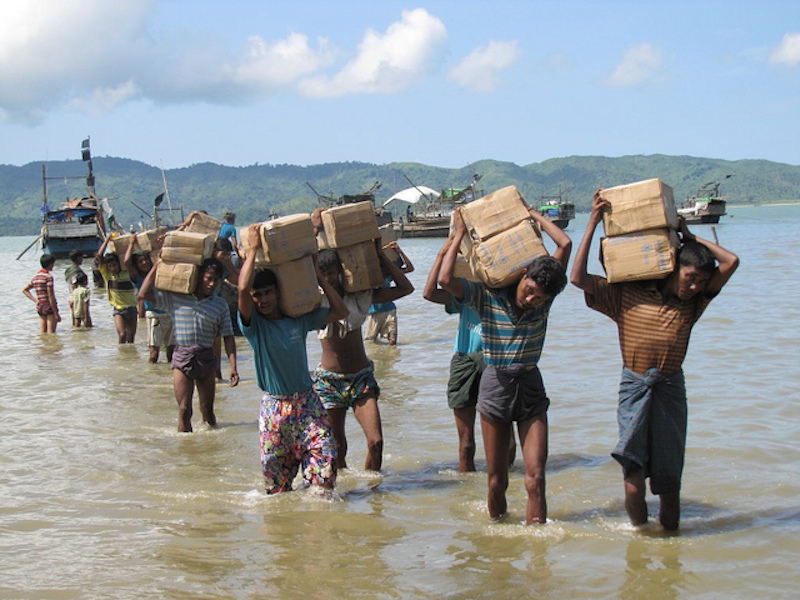
Featured Image: “Little Hope for Rohingya IDP’s” (2013), by European Commission DG ECHO via Flickr. Licensed under CC BY-ND 2.0.

Map of Myanmar (Infographic): Courtesy of Domino Theory


Disclaimer: Any views or opinions expressed in articles are solely those of the authors and do not necessarily represent the views of the NATO Association of Canada.

Author

  • The mission of NATO Association of Canada is to promote peace, prosperity, and security through knowledge and understanding of the importance of NATO.

    We strive to educate and engage Canadians about NATO and NATO’s goal of peace, prosperity and security. NATO Association of Canada ensures that we have an informed citizenry able to contribute to discussions about Canada’s role on the world stage.

    As a leading member of the Atlantic Treaty Association (ATA), NATO Association of Canada has strong and enduring ties with sister organizations in many of the alliance countries, as well as members of NATO’s “Partnership for Peace” and “Mediterranean Dialogue” programmes. The NAOC has had a leading role in the recent transformation and modernization of the ATA, and helped to create and develop the Youth Atlantic Treaty Association (YATA).

    The NAOC has strong ties with the Government of Canada including Global Affairs Canada and the Department of National Defence. We are constantly working to create and maintain relationships with international organizations such as the World Bank Group, the European Bank of Reconstruction and Development, NATO Headquarters, the International Criminal Court, and other prominent international NGOs and think tanks.


    View all posts
NATO Association of Canada

The mission of NATO Association of Canada is to promote peace, prosperity, and security through knowledge and understanding of the importance of NATO.

We strive to educate and engage Canadians about NATO and NATO’s goal of peace, prosperity and security. NATO Association of Canada ensures that we have an informed citizenry able to contribute to discussions about Canada’s role on the world stage. As a leading member of the Atlantic Treaty Association (ATA), NATO Association of Canada has strong and enduring ties with sister organizations in many of the alliance countries, as well as members of NATO’s “Partnership for Peace” and “Mediterranean Dialogue” programmes. The NAOC has had a leading role in the recent transformation and modernization of the ATA, and helped to create and develop the Youth Atlantic Treaty Association (YATA). The NAOC has strong ties with the Government of Canada including Global Affairs Canada and the Department of National Defence. We are constantly working to create and maintain relationships with international organizations such as the World Bank Group, the European Bank of Reconstruction and Development, NATO Headquarters, the International Criminal Court, and other prominent international NGOs and think tanks.